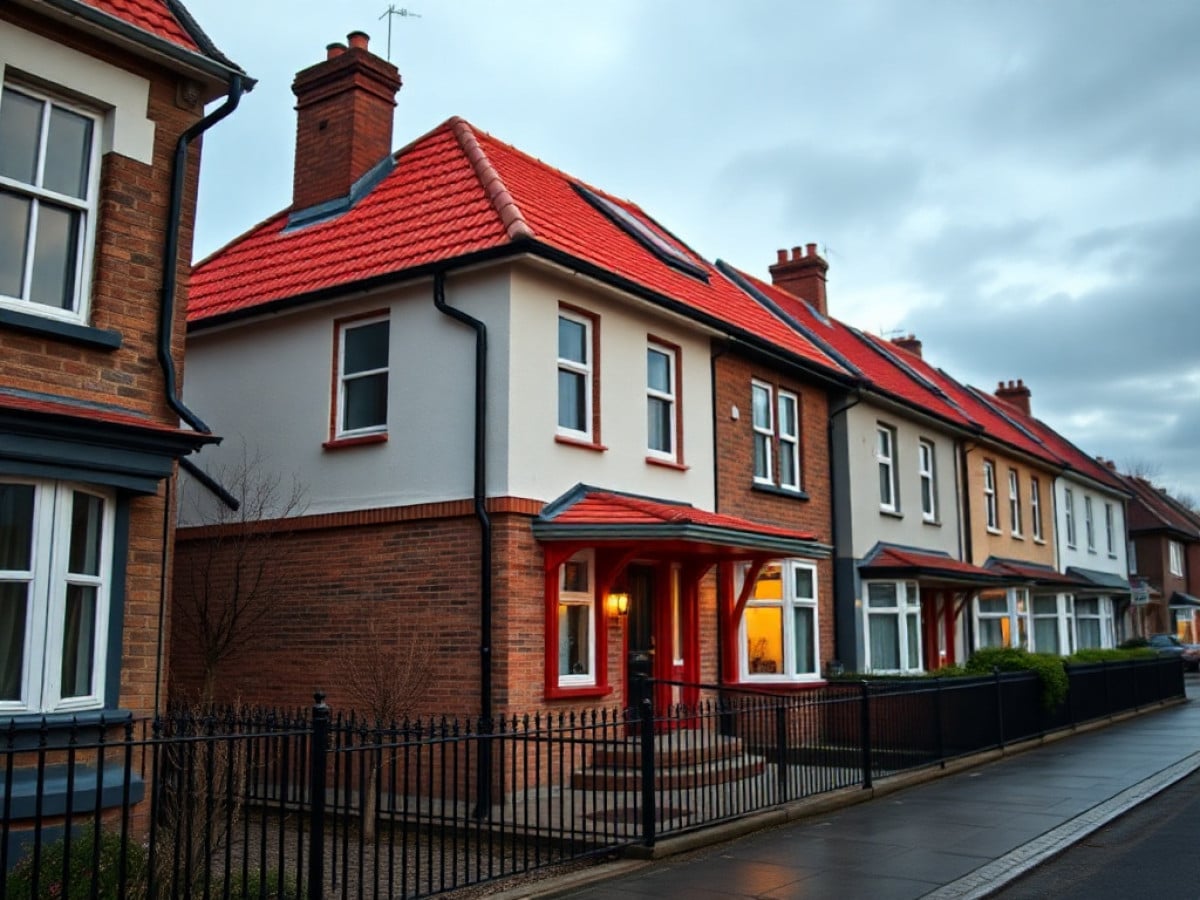
UK Housing Market Sees Slower Growth in February
In February, the growth rate of house prices in the UK decelerated, with the average value of a home increasing slightly by 0.3% to £301,151, according to the latest data from Halifax.
Halifax, a division of Lloyds Banking Group, the largest mortgage provider in Britain, highlighted that the ongoing conflict between the US and Israel against Iran could impede the anticipated reduction in mortgage rates this year. The bank noted that this geopolitical tension is expected to impact global economies, potentially drive inflation higher, and slow down the pace at which interest rates might decrease, which are crucial for determining the borrowing costs for prospective homeowners.
The rate of growth in home prices this February marked a notable decrease compared to January’s 0.8% growth rate, which had pushed the average house price above the £300,000 threshold for the first time.
Future Economic Outlook and Market Predictions
Amanda Bryden, head of mortgages at Halifax, commented on the situation, stating, “Looking ahead, geopolitical uncertainties seem set to influence the outlook for inflation and the wider economy.” She added that the markets are now bracing for a more gradual trajectory for interest rate cuts. This could mean that the reduction in borrowing costs might occur at a slower pace than previously expected.
Market analysts have also revised their expectations regarding the Bank of England’s monetary policy committee, predicting it is less likely to vote for a reduction in the current 3.75% base rate in its upcoming meeting.
Mark Harris, CEO of SPF Private Clients, a mortgage brokerage, explained that the conflict has pushed up energy prices and reduced the likelihood of central bank rate cuts. “Swap rates, which are essential for pricing fixed-rate mortgages, have moved higher amid concerns that escalating prices will intensify inflation,” said Harris. He noted that some lenders have already started to increase their mortgage rates in response to the higher swap rates, and the anticipation for a base rate cut soon has significantly diminished.
Following these developments, major UK lenders such as HSBC, Nationwide, and Coventry Building Societies announced increases in rates on their fixed mortgage products due to the Middle East crisis, with expectations that other lenders will likely follow suit.
Jeremy Leaf, a north London estate agent and former chair of the Royal Institution of Chartered Surveyors, observed that both buyers and sellers have been cautious since the onset of the conflict. “We expect the pause button will be pressed even harder if the uncertainties over interest rates and inflation continue for more than a few weeks,” Leaf added. He mentioned that although there was a steady uptick in activity until the end of February, the recent developments might start to reverse some of these gains.
Housing Market Dynamics and Regional Trends
Despite the slowdown, February saw the annual house price growth rate climbing to 1.3%, marking the strongest rate in four months. However, Halifax pointed out challenges such as stretched affordability, limited supply, and persistent regional disparities which continue to make it difficult for first-time buyers to enter the market. “For those without family support, the path to home ownership feels particularly challenging,” Bryden remarked.
Regionally, Northern Ireland posted the highest rate of house price growth in the UK, with an increase of 6.3% over the past year, bringing the average home price to £218,608. Scotland and Wales also saw significant growth rates of 4.7% and 2.4% respectively, with average property values reaching £222,286 in Scotland and £231,637 in Wales.
In contrast, the southern regions of the UK experienced a decline in property prices. The south-east saw a 2.2% annual decrease to an average price of £383,834, while London recorded a 1% dip, bringing the average property price down to £538,200.
Similar Posts:
- UK Housing Market Breaks Records: Average Home Price Surpasses £300,000, Reports Halifax
- UK Property Prices Stall in June: Is a Weakening Job Market to Blame?
- UK Real Estate Prices Tumble Unexpectedly in Economic Downturn
- UK Property Prices Unexpectedly Dip Due to Soaring Mortgage Expenses
- UK House Prices Surge Amid Middle East Conflict: Market Defies Expectations!