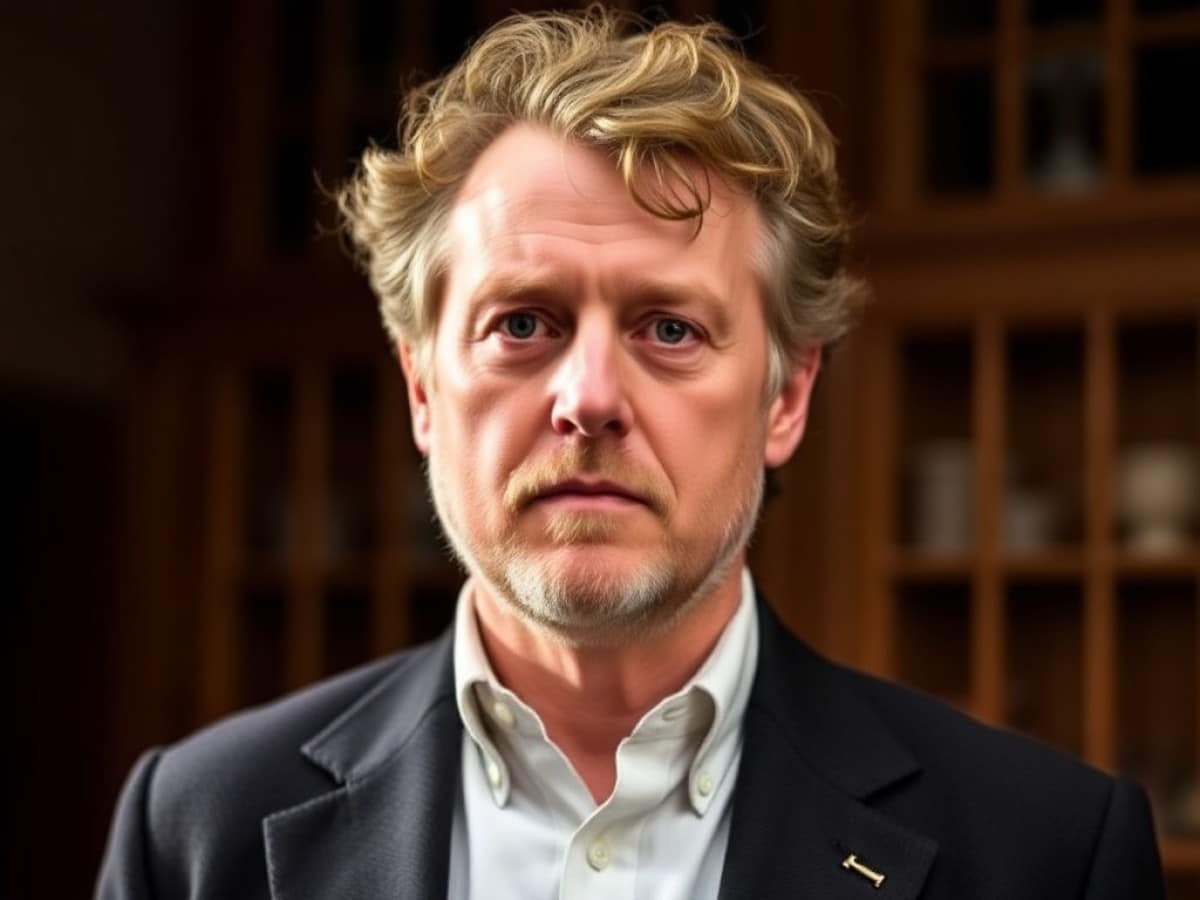
Ever since Thornton Wilder penned “Our Town” in 1938, the Pulitzer prize-winning drama is believed to have been staged every single day. Michael Sheen, who stars in a new touring version of this play, set in a tight-knit American small town, shares his profound connection with the script. “Each time I go through it, it feels like a wake-up call,” Sheen remarks. “It imparts a powerful message about the importance of not squandering time.”
This fresh rendition relocates the quintessential American narrative to Wales, and concurrently heralds the inception of the Welsh National Theatre. This new theatre enterprise, both ambitious and financially backed by Sheen, emerges in response to the disbandment of the previous National Theatre Wales. “The premiere is more than just a play’s debut,” notes Russell T Davies, a creative associate of the show. “I envision us celebrating a decade from now, reminiscing about how it all started with ‘Our Town’.”
The establishment of the Welsh National Theatre represents a bold declaration of purpose, especially amidst the backdrop of numerous theatre closures and financial cuts in Wales. The venture is committed to showcasing large-scale productions and countering the ongoing devaluation of the arts. A recent bipartisan report highlighted that Wales invests less in cultural activities compared to almost all other European countries, with only Greece spending less. With institutions like Welsh National Opera and Theatr Clwyd facing significant financial slashes, the theatrical landscape in Wales has been far from optimistic.
Into this challenging environment steps the Welsh National Theatre, driven by a mission to provide substantial platforms for Welsh talent both domestically and internationally, and to enrich and diversify the Welsh theatrical repertoire. Sheen explains his foundational strategy for the company, which merges community engagement with global aspirations. “The goal is to cultivate an audience that can propel us to tackle structural issues, allowing directors and playwrights greater freedom to advance their work without being hindered by logistical constraints,” he states.
The theatre’s debut season will open with “Our Town,” followed by “Owain & Henry,” a new piece by Gary Owen, known for “Iphigenia in Splott.” This production, a collaboration with the Wales Millennium Centre, features Sheen as Owain Glyndŵr, a 15th-century Welsh leader who revolted against King Henry IV. Subsequently, Matthew Rhys will star in “Playing Burton,” by Mark Jenkins, a poignant homage to the legendary Welsh actor Richard Burton. Sheen discusses his vision for the theatre, focusing on reintroducing Welsh plays and adapting global dramas for Welsh audiences.
Sheen’s motivation to launch the Welsh National Theatre with “Our Town” was partly to elevate Francesca Goodridge, the director and artistic director at Cardiff’s Sherman Theatre. “There’s a challenge in Wales for directors to transition from studio spaces to main stages,” Sheen observes. Their collaboration began on the revival of “Nye,” a grand narrative about the NHS co-directed by Goodridge, where Sheen portrayed the Labour politician Aneurin Bevan. Impressed by Goodridge’s prior directorial efforts, Sheen was eager to see her work reach a larger audience. “I told her I loved her work and wanted to see it on a bigger stage,” he recounts. Goodridge, recognizing the opportunity, eagerly agreed.
For Goodridge, adapting Wilder’s portrayal of the fictional Grover’s Corners to a Welsh setting felt natural; the communal dynamics were already relatable to her. “It’s about everyday interactions—neighbours chatting, children flirting, the daily deliveries,” she explains. Raised in Fforestfach, Swansea, Goodridge found parallels in the play’s depiction of ordinary life leading to profound experiences. She hopes the audience leaves with a renewed appreciation for their loved ones.
As the Welsh cast delved into the American script, they found it surprisingly fitting. “The lyrical, melodic quality of the language lends itself well to a Welsh accent,” Sheen notes. Davies, having previously directed Sheen, worked with the Wilder estate to subtly infuse the production with Welsh nuances. Although initial ideas like substituting rugby for baseball were declined to preserve Wilder’s original text, the essence of a Welsh community in America, akin to those in Patagonia, was embraced.
Goodridge and her team thought creatively about integrating Welsh elements, including translating hymns to resonate with the local culture. “To hear them sing like a Welsh choir is incredibly moving,” she comments. Featuring a cast of 18 Welsh actors, this adaptation represents a significant cultural assertion. Davies, having faced discouragement regarding Welsh characters in his earlier career, feels a deep pride in contributing to a narrative that celebrates Welsh identity.
Sheen sees “Our Town” as more than a quaint depiction of small-town life; it’s a narrative with a robust, urgent message. Reflecting on the historical context of Wilder’s writing, Sheen perceives the play as a subtle premonition of societal upheavals, using the simplicity of small-town life to address larger, more complex issues.
The drive to establish the Welsh National Theatre came during a pivotal moment, as National Theatre Wales faced closure after losing all its funding from the Arts Council Wales. “It felt like a now or never moment,” Sheen recalls, determined to leverage his influence and resources to initiate something new in the face of adversity.
Without public funding available, Sheen stepped up to finance the early stages of the theatre himself, emphasizing a diverse funding strategy to ensure its sustainability. “I’m still underwriting some expenses to keep us moving forward,” he admits, committed to the theatre’s success.
Sheen’s efforts extend beyond financial investment; they reflect a profound belief in community and mutual support. “As you grow older, the importance of community—of giving and receiving help—becomes clearer,” he reflects.
The collaboration with Rose Theatre in Kingston, where “Our Town” will conclude its tour, exemplifies the importance of co-production in contemporary theatre, allowing for greater ambition and financial viability. “It’s crucial right now,” says Christopher Haydon, artistic director at the Rose.
“We have significant stories to tell,” Goodridge affirms, underscoring the importance of ambitious narratives in the theatrical landscape.
“Our Town” is a co-production between Rose Theatre and Welsh National Theatre, starting at the Grand Theatre in Swansea and touring through Llandudno and Mold before concluding in Kingston, London.
Similar Posts:
- Discover the Magic of Welsh Rivers: Publisher Behind Bilingual Poetry Success Explores New Themes
- Explosive Drama Unleashed: “The Red Rogue of Bala” Stuns at Theatr Clwyd Mold
- Amber Davies Shines: From Love Island to Strictly and Legally Blonde Stardom!
- Transform Your Family Holiday: Make Theatre the Highlight of Your Adventure!
- Susan Sarandon & Whoopi Goldberg Star in Fall 2025’s Top Theatre and Dance Shows!

Fatima Clarke is a seasoned health reporter who bridges medical science with human stories. She writes with compassion, precision, and a drive to inform.