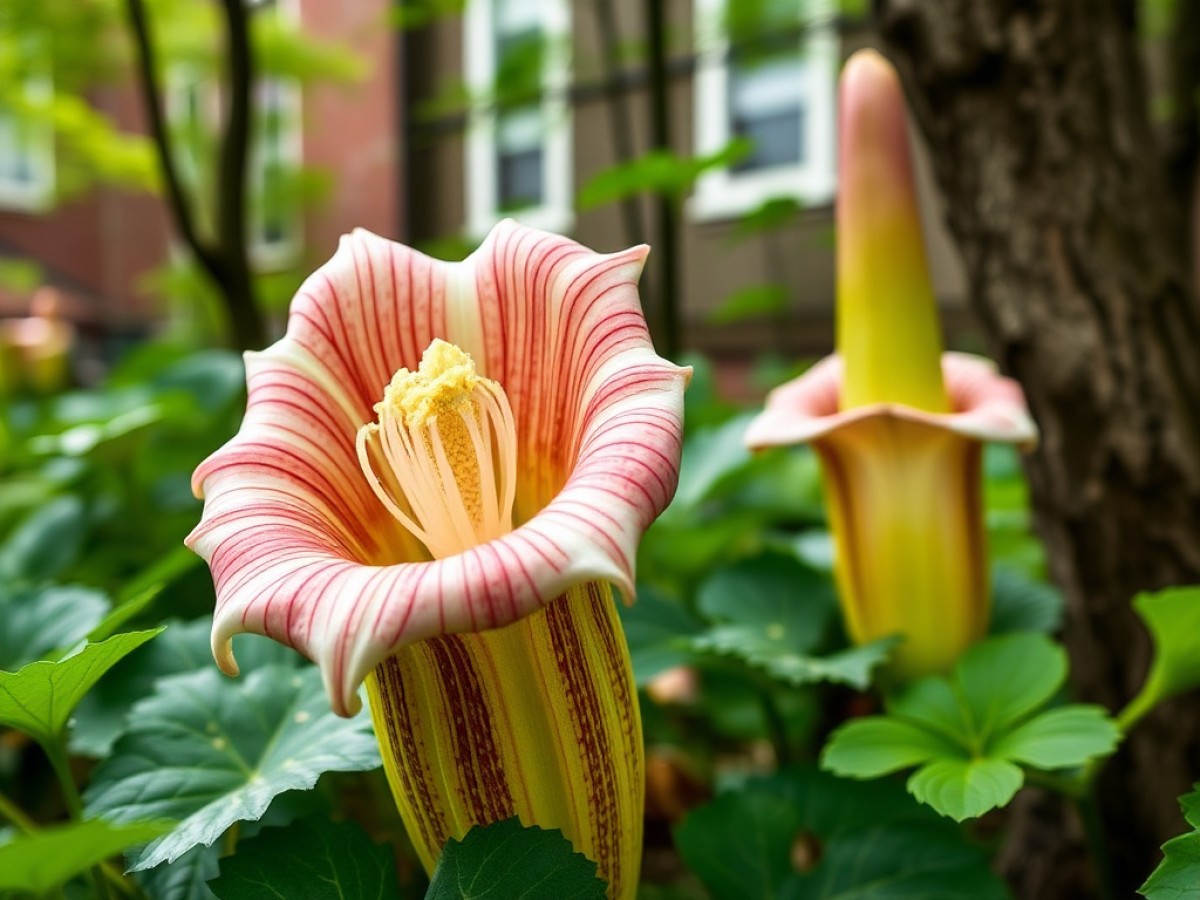
Bloom of the Corpse Flower at Mount Holyoke Attracts Visitors
Mount Holyoke College recently witnessed a remarkable natural event as its infamous corpse flower, known for its foul odor reminiscent of decaying meat, bloomed once again. This rare botanical phenomenon drew in numerous visitors, eager to experience the unusual plant’s notorious stench.
A Rare and Stinky Spectacle
The corpse flower, scientifically named Amorphophallus titanum, is native to the rainforests of Sumatra and is known for its infrequent blooming cycle, sometimes taking many years to re-flower. When it does bloom, the flower emits a strong odor that is often likened to that of decomposing flesh. This odor, which lasts about 24 to 48 hours, serves a crucial purpose in the wild: attracting carrion beetles and flesh flies that pollinate the plant.
The bloom of the corpse flower is not only a sensory experience but also a visually striking one. The flower, which can reach up to 10 feet in height, features a central spike called the spadix, surrounded by a frilly, skirt-like structure known as the spathe. The deep red color of the inside of the spathe adds to the illusion of meat, enhancing the flower’s strategy to mimic a decomposing animal.
Ecological and Educational Impact
The flowering of the corpse flower at Mount Holyoke is not just a curiosity; it serves as an important educational tool. Botanists and students alike flock to see and study the plant during its bloom, gaining insights into its unique pollination strategy and survival adaptations. The event also provides an opportunity to educate the public about the diversity of plant life and the importance of conservation, particularly for rare and endangered species like the corpse flower.
The plant’s bloom is a fleeting spectacle, creating a sense of urgency and excitement around the chance to witness it. Despite its off-putting smell, the corpse flower’s bloom is a sought-after event for plant enthusiasts, environmental scientists, and the general public, demonstrating nature’s complexity and the peculiar ways plants adapt to their environments.
Mount Holyoke’s corpse flower remains a significant draw for the college, symbolizing the wonders of the natural world and the ongoing study of botany. Each bloom presents a unique opportunity to delve into the mysteries of this extraordinary plant and its ecological role in the rainforests of Sumatra.
Similar Posts:
- Billie Eilish’s Mom Shares Top Plant-Based Eating Tips: Transform Your Meals!
- Cherry Blossom Alert: Japan’s Season Starts with First Blooms in Tokyo, Kyoto, and Osaka!
- Mount Olympus Seeks World Heritage Status: Home of Ancient Greek Gods!
- Shocking Report Reveals: Pittsburgh Coke Plant’s Pollution and Safety Nightmares!
- Explosion at Pennsylvania Steel Plant: Lingering Air Quality Concerns Spark Alarm

Morgan Ellis is an investigative journalist passionate about environmental policy and corporate accountability. With a background in climate science and years of reporting for nonprofit media, Morgan brings depth, clarity, and purpose to every story.