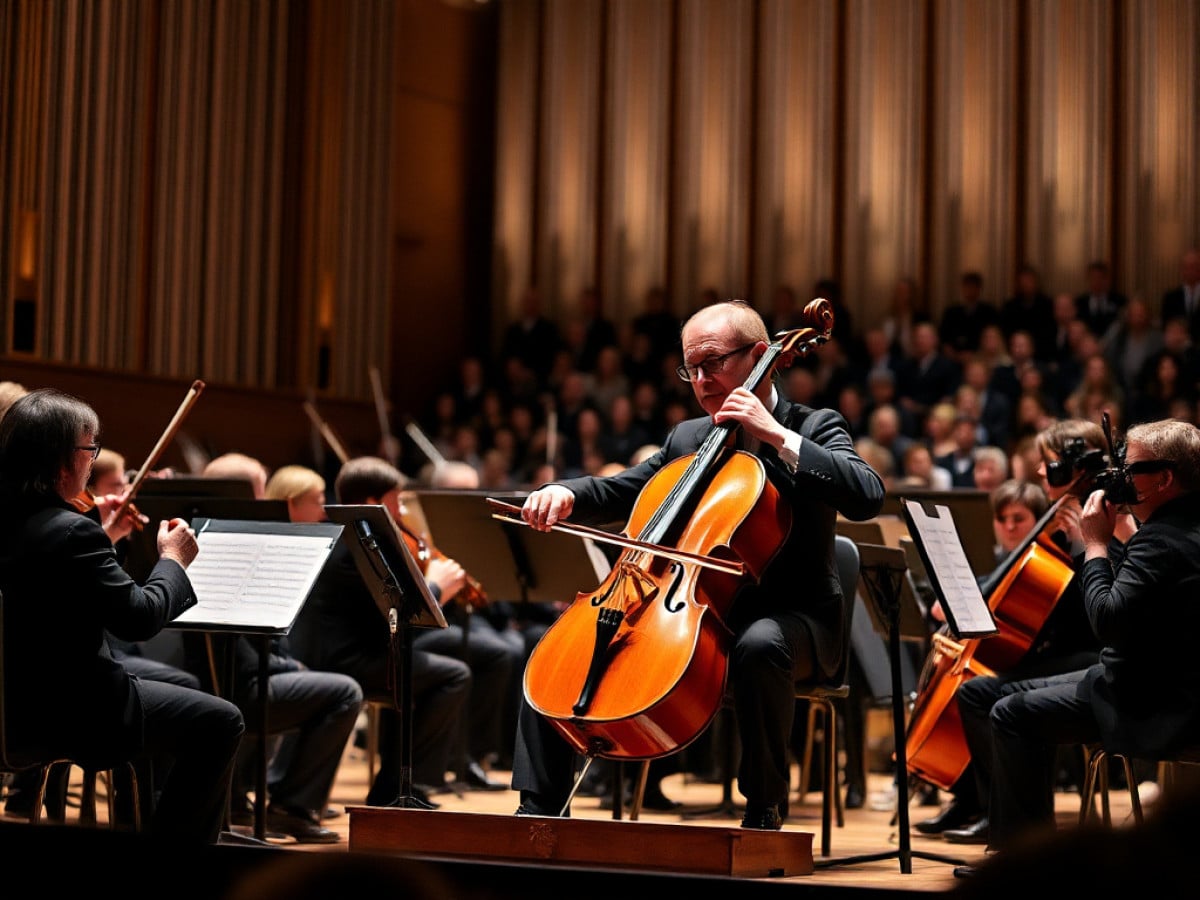
Despite the quality of performances, the concert seemed to lack a cohesive vision that could have tied its varied pieces more effectively. Thankfully, the world premiere of Joseph Phibbs’s cello concerto, crafted for Guy Johnston, provided a much-needed structural unity to the evening’s otherwise patchy lineup.
Expertly composed, the concerto featured five distinct movements that reveled in a resonant tonality and showcased a colorful orchestration. It included lush, flowing strings and innovative touches in the winds, brass, and percussion sections. Initiated by the soft pizzicatos of the double basses and the supporting cellos, Johnston’s solo performance was introspective and understated, beautifully highlighted by Clemens Schuldt’s precise orchestral management with the BBC Symphony Orchestra.
The concert continued with the Aubade, which sparkled and quivered with lively counterpoints and brightness, transitioning into the somber Elegy, where a lengthy, mournful cello melody unfolded against a rhythmic orchestral backdrop. The haunting Nocturne followed, filled with tension and the eerie calls of nocturnal birds, leading into something eerily foreboding, before the concerto concluded with the gentle, glowing strains of the Vocalise.
The rest of the concert’s offerings were more mixed. Tchaikovsky’s Hamlet, an expansive tone poem that includes a commanding ghost, a Russian-styled Ophelia, and a sharp military episode, was invigorated by Schuldt’s brisk, sharp interpretation, though it somewhat lacked emotional depth. Mel Bonis’s Ophélie, a brief yet captivating musical portrait from her collection of sketches of iconic women, lasted only five minutes but demonstrated the power of brevity. The piece featured a flowing harp, sweeping strings, and a wistful oboe that enveloped the doomed heroine as she met her tragic end, although the execution was notably loud.
Schuldt seemed more at home with the unofficially assembled suite from Richard Strauss’s Der Rosenkavalier. His approach was authentic, especially in the waltz sections which he handled with a nice bounce. However, his detailed control occasionally disrupted the musical flow. Despite excellent orchestral performance, no amount of conducting flair could seamlessly connect the disjointed segments of this pieced-together score, as the music staggered from one segment to another, exacerbated by Schuldt’s penchant for loud dynamics, which contributed to an overall sense of clumsy bombast.
Similar Posts:
- Royal Concertgebouw Stuns at Royal Albert Hall: A Breathtaking Mahler Performance with Janine Jansen!
- CB Symphony Dazzles: Yamada Leads Trombone Into Fujikura’s Sonic Depths!
- Stunning Performance by LPO Under Tan Dun at Royal Festival Hall: A Must-See Event!
- Leipzig Orchestra Stuns at Proms: Nelsons and Faust Deliver Breathtaking Performance!
- Stunning Clarinet Concertos by Lindberg & Aho: Julian Bliss Delivers Flawless Performance!

Fatima Clarke is a seasoned health reporter who bridges medical science with human stories. She writes with compassion, precision, and a drive to inform.