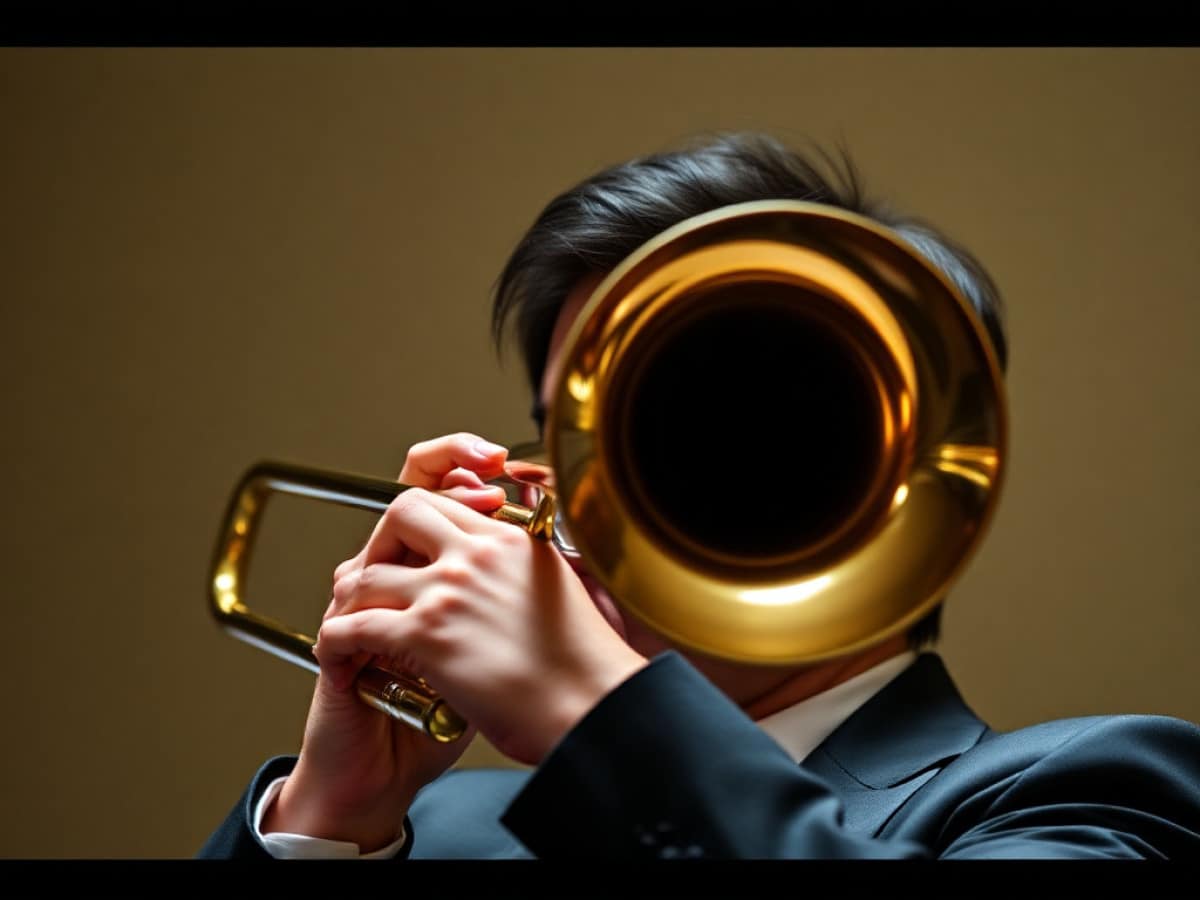
Spotlight on the Trombone
While trombone concertos are a rare highlight in the music world, they occasionally steal the show. A notable instance was in 2022 during the Proms, where a trombonist performed solo for the first time in nearly two decades. Prior to that, the spotlight shone on the instrument in 2008 when a 12-year-old prodigy became the youngest musician to clinch the title of BBC Young Musician. The prodigious talent in both events was none other than Peter Moore.
Now a seasoned performer with ten years at the London Symphony Orchestra, Moore, originally from Belfast, has become a formidable advocate for the trombone. His efforts have significantly expanded the instrument’s concerto repertoire. One recent example was his involvement in Dai Fujikura’s “Vast Ocean II” (2023), a reimagined version of a 2005 trombone concerto, which had its UK debut performed by Kazuki Yamada and the City of Birmingham Symphony Orchestra.
A Musical Narrative Inspired by Science Fiction
The inspiration for Fujikura’s concerto comes from Stanisław Lem’s science fiction novel, “Solaris”, portraying the orchestra as a vast, sentient ocean and the trombone as a human explorer. Fujikura humorously referred to Moore as “George Clooney” during a pre-concert discussion, highlighting the adventurous, protagonist role of the trombone. However, the composition itself suggested a more nuanced, Tarkovsky-like soundscape rather than a typical Hollywood blockbuster. It featured a complex tapestry of twinkling sounds and textures that avoided traditional development, opting instead for a pattern of echoing and dissolving motifs. Moore’s masterful performance breathed life into the piece, his trombone shifting colors through persistent notes and transforming slides into expressive vocal tones, while Yamada provided a mysterious and rich orchestral background. Whether the piece forms a cohesive whole beyond its beautiful sonic moments remains open to interpretation, yet Fujikura’s expertise in crafting musically open-ended questions is evident.
From Cosmic to Terrestrial in Music
The concert’s second half returned to more familiar musical landscapes with Mahler’s Symphony No. 1, a piece well-suited to Yamada’s expressive and instinctual style. The symphony unfolded in broad, sweeping strokes, with the second movement’s peasant-Ländler dance swaying intoxicatingly, as if tipsy from schnapps, thanks to the lush, woozy strings. The finale erupted with thunderous timpani and climaxed with the brass section standing, their instruments held high triumphantly. The third movement introduced a darker tone with its minor-key variation of “Frère Jacques”, ringing not for morning prayers but for a funeral. While there were touches of grotesque and eerie elements in the klezmer-like theme, the movement lacked the profound emptiness that balances the symphony’s vibrant life and hope.
Similar Posts:
- Leipzig Orchestra Stuns at Proms: Nelsons and Faust Deliver Breathtaking Performance!
- Stunning Performance: Danish National Symphony Orchestra Electrifies Royal Albert Hall!
- Royal Concertgebouw Stuns at Royal Albert Hall: A Breathtaking Mahler Performance with Janine Jansen!
- Penarth Festival’s Mahler Symphony: A Fresh Take on a Classic Masterpiece
- Stunning Clarinet Concertos by Lindberg & Aho: Julian Bliss Delivers Flawless Performance!

Fatima Clarke is a seasoned health reporter who bridges medical science with human stories. She writes with compassion, precision, and a drive to inform.