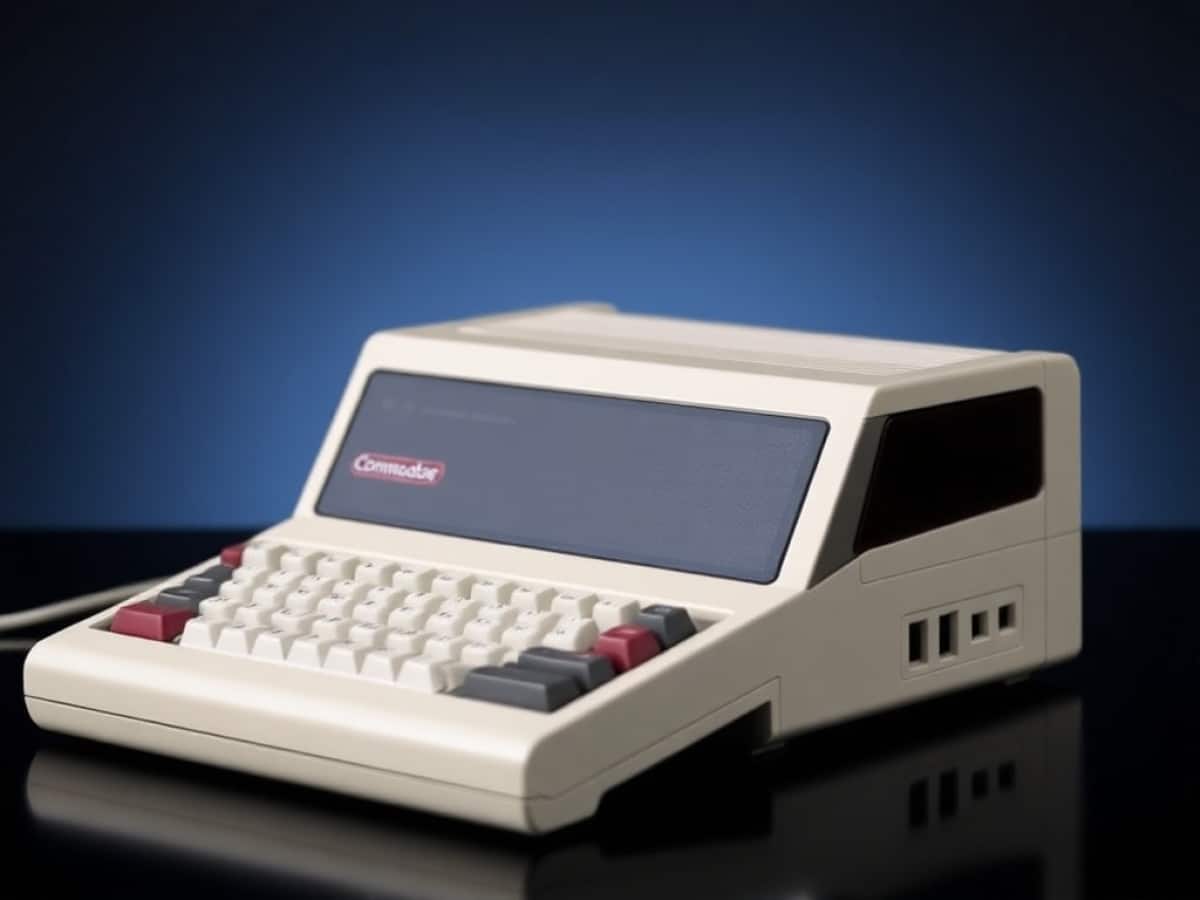
I didn’t anticipate the wave of nostalgia that hit me upon seeing the Commodore 64 Ultimate, though maybe I should have seen it coming. Presented in a box that mirrors the original’s iconic design—featuring the computer’s image against a backdrop of deep blue and white stripes—the experience starts nostalgically. Opening the box reveals a remarkably faithful model of the old Commodore 64, affectionately known as the breadbox. With its beige and brown coloring and the distinctive red LED above the light brown function keys, it feels like stepping back into 1982.
My own history with the C64 began when my father bought one in late 1983, upgrading from our previous ZX81. It marked a huge technological leap with its rich color graphics, sophisticated sound capabilities, and a full-sized keyboard. I remember setting it up on our dining table, connecting it to a small TV, and loading “Crazy Kong,” a simple Donkey Kong imitation—it was the only game we had. That machine became the center of my universe for the next four years, influencing my friendships and how I spent my free time with games like Bruce Lee, Paradroid, and Hyper Sports. Playing the golf simulator Leaderboard with my dad remains a cherished memory, the sounds and visuals from that computer still vivid in my mind after nearly four decades.
For a decade, the Commodore brand thrived, succeeding the C64 with the Amiga, another stellar gaming machine. However, the ascent of personal computers marked the beginning of a long decline, culminating in the company’s bankruptcy in 1994. The brand lingered, kept partially alive through various intellectual property acquisitions. In a turn of events, retro YouTuber Christian “Peri Fractic” Simpson, along with a team of Commodore old-timers, acquired the brand in August 2025, promising a revival.
Their creation, the Ultimate, not only replicates the original’s appearance (you can choose a Starlight edition with LED lights and a see-through case), but also its technical specifications. Unlike other retro replicas that depend on software emulation, the Ultimate uses an FPGA (field-programmable gate array), a chip configured to emulate the actual hardware. It supports original peripherals like the C64 Datasette or disk drive and even simulates the disk drive sounds when running disk files. It features a cartridge port for classic game cartridges like International Soccer, and you can connect a traditional Quick Shot II joystick to one of its ports, then load up Daley Thompson’s Decathlon and play until the joystick breaks—just like the old days.
But the Ultimate is more than a mere gaming console. Flick the authentic power switch, and it boots up to the original C64 startup screen, displaying “Commodore 64 Basic V2, 64K Ram system, 38911 Basic Bytes free. Ready.” along with that blinking cursor. You can dive into programming with Basic or assembly language, just as in the past. I even re-entered a classic beginner’s code from the 1980s:
10 print “keith is cool”;
20 goto 10
It worked perfectly. After that, I pulled out an old program listing from a Computer & Video Games magazine, a challenging task given the aged, faded print. Additionally, a simple click on the power button switches to a new menu full of modern enhancements. You can insert a USB drive to upload C64 games and applications acquired online. The unit even includes a USB shaped like a cassette tape filled with demos and games, and it offers internet connectivity—both wired and wireless—for accessing a community of games and vintage bulletin board systems.
What captivates me about this device is how it integrates contemporary technology within a vintage frame. You can connect it to a modern HDMI monitor, yet the interface, complete with ASCII art and text lists, remains distinctly retro. This return to hands-on computing, where each action required knowledge and effort, starkly contrasts with today’s user-friendly, consumer-oriented platforms. Commodore’s marketing positions it as a “Digital Detox Brand,” a claim that, while bold, captures the essence of returning to more engaged computing.
Priced at £260.50 ($349.99/AU$524), the Ultimate isn’t just for those nostalgic for their computing past. It represents a living piece of history, more approachable than the PDP-10 replica I discussed last year, offering a way to reconnect with the foundational experiences of personal computing. The comprehensive user guide it comes with not only helps in programming but also in using the computer to create music and graphics, potentially fostering a new indie gaming scene. There’s inherent value in understanding programming at a fundamental level, beyond just interacting with polished interfaces.
Moreover, the nostalgic appeal of the machine has its own value. It has been a joy to introduce my sons to this relic from a bygone era—a world without endless game libraries, ads, or social media distractions. Replaying those old games has highlighted the enduring worth of great design and smart programming over mere visual flair—a lesson from which we could all benefit.
Similar Posts:
- Retro Rewind Madness: Dive into Nostalgia with This New Video Rental Sim Game!
- Grand Theft Auto VI Launch Postponed: New Release Date May 2026!
- Unveiling the Secrets of the Gamer’s Mind: What Drives Video Game Enthusiasts?
- Metal Gear Solid Delta Review: Cold War Chaos & Cinematic Swagger Reborn!
- Preserving VHS-Era Gaming Culture: One eBay Bid at a Time!

Fatima Clarke is a seasoned health reporter who bridges medical science with human stories. She writes with compassion, precision, and a drive to inform.