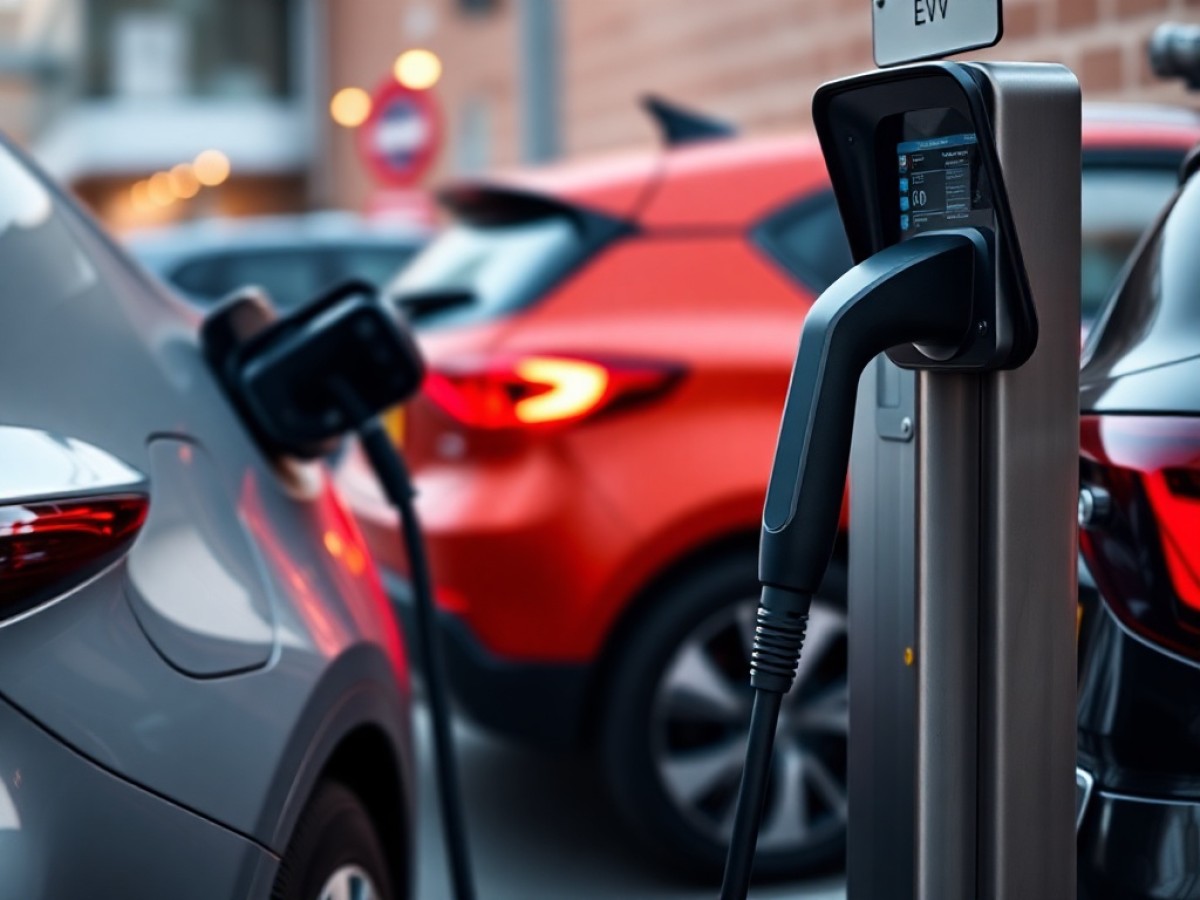
The Department for Transport has shown support for lowering the tax imposed on public electric vehicle (EV) chargers, a move that has been criticized as a ‘sidewalk tax’.
During the most recent budget discussions, government officials proposed reducing the VAT on electricity for public EV chargers from 20% to 5%. However, this suggestion was turned down by the Treasury, led by Chancellor Rachel Reeves, due to disagreements among different departments.
The Department for Transport was proactive, urging operators of electric car charging stations to contact the Treasury to express how a reduction in VAT would benefit them. According to three sources within the industry, these operators committed to passing on the tax reduction to consumers.
Ministers from the Department for Transport are reportedly in favor of this tax cut, especially during a period when many households are feeling the pinch financially. The department is headed by Heidi Alexander.
There is growing pressure on the government to lower the VAT on public charging electricity, highlighting the disparity faced by those who can charge their vehicles at home compared to those who cannot due to lack of private parking.
Home EV chargers benefit from a reduced domestic electricity rate of 5%, whereas public chargers are subject to the standard 20% rate enforced by HMRC. This discrepancy has been labeled as a ‘pavement tax’ by critics, who argue it deters the shift towards electric vehicles, particularly in cities.
Despite these arguments, the Treasury has been hesitant to modify the current rate, partly due to concerns over the potential loss in VAT revenue as the adoption of EVs increases and traditional fuel duty income decreases.
The issue of VAT disparity is set to be a significant topic in the government’s upcoming review of public charging costs, scheduled for release in the autumn.
However, recent developments might compel the Treasury to reconsider. A decision by a London tax tribunal in March concluded that the applicable rate should have been 5% all along due to an incorrect application of the law. Although HMRC is appealing the decision, many experts believe the appeal will not be successful.
Dan Caesar, founder of Electric Vehicles UK, commented, “VAT on public charging should be abolished to make EVs more affordable for everyone. HMRC’s decision to appeal, despite the efforts of other departments, highlights the disarray within the government.”
“Furthermore, the majority of British citizens continue to benefit from significantly lower costs associated with driving, and the government should not hesitate to promote this vigorously,” Caesar added.
Standardizing VAT rates for public charging could also serve as an additional incentive for more people to transition to electric vehicles, especially as other policies from the Labour government have been perceived as slowing the transition. For instance, Reeves announced in November that a 3p-a-mile charge for electric cars would be implemented starting in 2028 to compensate for diminishing fuel duty revenues.
Moreover, the government is contemplating further adjustments to its zero-emission vehicle (ZEV) mandate, which mandates that manufacturers progressively increase their sales of electric vehicles. This has provoked strong reactions from charging companies worried about reduced usage of their charging infrastructure.
A government spokesperson stated, “The government is facilitating the transition to EVs by offering drivers up to £3,750 off new cars, benefiting more than 95,000 people already, and investing over £7.5 billion into the UK’s electric vehicle sector.
“We are also evaluating the cost of public EV charging to examine the influence of energy prices, other cost factors, and options to reduce these expenses for consumers.”
Similar Posts:
- Pay-Per-Mile Tax: Will It Boost Reeves’ Funds or Deter Electric Vehicle Adoption?
- Hawaii’s EV Boom: Why Can’t Charger Availability Keep Up?
- EV Charging Expansion Faces New Hurdles: Trump Administration Imposes Roadblocks
- Rachel Reeves Aims to Redirect Attention to Spending Review, Away from Welfare Reductions
- MG Demands £500+ Fix for Faulty Electric Car: Owners Face Steep Costs