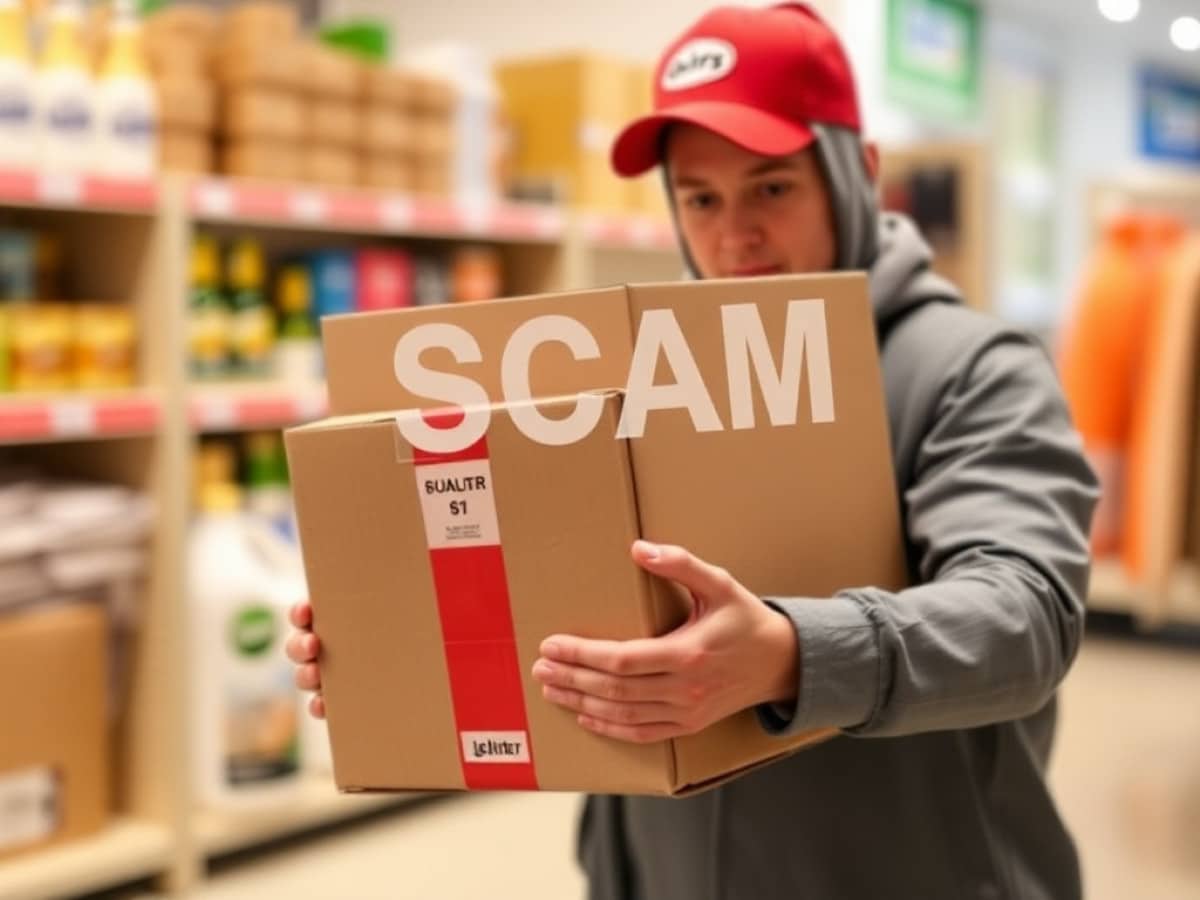
The message you’ve received on WhatsApp claims that a delivery person named John from Cleaning Superstore attempted to deliver a package to your address, but you weren’t there to receive it.
Despite not recalling any purchases from this company, the message seems to originate from a legitimate WhatsApp account, prompting you to reschedule the delivery by following a provided link.
Upon clicking the link, you’re then requested to pay a small fee for the redelivery of the package and to input your personal information.
This message, however, is deceitful. The main risk isn’t just the loss of the small fee paid, but more critically, the scam aims to collect your banking and personal details.
Recently, this scam involving the Cleaning Superstore has been circulating in the UK. It mirrors a well-known type of fraud where recipients are told they’ve missed a delivery.
The difference with this scam is that it purports to be from a real business, the Cleaning Superstore, which operates out of the United Arab Emirates.
Lisa Webb, a lawyer with the consumer advocacy group Which?, suggests that the scam is likely effective because it seems to come from a hacked, but verified business account. This could make the message appear more trustworthy than one from an unverified source or random number.
Providing even basic details like your name, address, and email could expose you to further scams.
The actual Cleaning Superstore in the UAE has not issued any comment on the matter.
Appearance of the Scam
The WhatsApp message typically reads: “PRCL/GB Sorry we missed you today! Our delivery driver, John attempted to reach you but failed to do so. Visit [phishing link] to redeliver.”
Following the link, you will be prompted to enter your personal information and make a payment for the redelivery.
An individual who encountered the scam reported on Trustpilot that they were redirected to a counterfeit Evri delivery page.
If the required payment details are provided, the scammers can withdraw funds at their discretion. This is often done incrementally over an extended period to avoid detection.
Alternatively, they might attempt to withdraw a large amount during a period of heavy spending, such as the holiday season, hoping it won’t be noticed.
Recommended Actions
Avoid clicking on the link, and do not share or forward it to others. If you have already clicked on it, refrain from entering any personal details.
If you have accidentally provided your account details, contact your bank as soon as you realize the mistake. Should you receive a notification about an attempted payment, inform your bank immediately that the transaction was unauthorized.
Webb advises to monitor your account for any unusual activities. She notes that banks can mark your account to flag suspicious activities, effectively placing them on alert. Although the immediate threat might be minimal, the real danger lies in the potential for future frauds, making it crucial to report any incident.
WhatsApp provides features to report suspicious messages and block the sender, which you should utilize in such instances.
Similar Posts:
- Christmas Shopping Alert: Protect Yourself From ‘Spray and Pay’ Delivery Scams!
- Alert for Apple Users: Beware of the Malicious iCloud Storage Scam Threatening Photo Deletion!
- Alert: Don’t Lose Your 12,739 Points! How Text Scams Trick You With Bogus Rewards
- Winter Fuel Allowance Scams Surge After Unexpected Government Policy Flip
- Alert: ‘Hi Mum!’ WhatsApp Scam Drains Wallets of Unsuspecting Parents & Friends