ROME — In response to the logistical demands of the Ukrainian conflict, Europe is speeding up its integration of unmanned technologies on the battlefield. The European Defense Agency (EDA) has recently facilitated a collaboration between defense manufacturers and military forces at a training facility in Italy, aiming to equip and align European military capabilities with advanced unmanned systems as swiftly as possible.
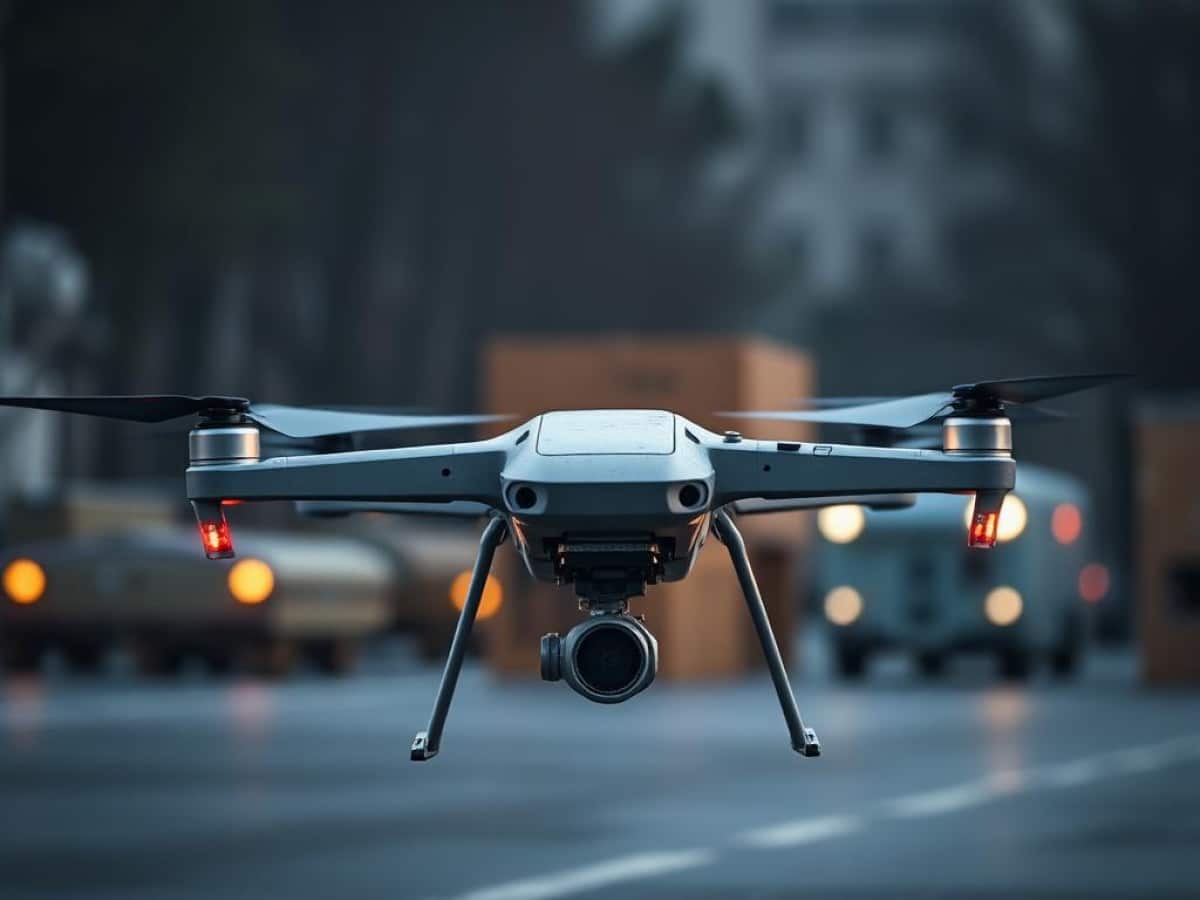
At a strategic exercise held near Rome, the EDA orchestrated a platform where unmanned aerial vehicles (UAVs) and unmanned ground vehicles (UGVs) were demonstrated. This initiative was established to enhance communication between the creators of these technologies and the military personnel who depend on them.
The inaugural European Defence Innovation Operational Experimentation (OPEX) campaign aimed to bridge the gap often referred to as the “valley of death” in defense circles. This term describes the phase where significant technological innovations falter and fail to reach practical military application.
“The conflict in Ukraine has fundamentally altered our approach to defense technology, condensing what would typically be years of development into mere weeks. This has been achieved through rapid prototyping, adaptability, and close cooperation between the military, engineers, and civilians,” remarked André Denk, EDA’s chief executive, during the event.
“Our goal is to hasten the journey of innovations from the laboratory to the field, securing their operational relevance,” he further noted.
The demonstration took place at the Italian army’s Montelibretti facility, showcasing aerial and land-based technologies from six different companies. Portugal’s Beyond Vision, Greece’s Altus LSA, and Austria’s Schiebel presented their UAVs. Meanwhile, Spain’s Alysis, Poland’s Piap, and Germany’s Arx Robotics exhibited their UGVs.
During the event, UGVs were observed navigating complex terrains, including water-filled ditches, under the watchful eyes of military representatives from Italy, Austria, Germany, France, Belgium, Cyprus, and Greece.
The technical trials, which concluded on July 3 at Montelibretti, will be followed by operational trials at another Italian army facility in Nettuno, near Rome.
“There’s a crucial missing link between research and development and the actual deployment of these technologies in field operations. This exercise provided a vital opportunity for military forces to witness these technologies in action, allowing them to grasp new tactical possibilities and adjust their doctrines accordingly,” explained an EDA official.
“With the assistance of Ukrainian experts, we’ve designed realistic scenarios for the deployment of these technologies. The EDA is now working on a blueprint to help armies seamlessly integrate these advanced systems,” the official added.
The demonstration highlighted the potential of UAVs to deliver supplies that could then be transferred to UGVs for delivery directly to front-line positions.
According to the official, similar experiments are already being conducted across Europe at a national level with local companies.
“For the first time, we are introducing military forces to systems they were previously unaware of, fostering new discussions and learning opportunities,” the official concluded.
Similar Posts:
- Next-Gen Combat Robot Emerges from European-Ukrainian Collaboration
- Kyiv’s Drone Strategy Influences US: Top Ukrainian Official Predicts Moscow Will Be Next
- Ukraine Launches 25,000 Robots for Frontline Tasks: Reducing Soldier Risk in Combat Zones
- Ukraine’s War Evolution: From Infantry Battles to High-Tech Warfare
- Greece Invests $4 Billion in Israeli Air Defense System: A Strategic Military Upgrade!

Jamal Peterson reports on defense, aerospace, and tech policy. With a military background and a strategic mind, he dissects complex subjects with clarity, offering readers sharp, reliable insights.