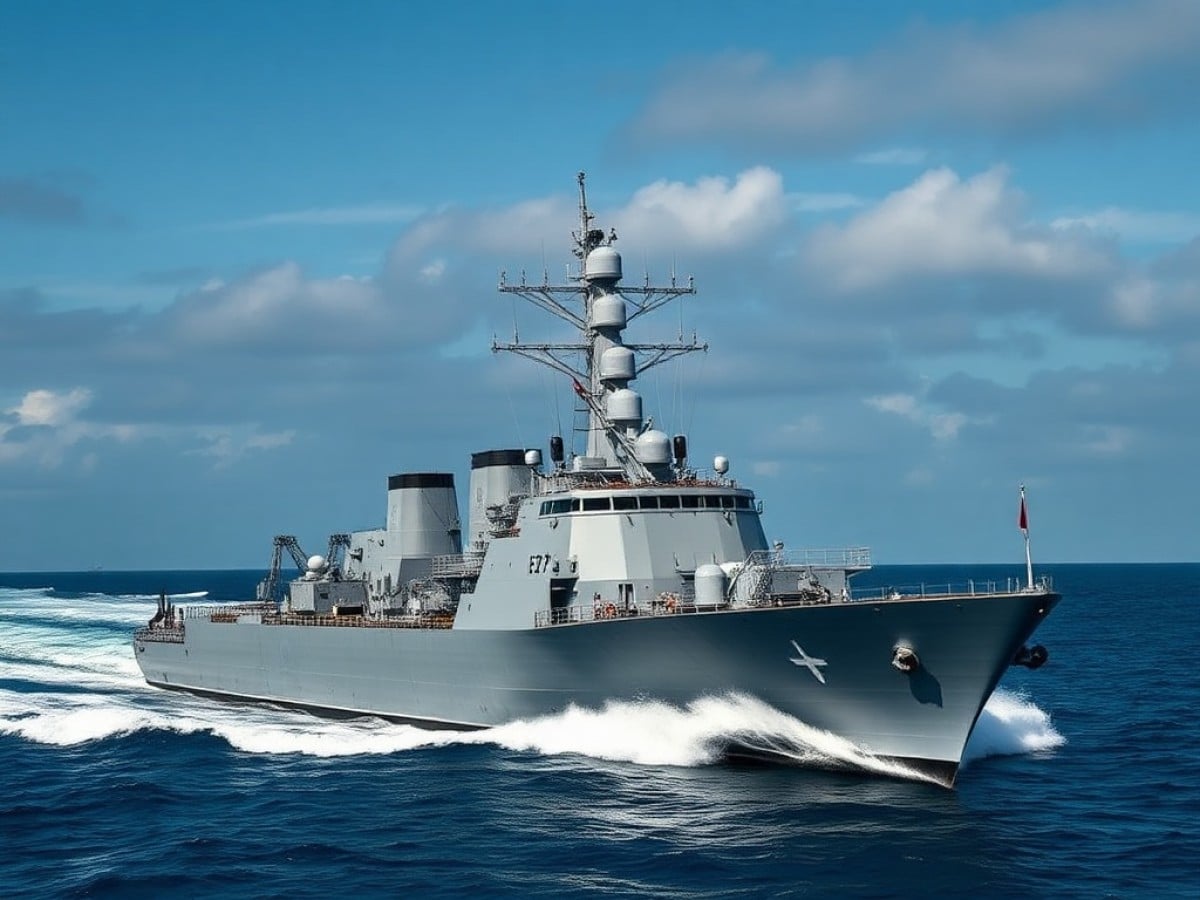
MANILA, Philippines — The JS Chokai, a Japanese destroyer, has been equipped to fire U.S. Tomahawk cruise missiles, a significant upgrade that allows it to hit targets more than 1,000 kilometers away. This enhancement makes it the first of its kind in the Japanese fleet to possess such long-range strike capabilities.
This advancement is a strategic shift for Japan’s military defense, as it aligns with the country’s decision last year to purchase 400 Tomahawks. These missiles are intended for use on its eight Aegis destroyers to bolster its standoff attack capabilities. This initiative also includes deploying advanced Type 12 missiles in the southwest regions and setting up hyper velocity gliding projectile systems nationwide.
According to Defense Minister Shinjiro Koizumi, the current missile defense systems might not be completely effective against all threats. He expressed this concern during a press briefing on Friday.
Koizumi emphasized the necessity of a counterstrike capability to prevent missiles from penetrating the missile defense network and to defend against further armed confrontations. He noted that standoff missiles are crucial for such counterattacks.
RELATED
The modifications to the JS Chokai’s launcher represent a critical step in Japan’s push to enhance its standoff capabilities and strengthen its overall defensive posture, according to Koizumi.
Standoff weapons are designed to be launched from a distance that is safe from enemy counterattacks, allowing operators to engage targets without immediate risk.
Since 2017, Japan has been integrating standoff capabilities into its defense strategy, which became a pivotal part of its security policy overhaul in 2020. This approach expanded further with detailed planning documents for the country’s southwest defense strategy in 2022.
Tomahawk cruise missiles, which can be launched from ships or submarines, have a range exceeding 1,600km. The Japanese version can be redirected mid-flight and is capable of targeting moving objects. The JS Chokai is now outfitted to launch both Block IV and V variants of these missiles.
The JS Chokai traveled to Naval Base San Diego in California in October 2025 for modifications and training with the U.S. Third Fleet. It is scheduled for live-fire exercises in August before returning to its base at Sasebo Naval Base on Kyushu Island in September.
Maritime security expert Benjamin Blandin, a research fellow at the Institute for National Defense and Security Research in Taiwan, noted that Japan is accelerating the implementation of a “denial and limited strike” strategy as per its 2022 defense outline.
“Japan is developing a much-needed counterstrike capability, moving from a strictly defensive posture to a more assertive regional deterrence approach, enabling it to target both ground and naval assets up to 1,000 km away,” explained Blandin.
Koizumi reiterated that Japan’s enhanced defense force, including its standoff missile capabilities, represents the “minimum necessary for self-defense” and would only be utilized in response to an armed attack from another nation, posing no threat to other countries.
Concerns have been raised by analysts about the potential strain on the U.S. Tomahawk inventory after more than 800 missiles were utilized in a four-week period during Operation Epic Fury against Iran, which could affect future allocations for allies like Japan.
Despite these concerns, Blandin believes that Japan’s Tomahawk orders will not be immediately impacted, though extended military engagements in the Middle East could result in slight to moderate delays.
RTX, the American manufacturer, announced on February 4 that it had secured five contracts with the U.S. Department of Defense aimed at increasing production and expediting deliveries of Tomahawk cruise missiles, both Land Attack and Maritime Strike variants, with expectations to boost annual production to over 1,000 units.
Blandin added that major disruptions are not anticipated concerning the Iran situation, as deliveries are planned to be spread over several years. He also mentioned that the U.S. is likely to prioritize Japan as a critical ally in the Indo-Pacific region.
Similar Posts:
- Japan Embraces Interceptor Drones: Joins Global Defense Trend
- Japan Slams China: Export Restrictions Threaten National Defense Capabilities
- Japan Sends Fighter Jets to NATO Bases: A Bold Move in Global Defense Strategy
- How an Ohio-Class Submarine Became Key in the Iran Strike Operation
- Australia Shakes Up Warship Program: Massive Frigate Purchase from Japan

Jamal Peterson reports on defense, aerospace, and tech policy. With a military background and a strategic mind, he dissects complex subjects with clarity, offering readers sharp, reliable insights.