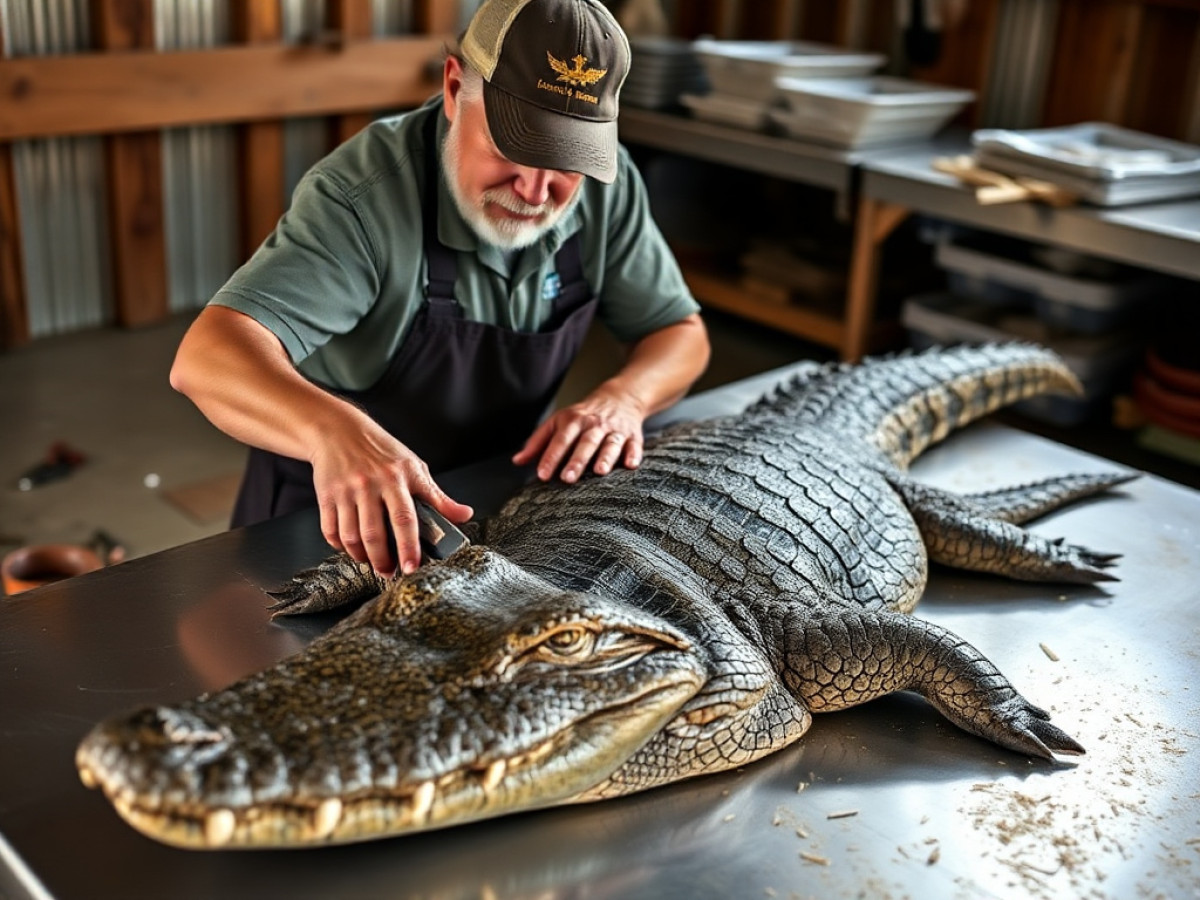
In ABBEVILLE, La., Jacob Sagrera carefully spreads out an alligator hide on a metallic surface, cleaning away salt particles. He examines the skin against the light to check for any imperfections and assigns it a grade. This assessment is crucial for a distant tannery, which will process the skin into luxurious items such as boots, watch straps, and handbags that will eventually grace high-end stores and fashion shows.
After grading, he places the hide into a stack, each marked with a yellow tag for tracking, ensuring compliance with legal trading standards.
Proponents argue that the business of alligator farming has been pivotal in conserving a species often viewed negatively or valued solely for its skin. Although some conservationists are skeptical about this approach, linking capitalism with conservation has proven beneficial for both farmers and luxury brands committed to sustainability.
Experts in the field support the economic valuation of these creatures and their habitats. George Melancon, an alligator research biologist with the Louisiana Department of Wildlife and Fisheries, believes assigning monetary value to these elements is essential for their preservation.
The Mechanics of Alligator Farming
At Vermilion Gator Farm, owned by Sagrera’s family, grading alligator skins is part of a well-established practice. American alligators, which were once on the brink of extinction due to overhunting, were listed as endangered several decades ago. With proper habitat management, their populations could recover, as noted by Grahame Webb, a prominent figure in reptile conservation and an adjunct professor at Charles Darwin University.
Louisiana suggested an alternative conservation strategy: farmers could buy eggs from landowners, raise alligators for their meat and skins, and sell them on the luxury market. This initiative has led to the production of about 400,000 farmed alligators annually in Louisiana, generating over $56 million from farmed skins in 2024. The state uses data from nest surveys and hunting tags to determine the number of young gators to release into the wild each year, with an estimated 3 million alligators currently in the wild across Louisiana. The proportion of farmed gators reintroduced into the wild has decreased from nearly 20% in the early 2000s to about 5% today.
Since being removed from the endangered list in 1987, American alligators are now classified as a species of “Least Concern,” though their trade remains regulated due to their resemblance to more endangered crocodilian species. Louisiana remains the primary state for alligator farming, with additional operations in states like Georgia, Florida, and Texas.
Trackers on alligator products confirm their legal origins, according to state officials and farmers. Col. Littleton, a company based in Lynnville, Tennessee, maintains meticulous records of all its tracking tags, as stated by Hayley Holt, their director of corporate and specialty sales.
According to Oliver Tallowin, a senior officer at the International Union for Conservation of Nature, alligator farming thrives due to robust regulations and a significant legal market.
However, some animal rights activists have ethical concerns about alligator farming. They argue that it might perpetuate the demand for skins, potentially encouraging illegal poaching. Sarah Veatch from Humane World for Animals believes that legitimizing trade through a profit-driven model can normalize and even expand the demand for wildlife products.
Alligator Farming’s Role in the Future of Luxury Fashion
Luxury brands are increasingly involved in sourcing alligator leather by investing in or acquiring farms, tanneries, and manufacturers, explains Christy Gilmore, a liaison between Louisiana alligator officials and the Convention on International Trade in Endangered Species of Wild Fauna and Flora (CITES).
As luxury brands delve deeper into the sourcing process, they uncover aspects of the business that traditional family-owned enterprises may overlook, such as environmental impacts, Gilmore adds.
Meanwhile, Louisiana’s wildlife agency has been increasing its marketing budget, funded by industry contributions like hunting tag sales, to bolster alligator programs amidst growing competition and concerns from animal rights groups about the use of alligator skins.
Exploring New Frontiers in Alligator Research
The state-supported alligator program also facilitates research on a species that remains somewhat enigmatic. Melancon is keen on improving our understanding of alligator biology to enhance ranching practices, such as developing a vaccine for West Nile virus, which affects the quality of their hides.
Other researchers are examining whether alligators play a role in mitigating climate change. A recent study indicated a correlation between alligator population density and increased carbon storage in wetlands, which could have significant implications for global warming. Chris Murray, a biology professor involved in the study, emphasizes that while alligators alone cannot combat climate change, they may contribute positively to this global challenge.
Murray’s research aims to highlight the ecological significance of alligators, beyond their value in luxury goods markets, stressing their integral role in the planet’s ecosystem.
___
Contributions to this report were made by Associated Press visual journalist Joshua A. Bickel.
___
For more updates, follow Melina Walling on X and Bluesky, and Joshua A. Bickel on other social platforms.
___
Similar Posts:
- Interpol Rescues 30,000 Trafficked Animals: Global Crackdown Reveals Shocking Wildlife Trade
- Hawaii’s Endangered Crow Soars Again: Breakthrough in Maui Forest Conservation!
- San Diego Man Kicks Protected Sea Lion: Shocking Attack Caught on Video!
- US Ends Automatic Protections for At-Risk Animals: Extinction Fears Rise
- Trump Administration Postpones Monarch Butterfly Protections: Fate of Species in Limbo!

Morgan Ellis is an investigative journalist passionate about environmental policy and corporate accountability. With a background in climate science and years of reporting for nonprofit media, Morgan brings depth, clarity, and purpose to every story.