Singapore to Initiate F-35B Operations
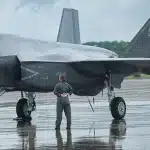
SINGAPORE — By the end of this year, Singapore is expected to become a new member of the F-35 operator community when it begins flying its first Lockheed Martin F-35B aircraft. This will make Singapore the fourth nation in the Asia-Pacific region to utilize the advanced fifth-generation fighter jet.
During a presentation at the Singapore Airshow 2026, Lockheed Martin’s Vice President of Aeronautics International Business Development, Steve Sheehy, forecasted that the Asia-Pacific region would host over 300 F-35s by 2030. This count includes American F-35s stationed in both Japan and Alaska.
Australian and Japanese F-35 Fleet Expansions
Australia has recently completed its acquisition of 72 F-35A fighters, with the final aircraft arriving in December 2024, making it the largest F-35 fleet outside of the United States at present.
However, this status is expected to shift to Japan in the future as the Japan Air Self-Defense Force is set to receive a total of 147 F-35 aircraft, comprising 105 F-35A and 42 F-35B models. Japan welcomed its first batch of four F-35Bs last year.
Meanwhile, South Korea has added 40 F-35As to its military assets and has placed an order for an additional 20 of these jets.
Singapore’s Growing F-35 Arsenal
As per a 2019 agreement, Singapore is on track to receive four F-35Bs by the end of this year. These jets will initially be stationed at Ebbing Air National Guard Base, with plans to relocate operations to Tengah Air Base in Singapore by approximately 2029, as stated by Lockheed Martin.
The Republic of Singapore Air Force (RSAF) also has another eight F-35Bs on order, expected to be delivered by 2028, and an additional order of eight F-35As placed in February 2024, scheduled for delivery by 2030. This will bring RSAF’s total F-35 inventory to 20 aircraft across two variants.
The Chief of Air Force of Singapore, Major Gen. Kelvin Fan, highlighted the strategic advantages of both variants: “The F-35As will deliver enhanced endurance and payload capacity, ensuring prolonged engagement capability, while the F-35Bs are equipped with short take-off and vertical-landing capabilities, enhancing operational flexibility.”
Additionally, the RSAF maintains a formidable aerial combat fleet that includes 40 F-15SG fighters and approximately 60 F-16C/Ds upgraded to F-16V standards, surpassing other Southeast Asian nations in terms of air combat capabilities.
Regional F-35 Support Infrastructure
Among the four global F-35 heavy maintenance, repair, and overhaul facilities, two are located in the Asia-Pacific region — in Australia and Japan. The other two are situated in Italy and the United States.
Sheehy also reported that his company achieved a record delivery of 191 F-35s last year, although this number was inflated due to delays associated with the rollout of Technology Refresh 3 (TR-3) updates. With the TR-3 backlog resolved, he anticipates that 156 F-35s will be delivered this year.
Finding additional F-35 customers in the Asia-Pacific might prove challenging. Recent attempts by Taiwan and Thailand to acquire the aircraft have been unsuccessful. However, a potential new market opened last year when U.S. President Donald Trump expressed a welcome for Indian interest in the aircraft.
Similar Posts:
- Australia Readies for ‘Ghost Bat’ Warplane Drones: A New Era in Military Technology!
- Japan Sends Fighter Jets to NATO Bases: A Bold Move in Global Defense Strategy
- Pentagon Secures $7.8 Billion in Missile Deals: Boosting Defense for US and Allies
- $131 Billion Deal Sealed: Boeing to Ramp Up F-15 Production, Modernization
- Israel Boosts Air Power: Massive Purchase of F-35 and F-15 Jets Confirmed

Jamal Peterson reports on defense, aerospace, and tech policy. With a military background and a strategic mind, he dissects complex subjects with clarity, offering readers sharp, reliable insights.