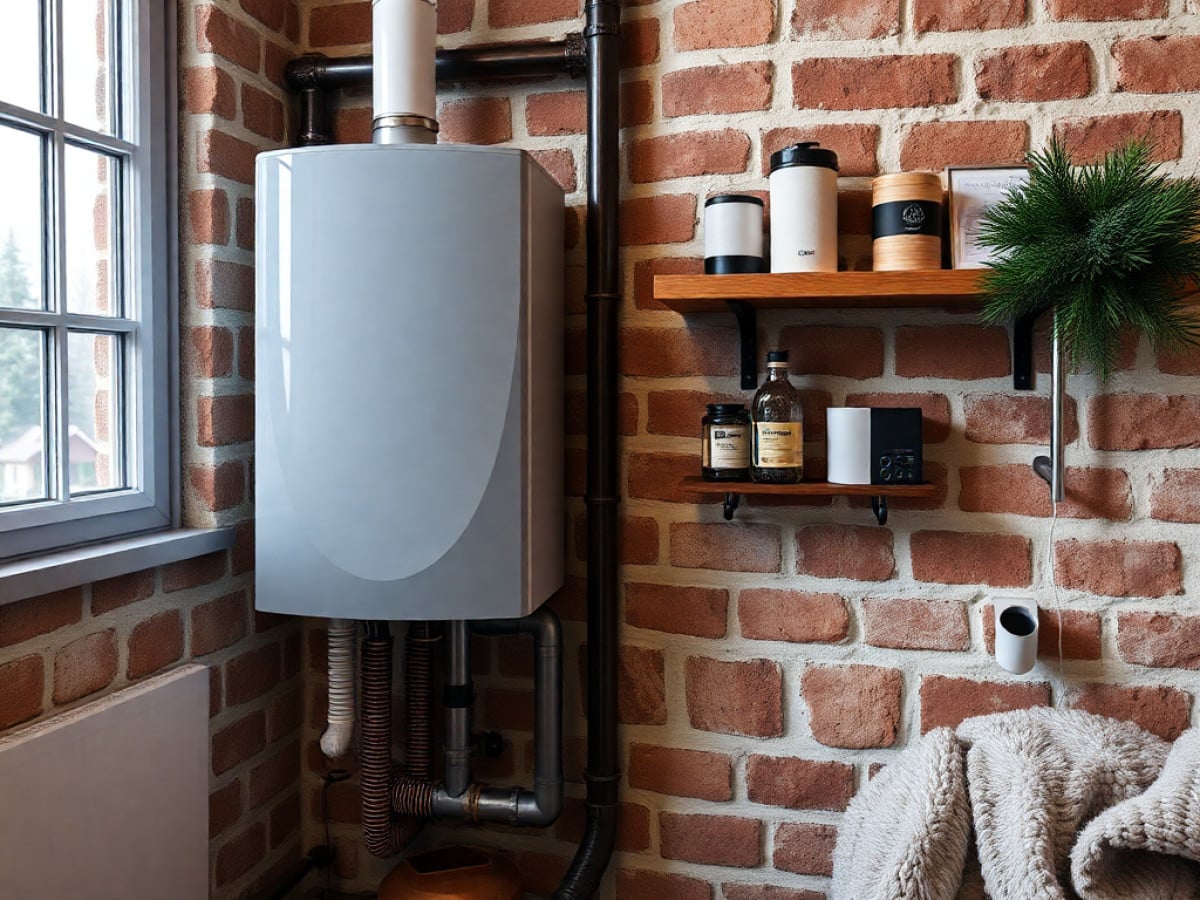
From adjusting thermostats for cost efficiency to mounting reflectors to enhance indoor heating, there are several steps you can take.
Embrace Intelligent Technology
“Implementing minor adjustments can significantly impact your warmth and energy conservation,” notes Sarah Pennells, a consumer finance expert with Royal London.
Start by activating the timer on your boiler or thermostat if available.
For enhanced control, consider upgrading to a smart thermostat. This device connects your heating system to the internet, enabling remote control typically via a smartphone app. This flexibility means you can modify your heating settings remotely if your plans change unexpectedly. Smart thermostats also allow you to program your heating and hot water schedules through the app.
Smart thermostats come with various features such as multi-room and hot water control, as well as geofencing, which detects your presence in the home. Prices range from £60 to £250 based on brand and model.
Installation can be DIY for some models like the Bosch Room Thermostat II (£69.99 on Amazon); however, others like the Hive Thermostat V4 (£155 at B&Q) might require professional installation, often available through the retailer at an additional charge.
Certain energy providers might offer discounts on smart thermostats through partnerships, such as Octopus Energy’s collaboration with tado°, offering up to 50% off tado° products. For example, a Wireless Smart Thermostat X Starter Kit is currently £112, reduced from £159.99.
Lower Heating Temperatures
Reducing your thermostat setting from 22C to 21C could save an average UK household £90 annually, according to the Energy Saving Trust. The typical comfort zone is between 18C and 21C.
Citizens Advice suggests that each degree lower on the thermostat could trim your energy bill by about 10%, although they caution against setting it below 21C for the elderly or those with health issues.
It’s also costlier to keep heating on constantly at a low level compared to a higher temperature for shorter periods.
Programming your heating to switch off 30 minutes before you leave or sleep can also decrease your energy expenses.
Adjust the Flow Temperature
For those with a combi boiler, reducing the flow temperature of water to your radiators can be beneficial.
If you own a system boiler or a hot water cylinder, seek professional advice before making adjustments, recommends EDF Energy.
Many boilers are preset at a high flow temperature around 75-80C; reducing this to about 60C can decrease your gas bill and still maintain comfort, Pennells explains.
The charity Nesta provides an interactive online tool with step-by-step guidance for adjusting your boiler settings. They recommend taking a photo of your current settings for reference.
Adjust Radiator Heat
If your radiators have thermostatic radiator valves (TRVs), you can set the temperature for each room individually. TRVs typically feature a scale from 0 to 6, with 0 being off and 6 fully open.
The Energy Saving Trust advises setting TRVs to the lowest comfortable temperature, possibly 3 or 4 for frequently used rooms and 2 or 3 for others, potentially saving £35 annually.
Although it may seem like a good idea to turn off the heating entirely to save money, experts warn against this due to the risk of mold and damp, which can be more costly and hazardous in the long run.
“During the energy crisis, we’ve observed a shift in heating individual persons rather than entire homes,” states Sophie Burr from National Energy Action. “Our studies indicate it’s more economical to heat common spaces moderately while keeping lesser-used rooms on a lower setting like 2, thereby preventing mold and protecting health.”
Install Heat Reflectors
The British Gas Energy Trust recommends placing foil behind radiators to reflect heat back into the room, especially effective on uninsulated external walls.
Radiator reflectors are inexpensive, easy to install, and long-lasting. They are available in rolls that can be cut to fit any radiator size and applied using adhesive or double-sided tape. Ensure radiators are off and cool before application. Retailers like Screwfix, B&Q, and Amazon offer these products at varying sizes and prices.
Regularly bleeding your radiators improves their efficiency. Turn off the radiator, use a radiator key or screwdriver to open the bleed valve, and allow air to escape until water flows steadily, then close the valve.
Avoid obstructing radiators with furniture or curtains to maximize heat distribution.
Maintain Regular Boiler Servicing
Servicing your boiler annually can enhance its efficiency and prolong its lifespan by addressing minor issues early. An unserviced boiler can consume up to 10% more energy, according to Octopus Energy.
Service costs vary between £70 and £110, but some energy providers include servicing in their annual coverage plans. While these plans offer reassurance, they might end up being more expensive than paying for services and repairs as needed. It’s advisable to evaluate if you could instead allocate savings for these expenses annually.
For rented properties, it’s the landlord’s responsibility to ensure annual boiler servicing, which must be performed by certified professionals, ensuring the unit’s efficiency and safety, highlights Burr.
Similar Posts:
- Experts Reveal: Air Conditioning Strategy That Saves Energy and Money!
- Experts Reveal: Best Air Conditioning Strategy to Save Energy and Money!
- Struggling with Cold Despite the Heat On? Discover Simple Money-Saving Tips to Stay Warm!
- Beat the Cold: 5 Essential Steps to Winter-Proof Your Home and Save on Energy
- Slash Your Heating Bills in Half with Heat Pump Revolution, Study Reveals