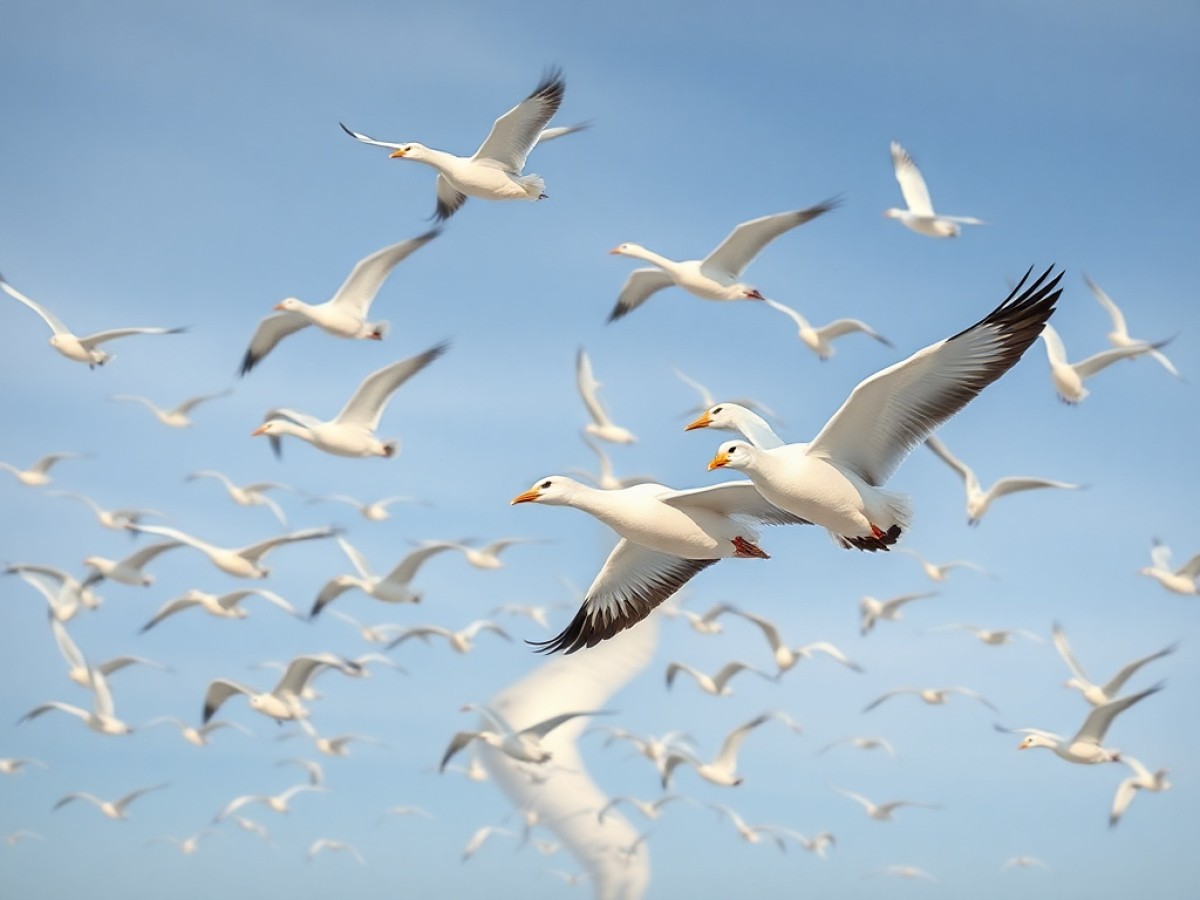
Spectacular Avian Cyclone Forms as Snow Geese Embark on Seasonal Arctic Journey
A remarkable natural event unfolds each year as snow geese take to the skies in a swirling mass, resembling a dynamic avian tornado. This breathtaking phenomenon marks their annual migration towards the Arctic, a journey essential for their breeding season.
The Phenomenon of the Bird Tornado
Witnessing thousands of snow geese simultaneously take flight is a sight to behold. As these birds ascend into the sky, their collective motion creates what appears to be a spiraling tornado. This spectacle not only captures the awe of onlookers but also highlights an intricate natural process of migration that snow geese follow instinctively.
The “tornado” forms when the geese, gathering in large numbers, suddenly burst into the air. The reasons behind this synchronized takeoff can vary. Often, it may be a reaction to a perceived threat, such as a predator in the vicinity. Other times, it’s simply a part of their natural behavior during migration, helping them to gather and conserve energy for the long journey ahead.
Migration to the Arctic
Snow geese spend their winters in warmer climates. As spring approaches and temperature rises, they begin their migration to the cooler, northern parts of the Arctic. This migration is crucial as it leads them to their breeding grounds, where they nest and raise their young during the summer months.
The journey is arduous and fraught with challenges. Snow geese often travel thousands of miles, facing threats from predators and the harsh elements. Despite these obstacles, the instinctual urge to reach their breeding habitat drives them forward.
Ecological Impact of Snow Geese
The migration of snow geese is not only a stunning natural event but also an important ecological one. These birds play a significant role in the ecosystems of both their wintering and breeding grounds. In the Arctic, their arrival contributes to the nutrient cycle, enriching the soil with organic material from their droppings, which supports other forms of wildlife.
However, the large populations of snow geese can also lead to challenges. In some areas, their feeding habits result in significant vegetation loss, which can alter landscapes and local biodiversity. Conservationists monitor these populations to manage their impact on the environment.
Observing the Majestic Migration
For nature enthusiasts and bird watchers, the migration of snow geese offers a unique and spectacular display. Many flock to migration hotspots just to catch a glimpse of the large formations of geese descending on lakes and wetlands. It’s an opportune moment to observe and appreciate the beauty and complexity of avian life.
As the climate changes and human activities increasingly impact natural habitats, understanding and preserving these migration patterns becomes more crucial. Each flight of the snow geese serves as a reminder of the delicate balance within ecosystems and the importance of conservation efforts to maintain these natural phenomena.
In conclusion, the annual migration of snow geese to the Arctic is not only an awe-inspiring spectacle but also a critical natural process, ripe with ecological significance. As we witness these magnificent “bird tornadoes,” we are reminded of the resilience of nature and the intricate connections that sustain it.
Similar Posts:
- Stunning Snow Geese Migration Captured at Dawn: See the Breathtaking Photos!
- Winter Storm Hits UK and France: Cold Snap Grips Europe!
- Brazil’s Spix’s Macaw from ‘Rio’ Fame Faces Threat: Climate Change Endangers Recovery Efforts
- Arctic Blast Sweeps US: Snowfall and Unusual Cold Grip Florida!
- Ruthless Raptor Devours Competition: Wins New Zealand’s Annual Bird Election!

Morgan Ellis is an investigative journalist passionate about environmental policy and corporate accountability. With a background in climate science and years of reporting for nonprofit media, Morgan brings depth, clarity, and purpose to every story.