Recently, a luxurious hotel in London was transformed into a hub for HBO Max. The halls were adorned with images of Carrie Bradshaw, and every available seat was accessorized with HBO Max branded pillows. A group of renowned celebrities including Lisa Kudrow, Noah Wyle, and Steve Carell were in attendance, ready to promote the streaming service’s debut in the UK.
Yet, the grand display could largely be traced back to a single individual. Years ago, HBO was hardly more than a niche channel focusing on sports and comedy routines. It was the groundbreaking series “The Sopranos,” created by David Chase, that catapulted HBO into the spotlight of high-quality drama.
Chase, however, downplays his role in this transformation. “It was largely about luck,” he remarks, eager to correct any misinterpretation before our discussion even starts. “HBO was looking to revamp their approach by focusing on original content, and ‘The Sopranos’ script had already been rejected by every other network in America.”
While Chase is in London to promote HBO Max, he has a well-known mixed relationship with television. His career spanned decades in the network TV industry, contributing to series like “The Rockford Files” and “Northern Exposure.” “I spent years following network guidelines and dealing with their demands, and I was over it,” he explains about his time before “The Sopranos.” “Had ‘The Sopranos’ not succeeded, I’m not sure what I would have done. I was ready to leave television behind.”
In contrast, the freedom offered to him by premium cable felt like a wonderland. Chase calculates that HBO only offered him two notes throughout the duration of The Sopranos. The first was about the show’s title (he ignored it) and the second was about an episode in season one entitled College, in which Tony Soprano kills a mob informant. The note was that, after building Tony up as a sympathetic character, the audience might abandon the show after seeing him murder someone in cold blood.
Chase ignored that one too. “I said, ‘He’s a captain in organised crime in New Jersey, and if he hears that there’s a guy up there who was a rat and he doesn’t kill him, he’s lost all believability.’” Chase won out and College – the second best television episode of all time, according to TV Guide – became the Rosetta Stone of prestige television.
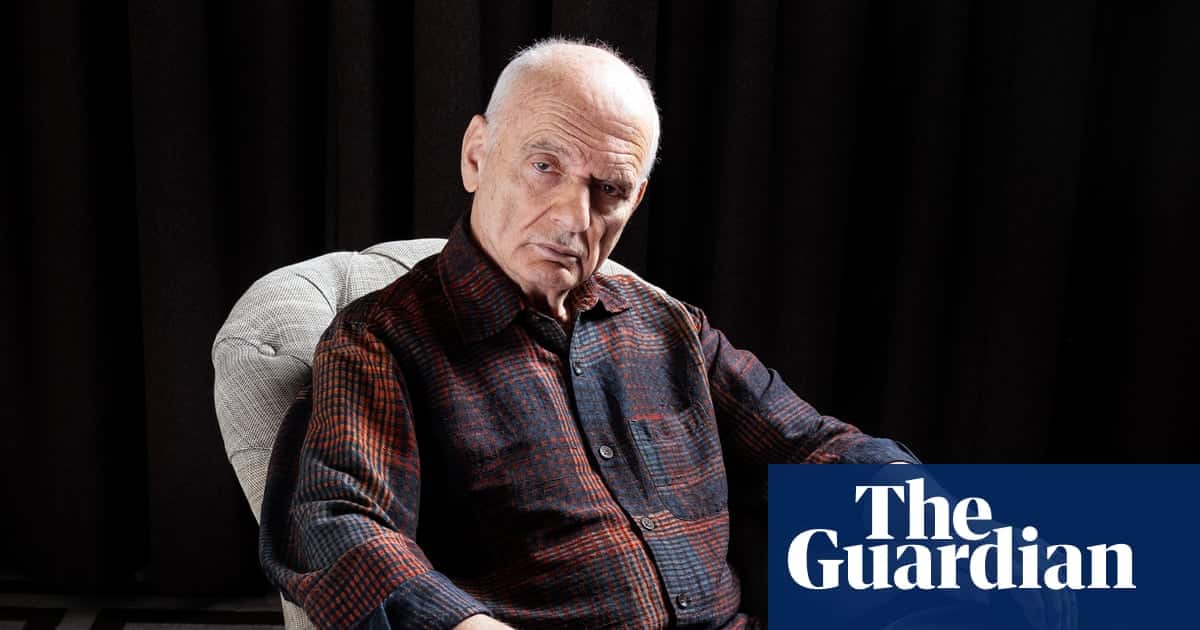
Chase is now 80, and the fearsomeness of the old days has given way to something bordering on avuncular. Famously, the premise of The Sopranos – a mob boss goes to therapy – was based on Chase’s own difficult relationship with his mother. I wonder if the ensuing decades had made him reflect more on his depiction of that relationship.
“I’ve thought about the fact that some day someone would ask, ‘Don’t you have any guilty feelings about portraying your mother that way?’” he admits. However, “I portrayed her as she was. I picture people saying, ‘Well, your mother didn’t plot to have you killed,’ but in 1967 at the height of the Vietnam war, my mother said to me, ‘I’d rather see you dead than avoid the draft.’”
How did you sit with something like that? “Not well,” he chuckles. “I had to create a whole TV series to get over it.”
Another potentially difficult relationship was the one he had with James Gandolfini, who played Tony Soprano. While they butted heads, with Gandolfini going as far as calling him Satan, it was Chase who delivered Gandolfini’s eulogy when he died, aged 51, in 2013. In recent years it was revealed that Gandolfini would often go missing from set for days at a time, apparently because he struggled with the darkness of the character. I suggest to Chase that this must have been stressful.
“Well, fortunately, I wasn’t the one who dealt with him going missing,” he replies. “That was Ilene Landress, our line manager. She was the one who found out where he was and did everything that needed to be done.”
I start to move on, but Chase has more to say. “I mean, he asked to meet me a couple of times, once on the banks of the Hudson River when he didn’t want to go to work, and he was so unhappy. This happened three or four times, and we talked and talked and talked, but I was never the one who had to find out where he was.”
There is another pause. I start asking the next question, but Chase still doesn’t feel as if he’s got the right answer out. “Can I just say one more thing?” he asks. “He never refused to do anything. He never said, ‘I’m gonna go wait in my trailer, and when you’re ready to shoot it the way I want it, come get me.’ That never happened.”
He makes a comparison, eager to show that Gandolfini’s disruptions were relatively minor. “Now, when I went on to Northern Exposure, there were two trailers in the parking lot. The first assistant director was out there with a long tape measure, measuring the distance from one trailer to the front door and then the other trailer to the front door, because neither one of the two stars wanted to have a longer walk than the other. Now that wasn’t a happy set.”
It has been 19 years since The Sopranos ended, and in that time Chase hasn’t written a single line of television, his output confined to the movies Not Fade Away and The Many Saints of Newark. But that isn’t to say he hasn’t been trying. A decade ago it was reported that Chase would be making a limited series about the early days of cinema, entitled A Ribbon of Dreams. There has been no news about the project for years. Is it dead?
- Must-Watch TV: The Most Intense Episodes of All Time Unveiled!
- E.A. Hanks Reveals Harrowing Childhood With Abusive Mother, Iconic Father
- Heartbreak Fuels Passion: Rising R&B Star Leon Thomas Talks Defiance, D’Angelo Influence, and His Doggie Persona
- Unpacking Benny Hill’s Humor: Why It Had Millions Rolling With Laughter!
- KPopped! Exclusive Review: Apple TV’s Star-Studded Singing Show Unveiled

Fatima Clarke is a seasoned health reporter who bridges medical science with human stories. She writes with compassion, precision, and a drive to inform.