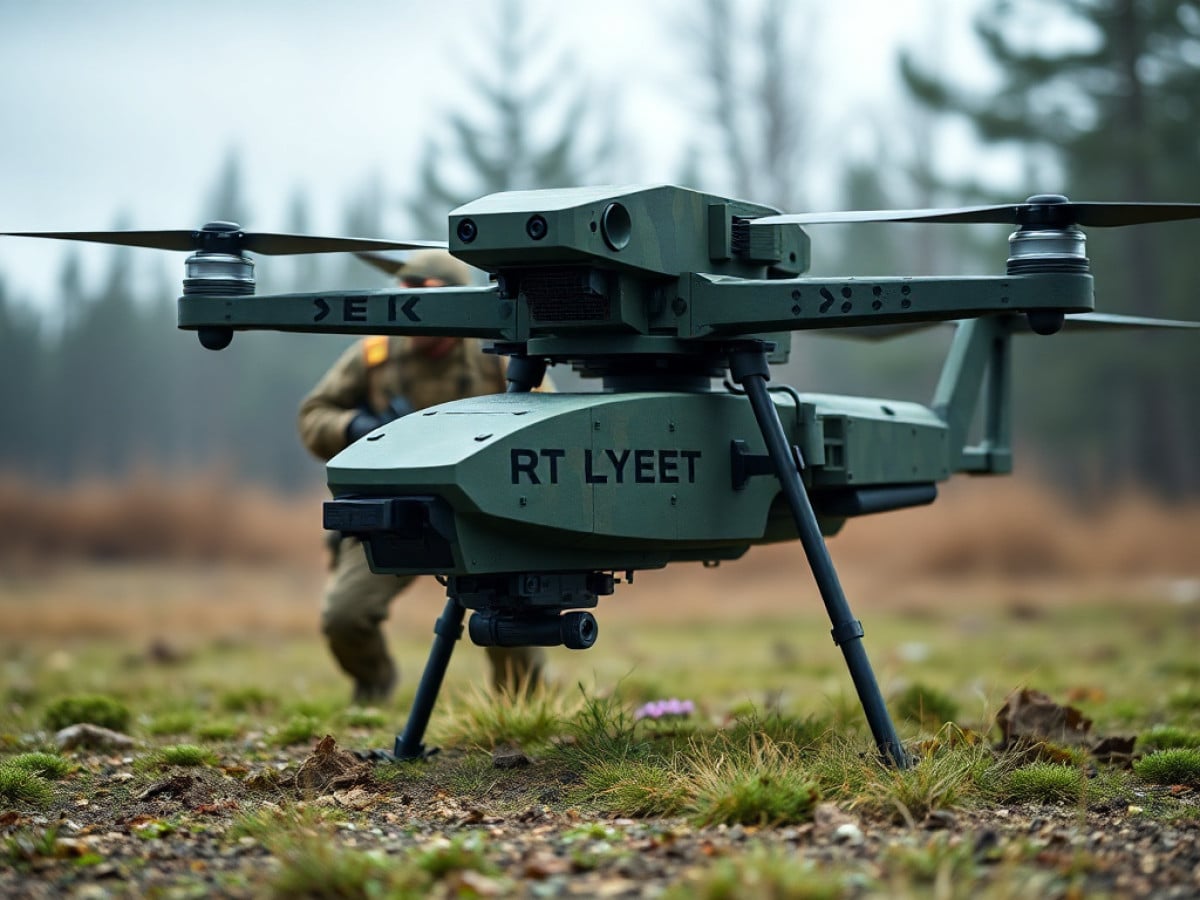
Ukraine is offering access to its extensive real-world combat data to international allies and defense manufacturers to enhance the training of artificial intelligence for autonomous drone operations. This unique initiative, as described by Kyiv, is the first of its kind globally.
New Collaborative Framework Initiated
This week, Ukrainian officials passed a resolution to establish a new collaborative framework involving the government, local defense industries, and international partners, according to a statement from the Ministry of Defense released on Thursday.
The Advent of Autonomous Warfare
“The future of warfare is in autonomous systems,” stated Ukrainian Defense Minister Mykhailo Fedorov in the announcement. He emphasized the goal of advancing the autonomy of drones and other military platforms to enhance target detection, battlefield analysis, and support for real-time decision-making.
This resolution is particularly timely, as more than a dozen countries are currently entangled in a conflict that began in Iran last month. Concurrently, there is a global surge in investments in autonomous defense technologies.
Benefits for Defense Companies and Allied Nations
For entities developing autonomous systems and target recognition technologies, the availability of authentic, real-world data significantly shortens development timelines and enhances the effectiveness of these models, something that cannot be replicated in lab settings. Allied nations stand to benefit by quickly advancing their AI-enabled defense mechanisms without the need to develop their own combat data from the ground up.
Fedorov described the arrangement as mutually beneficial: partner nations gain superior training data, while Ukraine accelerates the development of its autonomous defense capabilities.
Ukraine’s Specialized AI Platform
At the heart of this initiative is a specialized AI platform housed within the Ukrainian Ministry of Defense’s Center for Innovation and Development of Defense Technologies. This platform allows partners to train AI models using real battlefield data without giving them access to other sensitive military databases integrated into Ukraine’s digital command system, DELTA. This setup provides a crucial layer of security.
Deputy Defense Minister Lt. Col. Yuriy Myronenko, in an interview with Military Times, stated that the platform’s security protocols are aligned with the American National Institute of Standards and Technology and undergo annual audits by major consulting firms.
The Power of Data in Modern Warfare
Ukraine’s datasets are already integral to the DELTA battlefield management system, which employs neural networks to identify ground and aerial targets in real-time. Such data is vital in a conflict increasingly characterized by its scale, speed, and integration of AI technologies.
“You can only control with data,” Myronenko explained, emphasizing the immense challenge of managing numerous drones, personnel, front lines, and resources swiftly and effectively.
The platform allows partners to access large volumes of labeled photographic and video data collected during active combat, drawing from datasets that are continuously updated as the conflict with Russia progresses into its fifth year. Ukraine’s data is arguably the most operationally rich globally, offering an unprecedented volume of labeled, real-world combat imagery from an ongoing, high-intensity conventional war.
Comprehensive Data Collection and Utilization
“We have constructed our system so that the data is directly supplied by those who are in combat,” Myronenko added. This data is then aggregated, centralized, and made available for further analysis and application.
Ukraine currently possesses millions of annotated frames and databases accumulated across tens of thousands of missions, featuring various weapons, tactical formations, and targeting techniques. “We have more than 5 million drones,” the deputy minister noted, highlighting the logistical complexities of coordinating such extensive operations.
Under the new framework, partners can conduct joint analytics, train their AI models, and co-develop new technological solutions using detailed, real-time operational data.
Addressing the Central Challenge of Military AI
The primary challenge in military AI development is not algorithm creation but testing these algorithms against real operational conditions to validate their effectiveness in enhancing combat decision-making. Ukraine’s new data-sharing initiative addresses this critical need, and international defense firms and governments have already expressed interest in accessing this resource.
As nations globally navigate the integration of AI into their defense strategies swiftly and securely, Ukraine’s initiative provides a crucial model. The U.S. is also refining its approach to military AI integration, with recent directives calling for comprehensive AI adoption across its military forces.
As Deputy Minister Myronenko predicted, the battle over AI use in military operations and strategy is just beginning, with technology increasingly becoming the focal point of modern warfare. “The greatest risk,” he concluded, “is the absence of information.”
Similar Posts:
- Ukraine’s War Evolution: From Infantry Battles to High-Tech Warfare
- Ukraine’s ‘TrophyLab’ Unveiled: Sharing Captured Russian Weapons with Allies
- CIA Director Reveals: Russian Troops Last Only 20-30 Minutes in Ukraine Frontline Combat
- Poland Enters Pentagon’s Counter-Drone Market: US Deployment Unexpectedly Cancelled
- Interceptor Drones Revolutionize Air-Defense: Ukraine Gains Economic Edge

Jamal Peterson reports on defense, aerospace, and tech policy. With a military background and a strategic mind, he dissects complex subjects with clarity, offering readers sharp, reliable insights.