Delays and Challenges in the U.S. Navy’s Hypersonic Missile Program
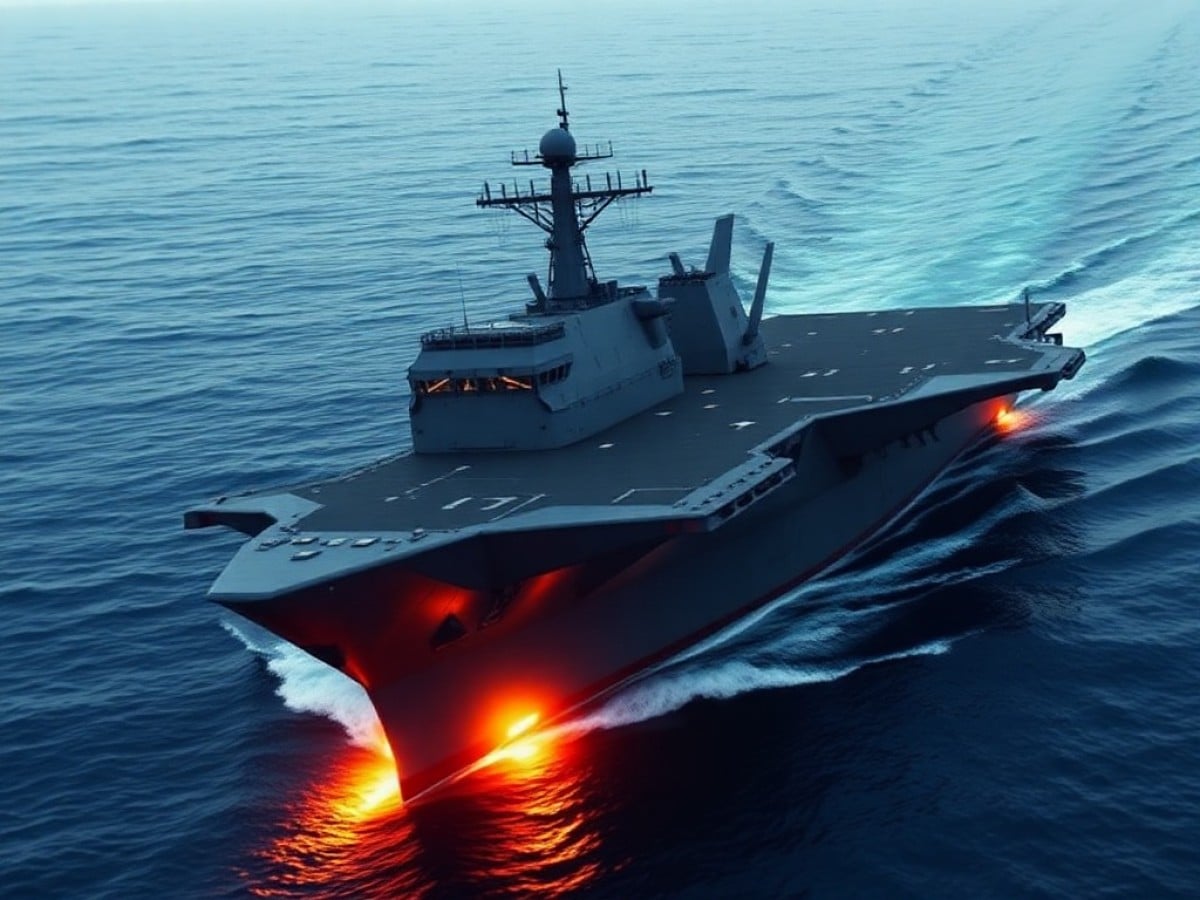
The initiative by the U.S. Navy to equip its Zumwalt-class destroyers with hypersonic missiles has encountered significant delays, now running two years behind the original schedule, as per findings by federal auditors.
The setbacks in the Conventional Prompt Strike (CPS) missile program, a joint venture between the Navy and the Army, have been compounded by a lack of coordination between the two services. This has resulted in the postponement of missile flight tests from 2025 to 2027.
Government Accountability Office (GAO) has highlighted multiple issues in its report, noting the Navy’s struggle with the development, production, and deployment of the CPS missiles aboard the DDG-1000 Zumwalt-class destroyers. Problems such as escalating costs, schedule delays, reliability of the destroyers, and production issues with the CPS missiles have been specifically pointed out.
Originally planned to be a class of 32 ships, the Zumwalt program was drastically reduced to just three ships due to rising costs and concerns over capabilities. In 2022, the Navy opted to arm these ships with the CPS hypersonic missiles, which feature a two-stage booster and a high-altitude glider capable of striking targets thousands of miles away in less than half an hour.
While two of the Zumwalt destroyers have been delivered, the third is expected to join the fleet by 2028. Besides the Zumwalts, the CPS missiles are also slated to be equipped on Virginia-class attack submarines, whereas the Army will deploy a land-based variant known as the Long-Range Hypersonic Weapon (LRHW).
However, the integration of hypersonic missiles and vertical launch systems into the destroyers has introduced additional costs and further delays. For instance, unexpected increases in cabling work were needed during the installation of missile launch tubes, as contractors had to cut and remove more wiring than initially planned.
Moreover, the GAO report criticizes the unique systems aboard the DDG-1000 class ships, like their radar and combat systems, which are not only costly but also challenging to maintain. Issues with unreliable power systems and difficulties in sourcing spare parts further plague the Zumwalts.
Although there have been successful test launches from land-based facilities, the CPS missile itself has encountered numerous problems. The financial burden has also grown, with costs escalating from an estimated $31 billion for 262 missiles in 2020, to now $41 billion for 224 missiles.
Lockheed Martin, the prime contractor for the missile body, is facing serious production challenges. These include issues with heat-resistant coatings, the use of substandard parts, and a production capacity that falls short of the required rates, currently able to produce only six or seven missiles annually instead of the desired twelve.
The complexity of constructing the CPS missile has also proven too challenging for some workers. According to the GAO report, the instructions provided to the workforce, primarily composed of recent high school and vocational school graduates, are too technical and difficult to follow as they are written more like engineering specs than workable guidelines.
Interestingly, while the Navy handles the missile body production, the Army has engaged its own consultants to explore ways to ramp up production, illustrating a stark lack of coordination. The GAO has pointed out that without a unified development and procurement strategy, both services risk further delays and inefficient spending of government funds.
Ultimately, the report emphasizes that neither the Navy nor the Army can afford to operate in isolation given the interconnected nature of their missile procurement and development efforts.
Similar Posts:
- $275 Billion Price Tag for Trump-Class Battleships: CBO Reveals Staggering Costs
- Navy’s Massive $76.6 Billion Deal: Boosting Virginia and Columbia-class Submarines
- Navy Receives Last Independence-Class Warship: A New Era of Combat Readiness
- US Navy Launches Trident Missiles: Demonstrates Nuclear-Capable Firepower in Test
- Italy’s $4.2 Billion Naval Boost: State Firms to Construct Two Advanced Destroyers

Jamal Peterson reports on defense, aerospace, and tech policy. With a military background and a strategic mind, he dissects complex subjects with clarity, offering readers sharp, reliable insights.