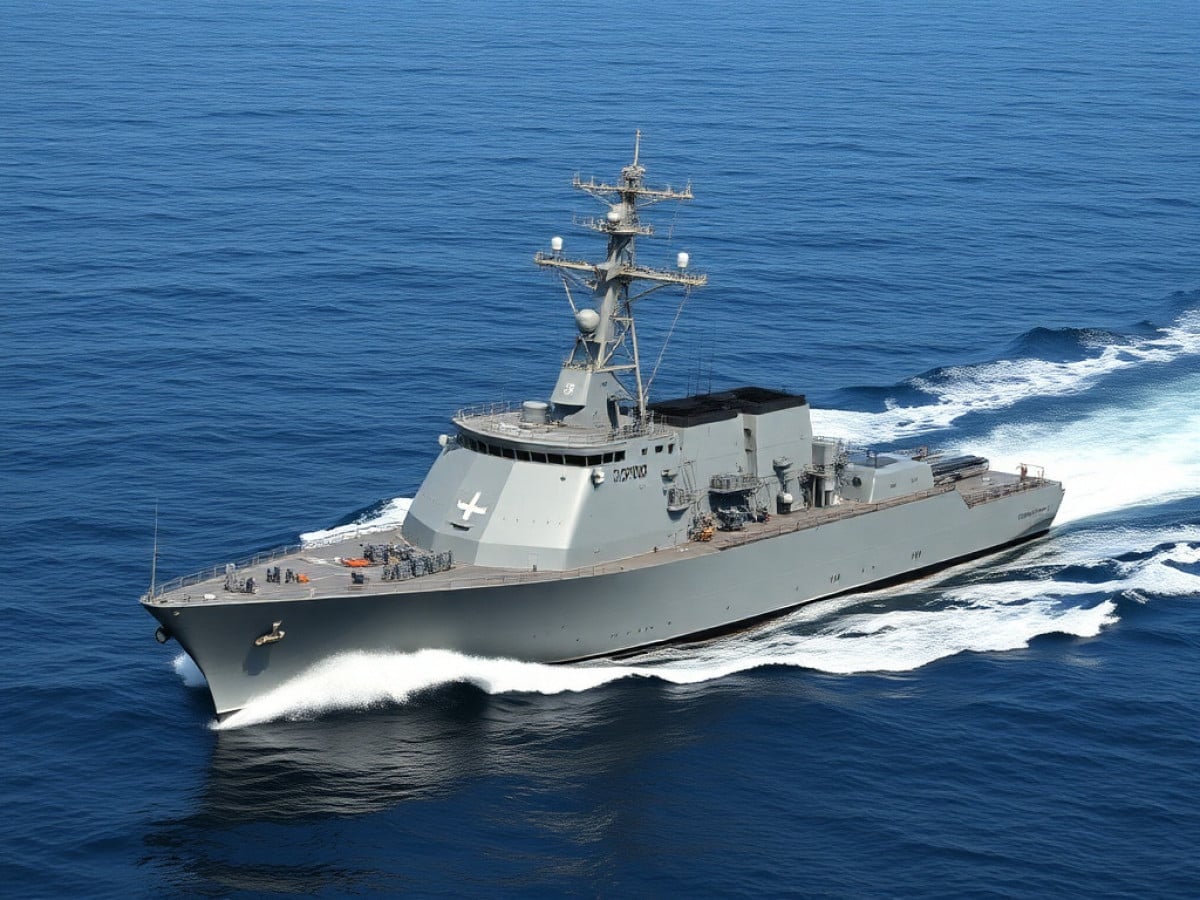
The United States Navy is actively developing a new category of smaller, more flexible warships, which it considers to be an essential part of its future naval force.
The inaugural ship of the upcoming FF(X) series, inspired by the design of the U.S. Coast Guard’s Legend-class National Security Cutter, is slated for launch in 2028. Navy Secretary John Phelan announced this on December 19, highlighting its role as a swift counterpart to the larger vessels in the Navy’s arsenal.
“To achieve rapid production and deployment, I have ordered the procurement of a new frigate class based on [the Huntington Ingalls Industries design],” Phelan stated. “This is a tested, domestically-produced ship that has consistently safeguarded American interests both domestically and internationally. This initiative has received approval from President Trump and the secretary of war as a part of the Golden Fleet initiative.”
The Navy is promoting the FF(X) as a versatile ship capable of executing a variety of missions including surface combat, modular payload delivery, and operations involving unmanned systems.
Recent naval deployments in regions such as the Red Sea and the Caribbean have underscored the need for these more adaptable frigates, according to Chief of Naval Operations Adm. Daryl Caudle.
“Our inventory of small surface combatants is only a third of our requirements,” Caudle explained. “We urgently need more robust blue-water small combatants to bridge this gap and allow our [guided missile destroyers] to concentrate on more critical high-end battles.”
Navy leaders also believe that by using the pre-existing Legend-class design, they can mitigate the risks of cost overruns and delays that have troubled past shipbuilding efforts.
A March 2025 report from the Government Accountability Office highlighted two decades of subpar performance in U.S. shipyards, characterized by chronic delays, with ships being delivered up to three years late and exhibiting operational defects upon arrival.
At that time, GAO Director Shelby S. Oakley told the Senate Armed Services Committee that unrealistic pricing and scheduling expectations were major factors contributing to these delays in shipbuilding.
Oakley described the shipbuilding industry as being in a continuous state of emergency management.
However, Phelan and Caudle are optimistic about the future with the FF(X) class.
“This frigate design is proven effective; it integrates well with the fleet, and most importantly, we possess the knowledge to construct it effectively now,” Caudle remarked.
Phelan added that acquisition of the new class will involve a primary shipyard with competitive follow-on strategies intended for multi-yard production.
Phelan emphasized the goal of shipyard performance being measured solely on their ability to deliver combat capabilities to the naval fleet as swiftly as possible.
Caudle shared that the strategy will mirror the approach taken with Arleigh Burke-class destroyers, focusing on a design that can be incrementally upgraded to address emerging threats and advancements in technology.
Similar Posts:
- Navy Set to Launch Construction of Two ‘Trump Class’ Battleships: Find Out More!
- US Navy Cancels Constellation Frigate Program: Two Half-Built Ships Scrapped!
- Navy Receives Last Independence-Class Warship: A New Era of Combat Readiness
- Australia Shakes Up Warship Program: Massive Frigate Purchase from Japan
- $275 Billion Price Tag for Trump-Class Battleships: CBO Reveals Staggering Costs

Jamal Peterson reports on defense, aerospace, and tech policy. With a military background and a strategic mind, he dissects complex subjects with clarity, offering readers sharp, reliable insights.