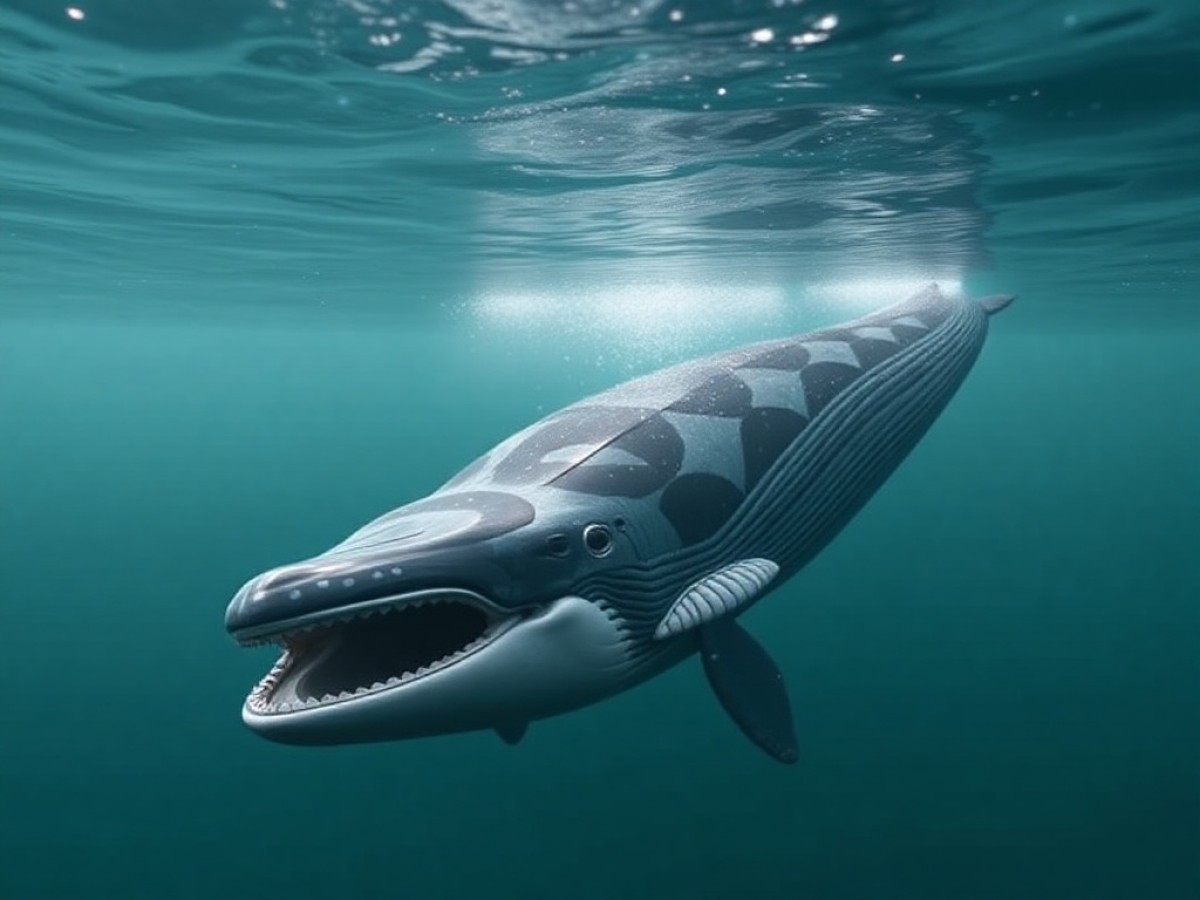
Scientific Advancements in Understanding Whale Vocalizations
Researchers have recently achieved significant progress in deciphering the sounds made by whales. This development opens new avenues for understanding these majestic marine creatures and their communication methods.
Exploring the Depths of Whale Communication
Whales are known for their complex vocalizations, which serve various purposes ranging from navigation to social interaction within their pods. The recent study focused on analyzing these sounds using advanced technology, which has provided deeper insights into the acoustic patterns and their meanings.
The researchers utilized a combination of hydrophones—underwater microphones—and sophisticated algorithms to capture and analyze the whale sounds over an extended period. This method allowed them to gather a large and diverse set of vocalizations, offering a broader scope for analysis compared to previous studies.
What the Findings Reveal
The findings from this study shed light on how whales use specific sounds in different scenarios. For instance, certain low-frequency sounds are used for long-distance communication, presumably because these frequencies travel farther underwater. On the other hand, higher-pitched sounds seem to be employed during social interactions among nearby whales.
Moreover, the study indicates that there might be a greater variety of sounds used by whales than previously documented. This suggests that whale communication could be more complex and nuanced, possibly involving a language-like structure with syntax and grammar.
Implications for Conservation and Further Research
Understanding whale sounds not only fascinates from a scientific standpoint but also has crucial implications for conservation efforts. By deciphering the contexts in which whales communicate, researchers can better predict their behaviors and migration patterns, which in turn can inform protection measures against threats like ship strikes and fishing gear entanglement.
Furthermore, these insights could lead to quieter marine environments. As human-induced noise in the oceans increases, it interferes with the acoustic landscape whales rely on. With a better understanding of whale communication, efforts can be made to minimize noise pollution in critical habitats.
The breakthrough in studying whale sounds is poised to revolutionize our understanding of these enigmatic giants and underscores the importance of continued research and conservation efforts in our oceans.
Similar Posts:
- Mystery of the Ocean Unraveled: Listen to the Oldest Known Whale Recording!
- Canada Acts to Save Endangered North Atlantic Right Whales: New Protections Against Ship Threats
- Ancient Whale Uncovered: Pokémon-Faced Creature with a Predator’s Bite!
- Ocean Regulator Under Fire: U.S. Right Whale Protection Rules Spark Outrage!
- Beluga Whales Heal Visitors: Playful Creatures in a Warming Hudson Bay

Morgan Ellis is an investigative journalist passionate about environmental policy and corporate accountability. With a background in climate science and years of reporting for nonprofit media, Morgan brings depth, clarity, and purpose to every story.