France Engages in Discussions for a Temporary Tank Solution Amid Delays with German Collaboration
PARIS — In a recent address to legislators, Catherine Vautrin, France’s Minister for the Armed Forces, revealed ongoing discussions with tank manufacturers to develop an interim solution for the nation’s dated Leclerc battle tanks. The move comes as the collaborative effort with Germany to create a new-generation battle tank faces significant postponements.
Vautrin informed the lawmakers during a Wednesday session that the French-German initiative aimed at producing a successor to the Leclerc tank, known as the Main Combat Ground System (MGCS), is approximately ten years behind its original schedule. In conjunction with this update, she outlined the government’s proposal to increase the defense budget by €36 billion ($42 billion) for the period between 2026 and 2030.
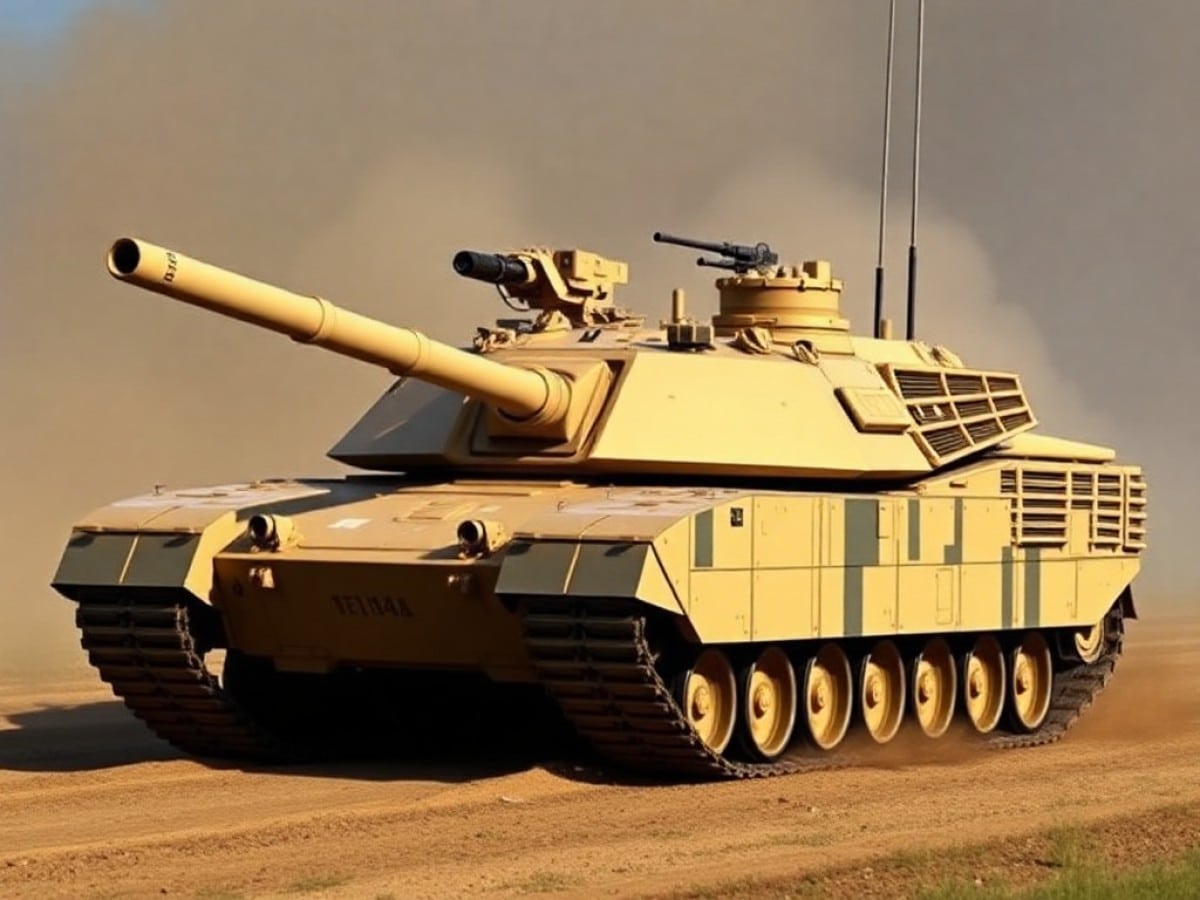
The Minister attributed the MGCS project’s delay to Germany’s decision to initiate a separate program for their new Leopard 3 tanks. This development has necessitated France to seek an interim solution to bridge the gap until the MGCS is ready, which is not anticipated until the early 2040s, while the Leclerc tanks are expected to be operational only until 2038.
Vautrin emphasized that this interim solution should serve as a foundational element for the upcoming MGCS and not merely as a continuation of the current generation. She highlighted that the new system would focus on advanced connectivity features, marking a significant shift towards modernized warfare technologies.
According to the minister, the temporary tank might feature a chassis from KNDS Germany and a turret from KNDS France, ensuring that the turret remains of French design. She noted that discussions between France’s Directorate General for Armament and various manufacturers have just begun.
Additional Defense Budget and Ongoing Military Projects
The allocation for defense spending is part of a broader amendment to France’s military planning law, which had previously set aside €400 billion for the period of 2024 to 2030.
In another development concerning Franco-German-Spanish cooperation, the Future Combat Air System (FCAS) project has stalled due to disagreements between Dassault Aviation and Airbus about leadership roles and division of labor. Vautrin reported that mediation is currently underway with two “qualified, external individuals” to resolve issues related to intellectual property, work distribution, and airworthiness certifications, with conclusions expected by the end of April.
Eric Trappier, CEO of Dassault Aviation, expressed at a recent industry conference that discussions with Airbus aim to salvage the project, stressing his preference for clear leadership rather than co-management. Despite initial plans, the inclusion of Spain in the FCAS has given Airbus a larger stake, which has led to disputes over the agreed leadership role of Dassault Aviation.
Regarding the Eurodrone initiative, another collaborative effort led by Airbus, Vautrin conveyed to lawmakers that the project is not progressing satisfactorily and is no longer part of the updated budget. Consequently, plans to acquire Safran’s Patroller MALE drone have also been canceled.
On a positive note, France plans to expedite the procurement of the SAMP/T NG air-defense systems, aiming for ten units by 2030, up from the initially planned eight, though the goal remains to have 12 systems by 2035. Moreover, the government maintains its target of 225 Rafale jets by 2035, split between the Air Force and the Navy, focusing now on acquiring jets configured to the future F5 standard capable of deploying the ASN4G hypersonic nuclear missile.
The revised budget also includes an investment of €3.5 billion to enhance the combat aviation framework through innovations in long-range missiles, escort drones, and enhanced connectivity to keep the Rafale competitive in the international market. The F5 standard is described by Vautrin as a significant mid-life upgrade necessary to preserve the aircraft’s competitive edge.
Additionally, the updated military spending plan projects an increase to 30 multiple launch rocket systems by 2030, compared to the prior plan of 16 systems. Furthermore, France is set to test two domestically developed rocket-artillery systems this month, which will determine if a “sovereign” solution is feasible or if an off-the-shelf system needs to be considered.
The ministry is also initiating work on a conventional ballistic long-range strike capability with an additional €1 billion funding. For this year, the Armed Forces Ministry plans to order 10,000 combat drones, 43 Proteus anti-drone cannons, and four SAMP/T NG air-defense systems, with a further €4 billion allocated for air-defense systems aimed at countering drones, expecting deliveries to commence in 2026.
In conclusion, Vautrin praised French arms manufacturers for ramping up production, noting MBDA’s plans to quadruple the production of Mistral 3 air-defense missiles and increase the Scalp cruise missile production to meet future demands.
Similar Posts:
- France Aims for Key Deal on Cutting-Edge Fighter Jet: Progress Toward ‘Mutually Acceptable’ Accord
- Crisis in French-German Fighter Jet Program: Dassault Points Finger at Airbus!
- France Urges FCAS Partners to Redefine Roles: Future of Fighter Jet Project at Stake!
- Germany and France Abandon Joint Fighter Jet Initiative: What’s Behind the Shocking Decision?
- Sweden’s Frigate Decision Looms: France Eyes 2030 for Naval Upgrade

Jamal Peterson reports on defense, aerospace, and tech policy. With a military background and a strategic mind, he dissects complex subjects with clarity, offering readers sharp, reliable insights.