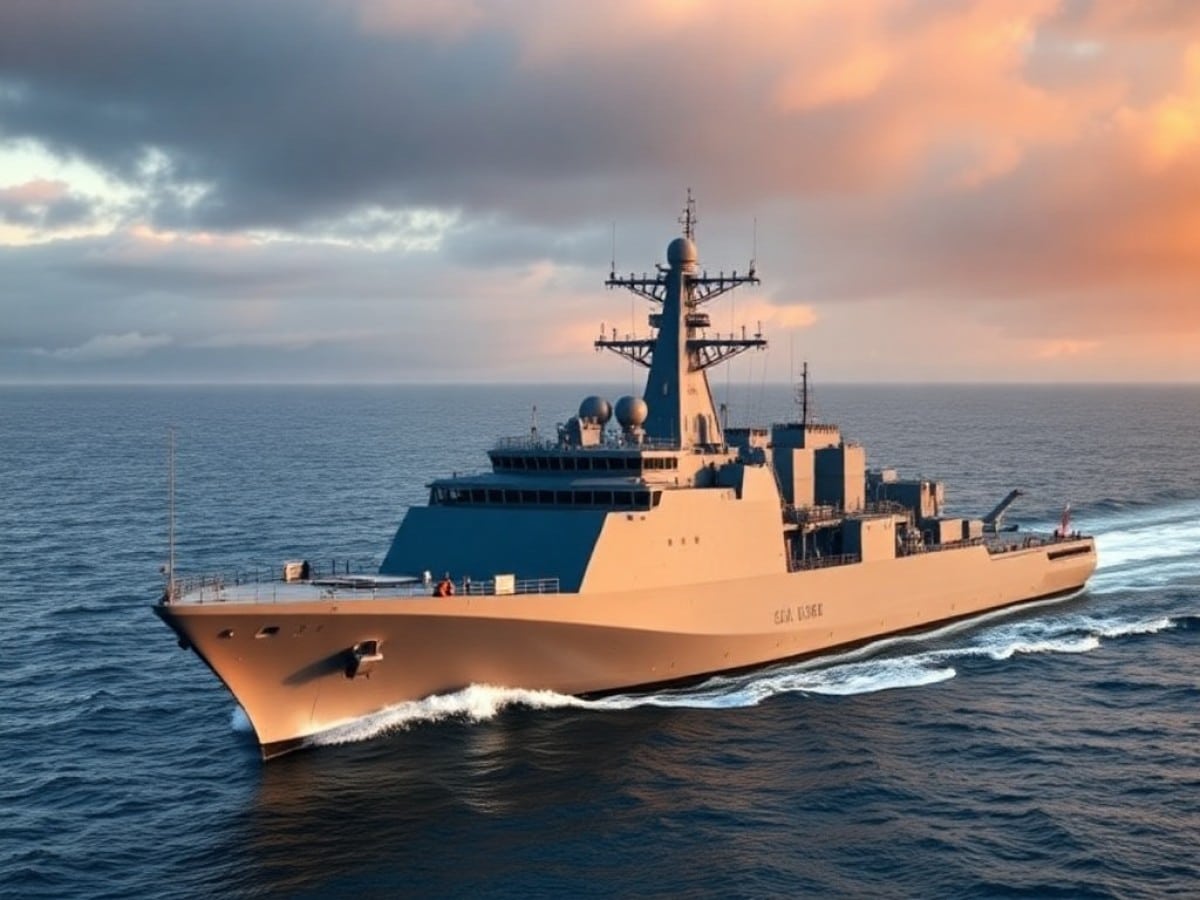
PARIS — The Dutch regional broadcaster Omroep Gelderland managed to monitor the movements of the Royal Netherlands Navy’s air-defense frigate, the Evertsen, by successfully sending a Bluetooth tracking device to the ship through military postal services. This frigate is currently part of the naval escort for France’s Charles de Gaulle aircraft carrier, which is deployed in the Mediterranean Sea.
The tracking device was eventually found during a routine mail sorting onboard the frigate, but this was only after the ship’s location had been tracked for a full day, as reported by Omroep Gelderland on its website last Thursday. In response to this security breach, the Dutch Ministry of Defence has started implementing new security measures, the broadcaster noted.
This incident of tracking follows a report by Le Monde in March, which detailed how the publication was able to track a French officer during a 7-kilometer jog on the deck of the Charles de Gaulle, using data from the officer’s fitness watch connected to the Strava app while the carrier was at sea.
Security Concerns Raised
Rowin Jansen, an assistant professor of national security law at Radboud University in Nijmegen, emphasized the importance of being able to detect and intercept such tracking devices. He explained to Omroep Gelderland, “Commercial satellite images are intentionally delayed before being released for good reason. Allowing terrorists the ability to track a naval ship’s real-time location via a simple mailed package increases the risk of missile attacks.”
Omroep Gelderland detailed how they sent the Bluetooth tracker, a small device typically used to locate items like keys, to the frigate in an envelope via the military mail system, following the Ministry of Defence’s online guidelines for sending mail to military personnel.
Despite the ministry’s protocol to scan packages for prohibited or dangerous items, it was revealed through videos online that envelopes do not undergo such scanning. Consequently, the broadcaster cleverly hid the tracker inside a postcard, which went undetected and was delivered without issue.
Reevaluation of Security Protocols Suggested
Retired Lt. Gen. Mart de Kruif, mentioned by the broadcaster, stressed the need for reconsideration of current security protocols in potential large-scale conflicts. He stated, “Everyone must consider what they can do to ensure the safety of our servicemen and women. We should not just rely on established rules but also on what is necessary. We are still somewhat naive, and this mindset needs to change.”
Omroep Gelderland tracked the path of the Bluetooth tracker from the Dutch naval base in Den Helder to Eindhoven Airport, then to the port of Heraklion in Crete, where webcam footage confirmed the Evertsen docked at the quay.
After the frigate left the port on March 27, the broadcaster was able to monitor the ship traveling west along the coast of Crete before it turned eastward. The tracker eventually went offline permanently 24 hours later near Cyprus.
In reaction to this incident, the Ministry of Defence has adjusted its policies, including prohibiting the mailing of greeting cards containing batteries to the Evertsen, and is reviewing further guidelines for military postal services, a spokesperson informed Omroep Gelderland.
The tracker was located during mail sorting after the frigate had set sail. While the ability to track the ship at sea existed, the Ministry of Defence assured that this did not pose an operational risk.
Defence Minister Dilan Yeşilgöz reported the incident to parliament on Thursday evening, as per Omroep Gelderland’s coverage.
Similar Posts:
- Netherlands Considers Local Manufacturing of Raytheon’s Amraam Missile: A Strategic Shift?
- Romania Enhances Black Sea Fleet: Acquires Advanced Turkish-Made Patrol Ship
- France Completes Fleet Plan: Orders Final FDI Frigate from Naval Group!
- Netherlands Crafts Mobile Anti-Drone System: Plugging Critical Defense Gaps!
- Netherlands Buys Skyranger Anti-Drone Cannons for Less Than €1 Billion: Enhancing Defense Capabilities

Jamal Peterson reports on defense, aerospace, and tech policy. With a military background and a strategic mind, he dissects complex subjects with clarity, offering readers sharp, reliable insights.