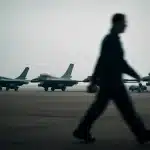
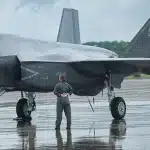
CHRISTCHURCH, New Zealand — A brief yet intense conflict erupted between India and Pakistan, marked by an extensive aerial engagement during the night of May 6-7.
A notable element of this clash was the competition between contemporary Chinese and Western military technologies.
Pakistan’s arsenal is significantly composed of Chinese-designed or produced weapons, while India utilizes a mix of Russian and Western military gear.
According to Brendan Mulvaney, director of the China Aerospace Studies Institute affiliated with the U.S. Air Force, amidst the chaos of battle, with drones and aircraft deploying long-range missiles across the border, obtaining reliable information was challenging.
Mulvaney noted that the conflict, dubbed Operation Sindoor by India, “undeniably demonstrates that Chinese-produced equipment, including their exported models, are sophisticated and potent, posing a significant challenge in future conflicts beyond China’s own borders.”
This confrontation served as a practical field test for the military hardware of both sides under real combat conditions. The performance and outcomes will be closely analyzed not only by India and Pakistan but also by their equipment suppliers, notably China and France.
The hostilities concluded with a ceasefire on May 10.
China remains the primary source of military hardware for Pakistan, supplying over half of its approximately 400 fighter jets, predominantly the JF-17 and also the J-10C.
Data from the Stockholm International Peace Research Institute (SIPRI) shows that since 2015, China has exported arms worth $8.2 billion to Pakistan. Between 2020 and 2024, China ranked as the fourth-largest arms exporter globally, with Pakistan being its largest client, purchasing 63% of its exported weapons during this period.
“It appears a J-10C equipped with a PL-15E missile has downed a Rafale,” stated Mulvaney, referring to the French fighter jet operated by India. He also mentioned reports of additional aircraft losses on both sides, though these claims are difficult to confirm.
Both countries have been reluctant to confirm their military losses.
Images on social media show debris from Chinese-made PL-15E missiles found in India. Mulvaney described the missile as “advanced, effective, and comparable to any weaponry that India could deploy, with a substantial range even in its export version.”
He added that the performance of the Chinese aircraft and weapons owned by Pakistan was as expected and aligned with prior assessments, although no further comparative analysis was currently available.
India operated three different types of fighter jets and has fewer support systems like early-warning aircraft, which may give Pakistan an edge in such rapid engagements.
In addition to fighter jets, both nations deployed drones and cruise missiles targeting each other’s infrastructure, bringing various air-defense systems into action.
Pakistan’s air defense relies on systems like the Chinese-built long-range HQ-9, medium-range LY-80 (HQ-16), and short-range FM-90 (HQ-7) missile systems. Conversely, India utilizes Russian S-400 systems and indigenous Akash missiles.
China quickly highlighted the effectiveness of its military equipment. For instance, an op-ed in the China Academy, which calls itself an “intellectual content network aimed at global audiences to understand China,” lavishly praised Beijing’s technological capabilities.
Hu Xijin, the author of the piece, claimed, “This could be seen as one of the most persuasive real-world demonstrations of Chinese weaponry on an international stage – a pivotal moment for China’s defense industry.”
While such statements might be seen as exaggerated, Mulvaney pointed out that “there’s no reason to believe this event won’t enhance China’s credibility, potentially boosting its global arms sales.”
Chietigj Bajpaee, a senior research fellow for South Asia at Chatham House, cautioned that China’s position is likely to be far from neutral going forward, especially if tensions between India and Pakistan escalate further, potentially to a wider conventional or even nuclear conflict.
Similar Posts:
- Bangladesh Air Force to Spend Billions on Multirole Fighters: Major Military Upgrade Approved!
- India Advances in Defense: Homegrown Long-Range Air Defense System Nears Completion
- China Outraged by US Army’s Typhon Missile Deployment in Japan: Tensions Escalate
- India Bolsters Military: Acquires Advanced Air Defense Systems and Drones for Modern Warfare
- China Expands Military Might: New Launch Pads Built Near Nuclear Missile Silos

Jamal Peterson reports on defense, aerospace, and tech policy. With a military background and a strategic mind, he dissects complex subjects with clarity, offering readers sharp, reliable insights.