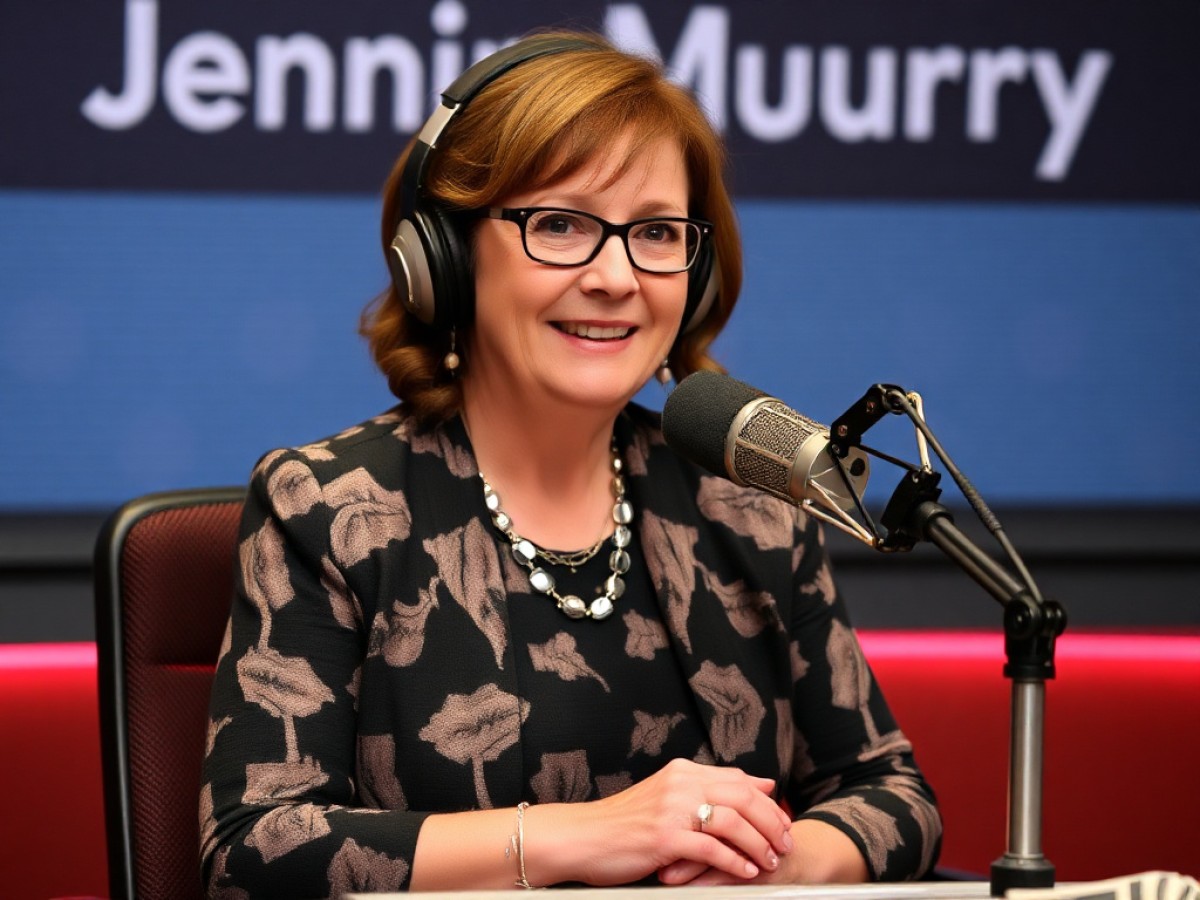
Jenni Murray’s Early Career and Transition to Woman’s Hour
Jenni Murray, before becoming the iconic host of Woman’s Hour in 1987, was already a seasoned broadcaster with the BBC. Her journey began in 1973 in Bristol, and she quickly established herself as a competent TV reporter and presenter for South Today. Despite her robust news background, her time on the Today programme in the 1980s revealed a starkly sexist environment where male presenters handled political matters and women were left with softer stories. This setting proved too restrictive for Murray’s capabilities.
Transforming Woman’s Hour
Under Jenni Murray’s stewardship, Woman’s Hour underwent a significant transformation, mirroring her own dynamic and versatile style. The show became a space where no topic was too heavy or too trivial. Murray adeptly managed discussions ranging from intense political debates to lighter conversations about gardening, and she fiercely advocated against domestic violence. Her approach was deeply personal yet never self-centered, maintaining a delicate balance that resonated with listeners.
The Voice That Captivated Many
Murray’s voice was often described with adjectives like “mellifluous” and “rounded,” which might suggest a polished, upper-class accent. However, this interpretation misses the mark. The BBC of her early career favored a Received Pronunciation accent, which Murray adopted not out of elitism but necessity. Despite her middle-class upbringing—her father a civil engineer and her mother a civil servant—her enunciation and warmth were genuine, filling households with her presence, especially when the program shifted to morning broadcasts in the early 1990s.
Memorable Interviews and Unflinching Questions
Jenni Murray’s interview prowess was evident in her encounters with figures like Margaret Thatcher and Hillary Clinton. After Thatcher left office, Murray probed into the sexism the former Prime Minister encountered, revealing incidents that left Thatcher speechless and shocked. Similarly, Murray’s conversation with Hillary Clinton delved into personal territories, discussing Bill Clinton’s infidelity in a way that brought out a more personal side of Hillary, discussing marriage as a bond of friendship beyond sexual relations.
Murray’s fearlessness was also apparent in her memorable interview with the formidable Bette Davis when she was 81, an experience Murray recalled with a mix of awe and nervousness years later.
Championing Feminism and Solidarity
Murray had a sharp eye for emerging feminist voices and demonstrated a strong sense of solidarity with women activists. A notable broadcast in 2013 featured newcomers like Caroline Criado-Perez, advocating for women’s representation on banknotes, and Laura Bates, discussing everyday sexism, alongside chef Allegra McEvedy, who humorously tackled food choices for hangovers from a feminist perspective. These discussions underscored Murray’s commitment to issues impacting women and her skill in amplifying voices that matter.
Personal Struggles and Audience Connection
In 2006, Murray faced a personal health battle with breast cancer, which she found tedious to discuss publicly yet felt compelled to share due to her close relationship with her audience. Her openness about undergoing a mastectomy illustrated her commitment to her listeners, with whom she had developed a deep mutual bond over the years.
Jenni Murray’s legacy as a broadcaster is marked by her ability to tackle a wide range of topics with insight and empathy, making her a beloved figure in British media.
Similar Posts:
- Top UK Podcasts of 2025 Unveiled: Discover the Must-Listen Hits This Year!
- Retirement Revolution: From Gig Work to Global Getaways
- Madrid’s PhotoEspaña 2025: A Visual Feast at Spain’s Premier Photography Festival
- Eco-Friendly Periods Surge: Why Women are Choosing Reusable Menstrual Products
- Rising Trend of ‘Tradwives’: Author Caro Claire Burke Explores Why Women are Choosing Traditional Roles

Fatima Clarke is a seasoned health reporter who bridges medical science with human stories. She writes with compassion, precision, and a drive to inform.