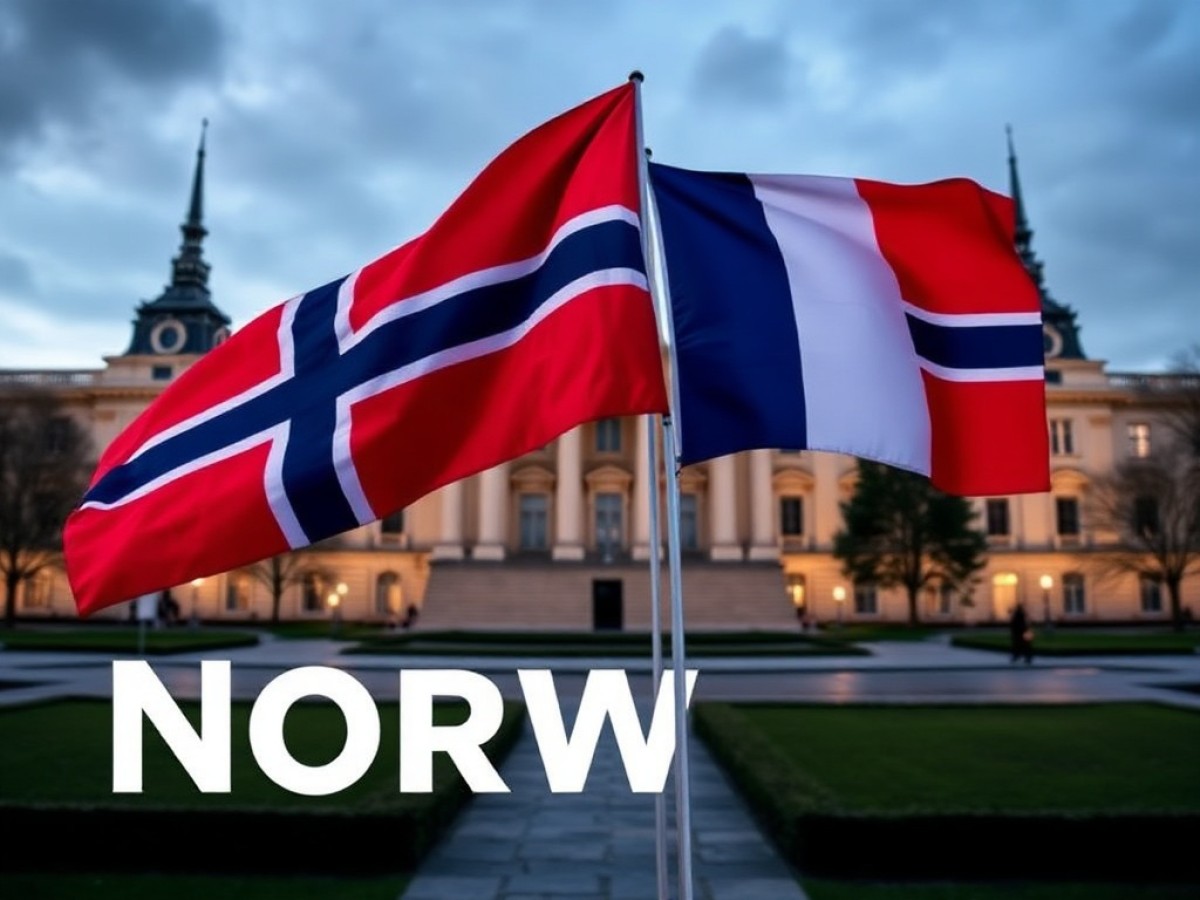
VIENNA — In a significant move towards enhancing its security posture against Russia, Norway has joined eight other European nations in aligning with France’s nuclear defense strategy, amid growing skepticism about the steadfastness of U.S. support.
This development was officially declared after Norwegian Prime Minister Jonas Gahr Stoere’s recent visit to Paris. The meeting also saw participation from representatives of other European nations that are part of France’s newly conceptualized strategy of “forward deterrence” — a concept that is still taking shape but marks a pivotal shift in the role of French nuclear capabilities.
Prime Minister Stoere clarified that Norway does not intend to house nuclear weapons during peacetime. However, the revised French policy, dramatically unveiled by French President Emmanuel Macron at a nuclear submarine base in March, aims to couple the security of European allies directly with potential French nuclear intervention, independent of U.S. involvement. Decision-making authority and control over these nuclear arms will reside solely with Paris, positioning France as a guardian for European security.
Although the practical implications of this alliance are yet to be fully articulated, Norway is just beginning to navigate this new terrain. Other countries, such as Poland, are exploring more advanced stages of engagement, including the potential forward deployment of French nuclear-capable Rafale fighters.
In terms of progress, Germany appears to be further along. Earlier this year, Germany and France established a joint steering committee on nuclear deterrence, pledging to take initial tangible steps by the end of 2026.
During last week’s Paris meeting, which was also attended by Germany, Chancellor Merz’s foreign policy and security advisor was present, as reported by the German magazine Der Spiegel. The next session of this steering group is scheduled before the summer recess, a period when many European bureaucrats are typically on holiday.
Germany is set to participate in French nuclear exercises in an observational capacity starting this September. They will also engage in visits to French nuclear facilities to better understand the infrastructure. The Bundeswehr, Germany’s armed forces, may later assume a more involved role, though this would be limited to support functions that do not directly handle nuclear weaponry, as per Spiegel.
The ambiguity surrounding the specifics of France’s nuclear offerings to its European partners might be intentional. The French nuclear strategy is noted for its “strategic ambiguity,” a stance that has been publicly acknowledged by French policymakers and defense experts. This approach differs significantly from the more participatory U.S.-led NATO nuclear sharing, which involves active deployment of nuclear weapons in several European countries and incorporates regional warplanes equipped to deploy U.S. nuclear armaments in conflict scenarios.
France’s revised nuclear doctrine suggests a protective sphere where the French president might elect to respond to threats with nuclear force. Besides Norway, Germany, and Poland, Sweden, Denmark, Greece, the Netherlands, Belgium, and the U.K. have all subscribed to France’s advanced deterrence framework.
France remains one of the five nations globally sanctioned under international agreements to maintain nuclear weapons, and it currently possesses the world’s fourth-largest nuclear arsenal, estimated at about 290 warheads, ranking behind China, the U.S., and Russia, but ahead of the U.K.
Similar Posts:
- Germany May Use French, UK Nukes as Deterrent, Says Merz: A Bold Shift in Defense Strategy?
- US Considers Deploying Nukes in Poland, Baltic States: Alarming New Report Reveals
- France Limits Israeli Participation at Europe’s Largest Defense Expo: Tensions Rise
- France Aims for Key Deal on Cutting-Edge Fighter Jet: Progress Toward ‘Mutually Acceptable’ Accord
- Germany-UK Forge First Defense Pact Since WWII: Moscow Issues Stark Warning

Jamal Peterson reports on defense, aerospace, and tech policy. With a military background and a strategic mind, he dissects complex subjects with clarity, offering readers sharp, reliable insights.