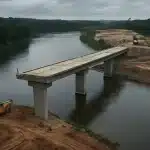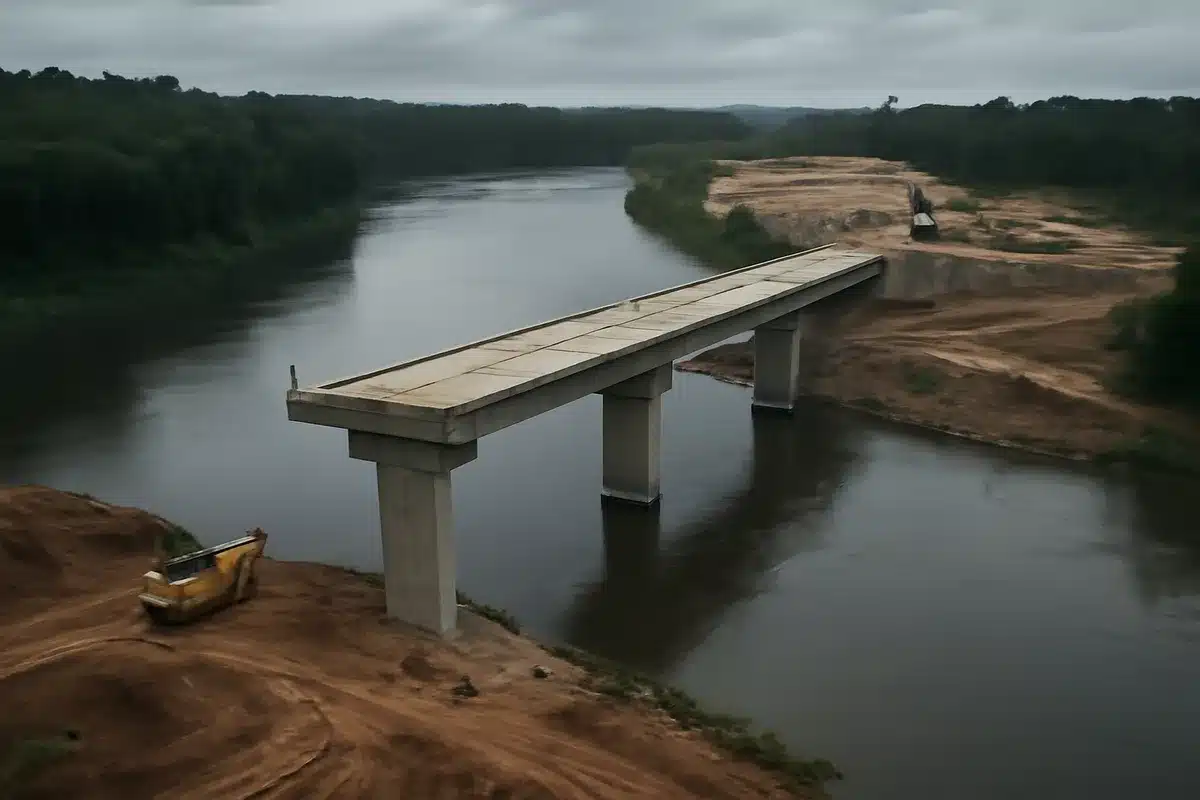
VIENNA — A pioneering road bridge connecting North Korea with Russia over the Tumen River is nearing completion, as observed in recent satellite photos analyzed by Defense News. The development on the Russian side is still progressing, whereas the North Korean segment is already completed. This bridge symbolizes the growing ties between the two nations, particularly in light of North Korea’s military aid to Russia amidst the Ukraine conflict.
Recent high-resolution imagery from Planet shows the North Korean side of the bridge is completely constructed, featuring a customs house and a secured entry point a few hundred meters from the river. In contrast, the Russian side is still under development, with ongoing construction of border facilities and the connecting road itself. Though the groundwork for a significant customs facility and the base for a future road have been established, the Russian border remains closed to commercial traffic at this point.
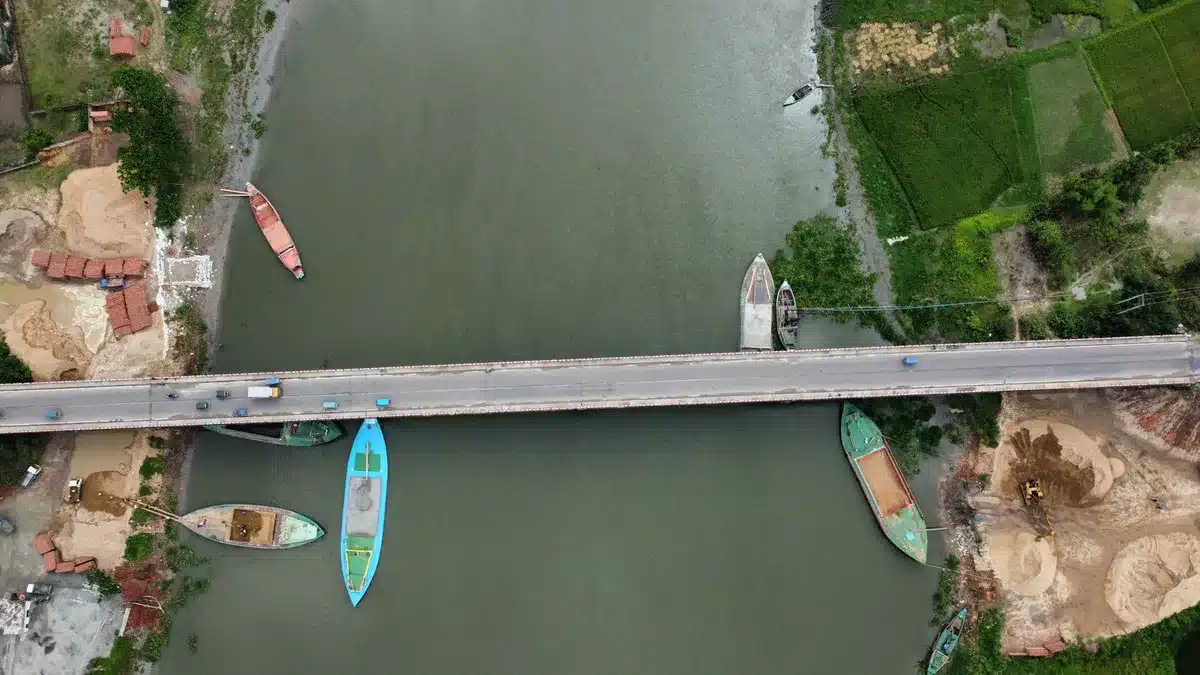
The bridge is located at Tumangang, a key rail junction on the North Korean-Russian border that was a major site for Soviet-era trade but fell mostly inactive post-1991. The site has seen a resurgence of activity since 2022, aligning with Pyongyang’s decision to supply Moscow with artillery shells and troops for the conflict in Ukraine, and Russia’s tacit disregard for the UN sanctions against North Korea, which Moscow initially supported.
The small, 17-kilometer (11-mile) border between North Korea and Russia is gaining increasing geopolitical importance.
John Ford, a research fellow at the Foreign Policy Research Institute, who has been monitoring North Korean infrastructure and armament production, remarked, “Clearly, Kim Jong Un has opted to align with Russia, and this bridge is emerging evidence of that decision.” He noted that Pyongyang had long desired a symbolic road bridge at this crossing, but Moscow had historically declined the proposal until its strategic priorities shifted following its expansive invasion of Ukraine.
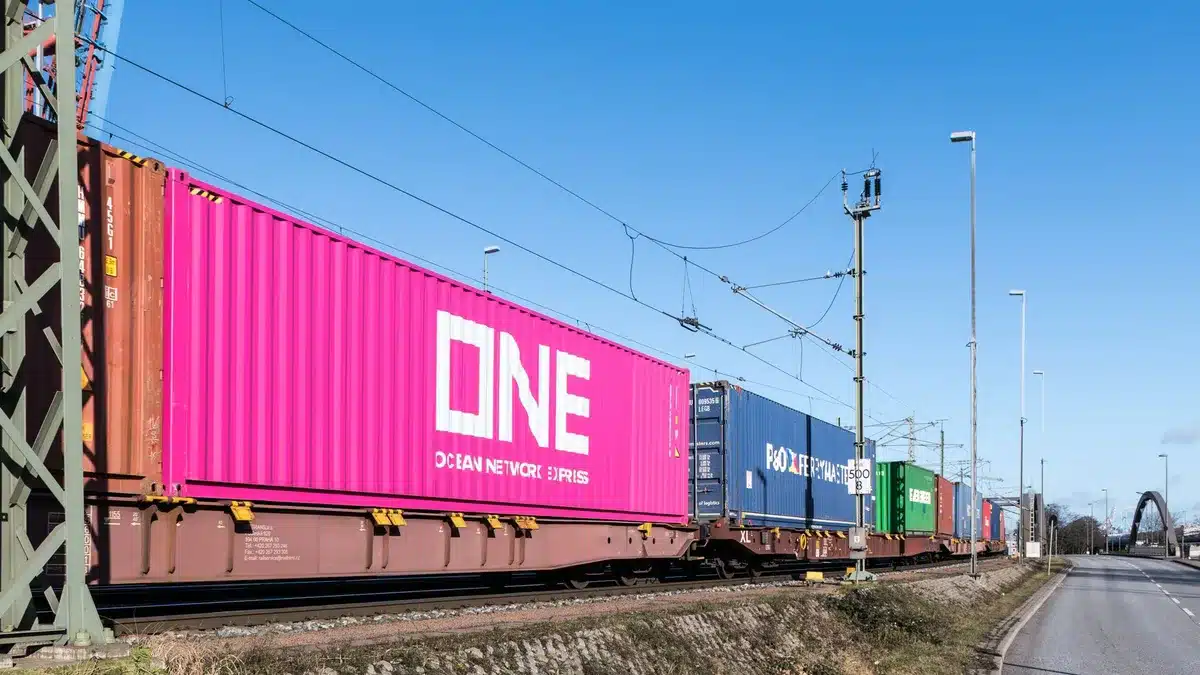
Ford explained that beyond its symbolic significance, the bridge could help alleviate a longstanding bottleneck at Tumangang’s rail link. The lack of standardized ISO shipping containers in North Korea has necessitated manual transloading of cargo between rail cars—a slow process that has pushed much of the ammunition trade to the port of Rason, then by sea to Russia’s Dunai terminal. A functional road crossing might enable trucks to circumvent this bottleneck, though Ford remains uncertain whether it would primarily facilitate the inflow of Russian goods into North Korea or the export of North Korean goods, including munitions.
“What’s most surprising is that it appears functional,” Ford commented, highlighting the impractical location of the construction site. Positioned far from any major urban areas in Russia’s Far East and in a remote part of North Korea, existing transport methods, particularly maritime shipment from the nearby port of Rason, seem more logical. He also doubted that Russian truckers would venture deep into North Korea, suggesting a transfer point near the river might be more feasible than a genuine cross-border logistics path.
Nevertheless, it is clear that Russia and the Democratic People’s Republic of Korea have significantly strengthened their international alliance since Putin’s 2022 invasion of Ukraine.
In 2024, the two nations inked a “Comprehensive Strategic Partnership” which includes a mutual defense obligation that commits each country to defend the other in times of war, along with numerous cooperation agreements spanning nuclear development to space exploration.
Ford also highlighted symbolic indicators of the deepening relationship, such as the reinstallation of Lenin and Marx portraits at North Korea’s Military Officers Political Academy and Kim’s 2023 visit to Vladivostok. These elements suggest Pyongyang is betting on a lasting partnership with Moscow that might endure beyond the current conflict in Ukraine.
Whether the bridge will significantly enhance cross-border throughput will only be determined after construction is complete and analysts can observe actual truck traffic, Ford added.
Similar Posts:
- North Korean Forces Boost Russia’s Ukraine War Efforts: New Military Alliance Exposed!
- Ukraine War: Victory Day Ceasefires Collapse Immediately Amid Conflict
- Finland Shuts Airspace, Limits Sea Traffic Near Russia: Drone Threats Escalate
- South Korea Boosts Defense: K2 Tanks to be Equipped with Advanced Trophy Protection System
- NATO Commander Warns: Rising Russian and Chinese Threats in Arctic Escalate Tensions!

Jamal Peterson reports on defense, aerospace, and tech policy. With a military background and a strategic mind, he dissects complex subjects with clarity, offering readers sharp, reliable insights.