Escalation of Conflict Amidst Ceasefire Plans for Victory Day
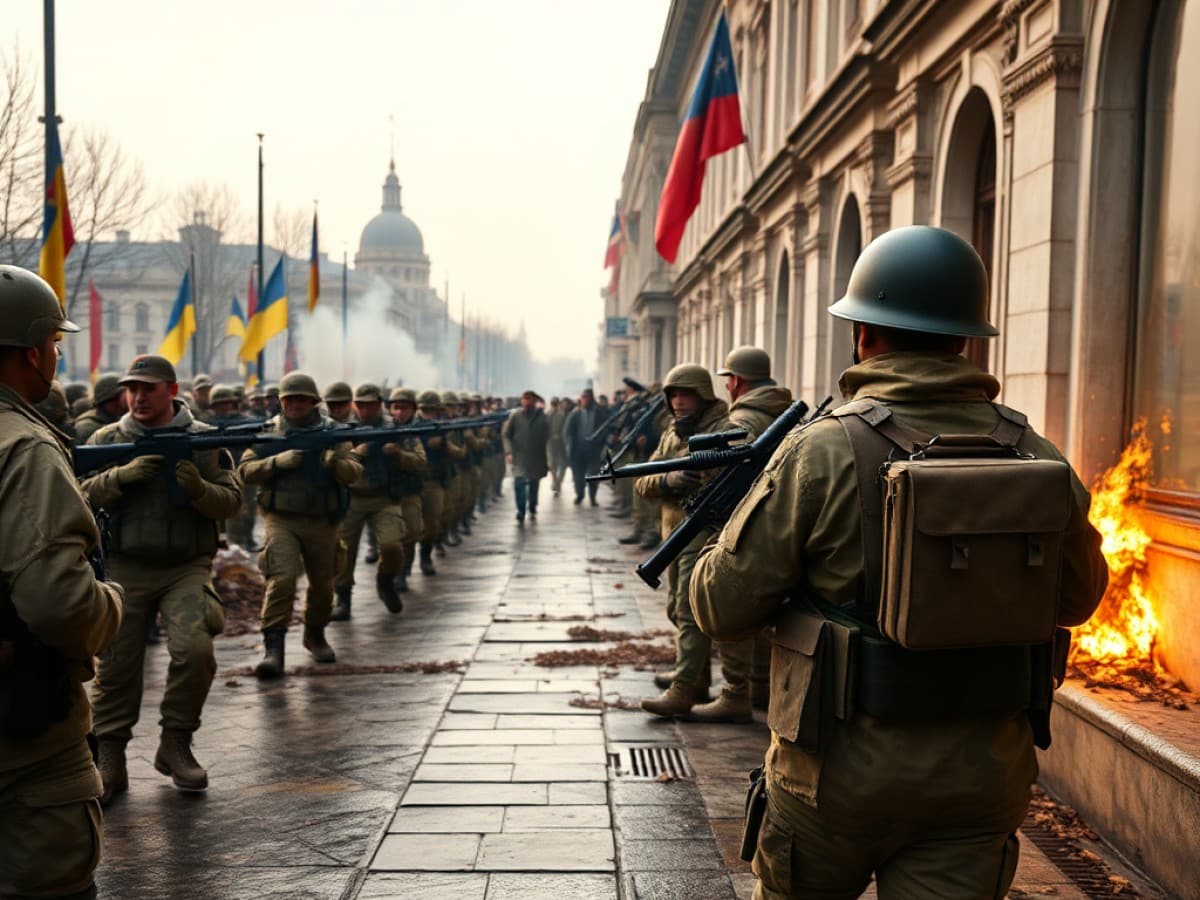
In Vienna, the recent ceasefire initiatives proposed by Ukraine and Russia in light of Victory Day have essentially failed, exacerbated by increased aerial assaults and threats of a “massive missile attack” on downtown Kyiv.
Both nations had announced a temporary cessation of hostilities timed to coincide with the significant event commemorating the surrender of Nazi Germany. However, each side conditioned their ceasefire on the other not violating the truce, warning of severe repercussions if breached.
Russia announced a ceasefire on the 8th and 9th of May, specifically aligning with the Victory Day festivities. Nonetheless, it warned that any attacks on Russian territory during this period would provoke a severe missile attack on Kyiv’s center. The Russian Ministry of Defense, through its Telegram channel, advised the citizens and embassy personnel in the Ukrainian capital to evacuate.
Ukraine responded with a ceasefire announcement of its own, set to begin at midnight on May 6th. President Zelensky noted that Ukraine had not received any formal ceasefire proposal from Russia. He stated that Ukraine would be forced to respond in kind to any Russian violations of the ceasefire.
The ceasefire was short-lived, with Russia launching 108 combat drones and three missiles overnight between May 5th and 6th, targeting major Ukrainian cities including Kharkiv. By the morning of May 6th, President Zelenskyy reported 1,820 violations by Russian forces, which included nearly 30 ground assaults and over 20 airstrikes deploying more than 70 guided bombs. A strike on a kindergarten in the Sumy border region resulted in two fatalities.
The Ongoing Cycle of Ceasefire Declarations
The pattern of one-sided ceasefire declarations has become a familiar tactic in the information warfare between Kyiv and Moscow regarding the conflict. These declarations serve as a strategic means for both governments to demonstrate the other’s lack of commitment to peace. A 32-hour ceasefire around Orthodox Easter had similarly failed, with Ukraine accusing Russia of 2,299 violations and Russia accusing Kyiv of 1,971 violations, numbers which Kyiv later adjusted to 10,721 violations attributed to Russia.
The annual Victory Day parade in Moscow, scheduled for May 9th on the iconic Red Square, will proceed albeit in a significantly reduced capacity. For the first time, there will be no display of armored vehicles, tanks, or missile carriers, and even the participation of military academies has been curtailed. Russian officials attributed these changes to the “operational situation” and potential “terrorist threats,” although an aircraft flyover is still planned.
The parade in St. Petersburg has been similarly downsized. Last year, the event had drawn 29 heads of state, including high-profile leaders like Xi Jinping, Lula da Silva, and the now-ousted Venezuelan president Nicolas Maduro. This year, only a few leaders are expected to attend, among them Robert Fico, Slovakia’s pro-Russia premier, who, despite earlier Russian statements, has said he will not be at the parade. Belarusian leader Alexander Lukashenko will also be present.
In the meantime, Moscow has ramped up internet restrictions, anti-drone defenses, and security measures to protect the highly symbolic parade from potential disruptions by Ukraine.
President Zelensky has remarked on the situation, stating that Russia “cannot hold a parade in Moscow without Ukraine’s goodwill.”
Similar Posts:
- Ukraine Set to Deploy Advanced Ballistic Missiles: Combat Readiness Just Weeks Away
- Finland Shuts Airspace, Limits Sea Traffic Near Russia: Drone Threats Escalate
- Kyiv’s Drone Strategy Influences US: Top Ukrainian Official Predicts Moscow Will Be Next
- North Korean Forces Boost Russia’s Ukraine War Efforts: New Military Alliance Exposed!
- Ukraine Drone Strikes: A Wake-Up Call for US Air Defense!

Jamal Peterson reports on defense, aerospace, and tech policy. With a military background and a strategic mind, he dissects complex subjects with clarity, offering readers sharp, reliable insights.