
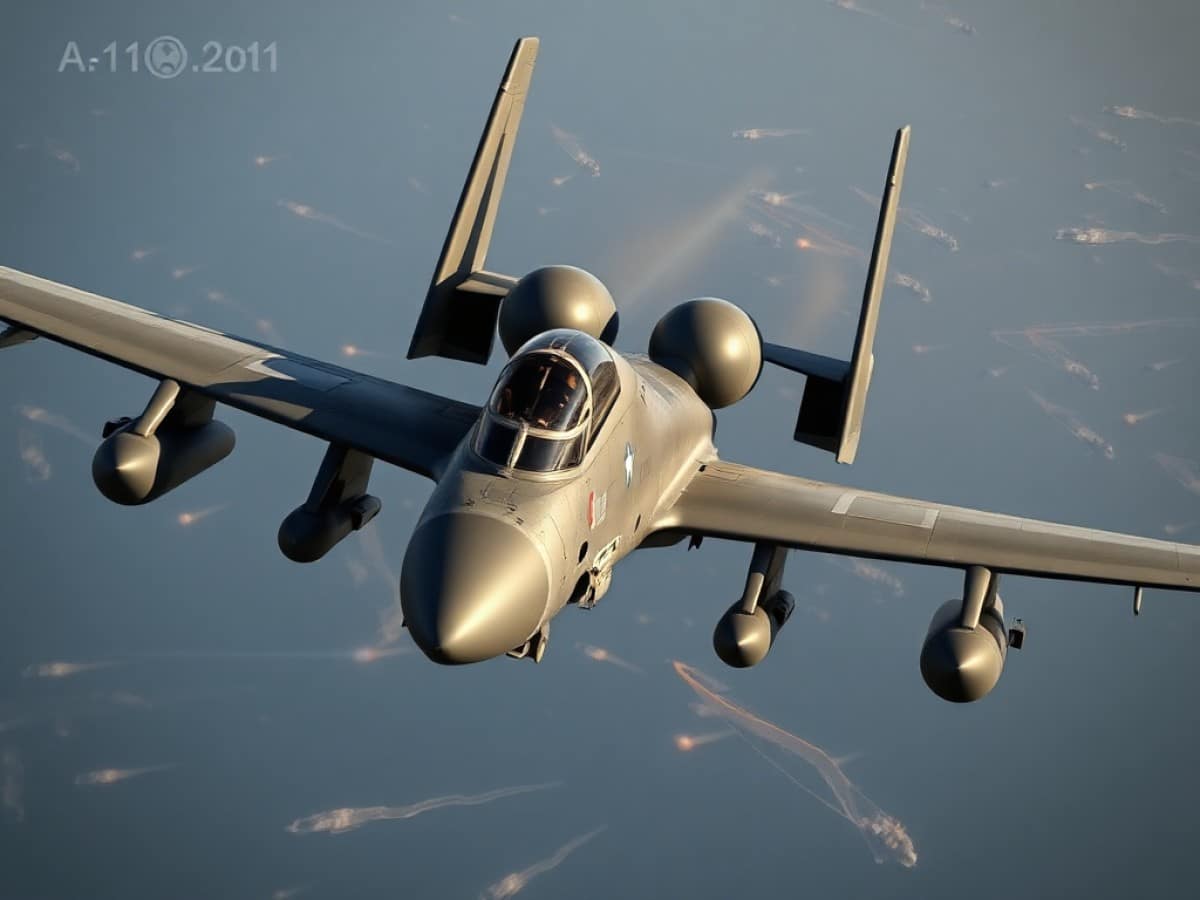
The U.S. Air Force’s A-10 Thunderbolt II attack planes are currently participating in naval interdiction missions as part of Operation Epic Fury along its southern edge, focusing on attacking the Islamic Revolutionary Guard Corps’ rapid-assault boats in the Strait of Hormuz, according to the Joint Chiefs of Staff chairman, who spoke on Thursday.
“The A-10 Warthog is actively engaged along the southern border of the operation, specifically targeting the fast-attack boats in the Strait of Hormuz,” stated Air Force General Dan Caine at a Pentagon briefing about the ongoing operation.
This development signifies a broadening of the Warthog’s confirmed role within Operation Epic Fury. U.S. Central Command had previously disclosed images on March 15 showing A-10C Thunderbolt IIs being refueled mid-air during their support of the operation, the first official images of these aircraft participating in the campaign.
“The A-10 Thunderbolt II has the capability to loiter for extensive periods, standing by and ready to carry out missions as required,” CENTCOM mentioned in a related post on X.
Engineered for close air support, the A-10 is designed to operate at low speeds and altitudes, close to combat areas to provide direct support to ground troops and, increasingly, joint forces in contested coastal areas. Its heavily armored cockpit, known as a “titanium bathtub,” and its redundant flight systems enable it to endure considerable damage and keep flying in situations that would disable less robust aircraft.
Equipped with a 30mm GAU-8/A Avenger cannon that fires 3,900 rounds a minute, along with AGM-65 Maverick missiles and APKWS laser-guided rockets, the A-10 is adept at engaging the swift, nimble surface vessels used by the IRGC Navy to pose threats to shipping within the tight confines of the strait’s coastal waters. Its capacity to loiter provides its crew with sustained surveillance opportunities that faster aircraft lack.
In a video dated March 16 and uploaded to CENTCOM’s official X account, CENTCOM commander Admiral Brad Cooper reported that U.S. forces had destroyed over 100 Iranian naval vessels and declared, “We will continue to rapidly diminish Iran’s capability to obstruct freedom of navigation in and around the Strait of Hormuz.”
The Strait of Hormuz is a critical channel, with roughly 20% of the world’s oil supply passing through it, according to data from the U.S. Energy Information Administration.
The deployment of the A-10s in Operation Epic Fury occurs as Congress has taken steps to shield the aircraft from Air Force plans to phase them out.
The National Defense Authorization Act for Fiscal Year 2026 has thwarted the Air Force’s intentions to retire the remaining A-10 fleet, ensuring a minimum inventory of 103 A-10s until September 30, 2026, and demanding a detailed plan for their eventual replacement.
Pentagon officials have not yet disclosed specific details regarding the number of A-10 sorties or strikes conducted during the operation.
Similar Posts:
- Shocking Photos: Shredded KC-46 Boom Forces Emergency Landing
- US Anduril Plant Begins High-Speed Combat Drone Production: New Era in Military Tech Unleashed!
- US Air Force Axes A-10s, Scraps E-7 by 2026: Major Military Budget Cuts Revealed!
- US Deploys LUCAS Attack Drone in Combat for First Time: Strikes Target Iran!
- Revamped Air Force Fleet Takes Flight Under Wilsbach’s Command

Jamal Peterson reports on defense, aerospace, and tech policy. With a military background and a strategic mind, he dissects complex subjects with clarity, offering readers sharp, reliable insights.


