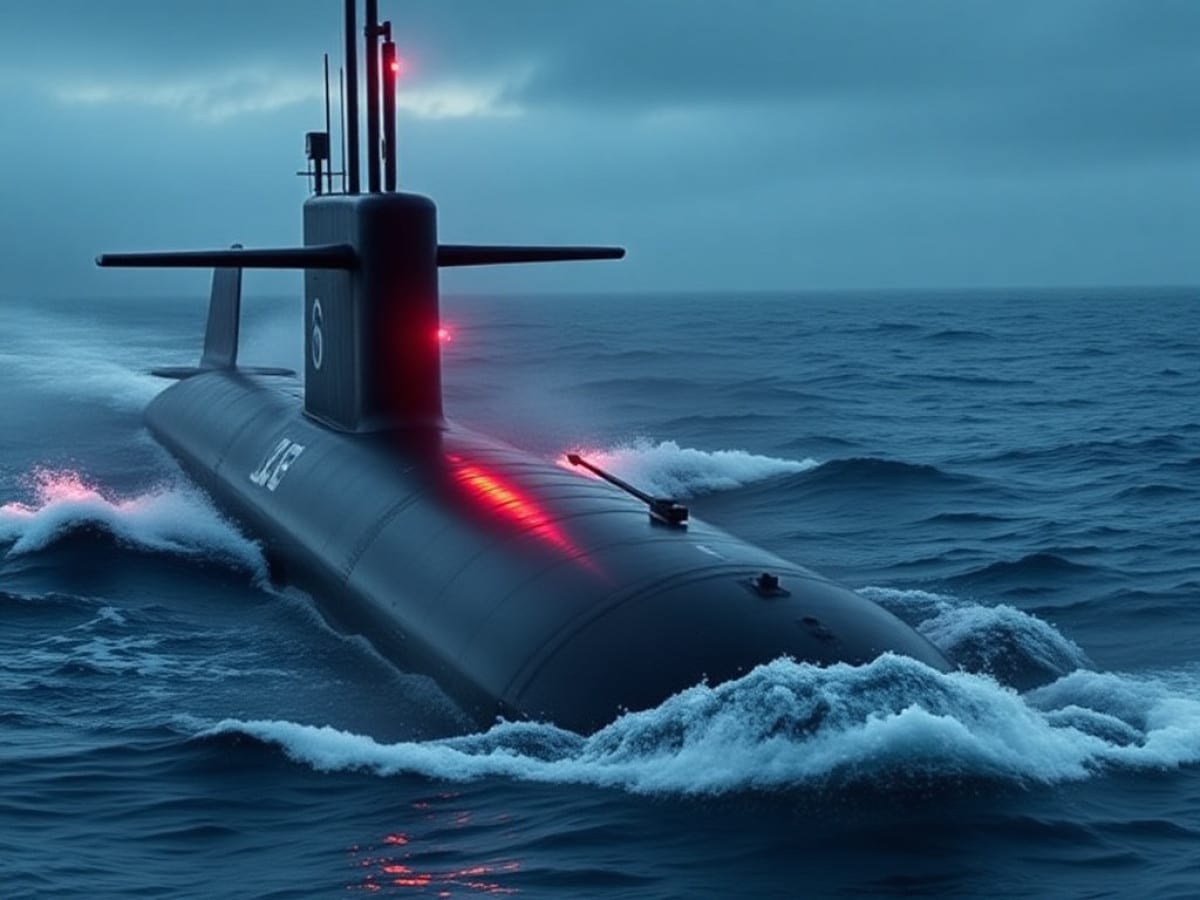
CHRISTCHURCH, New Zealand — On March 4, a significant event occurred involving a U.S. Navy submarine, marking the first use of a torpedo against an opposing naval vessel since World War II. Notably, three members of the Australian Navy were present on the submarine during this operation.
The involvement of Australian submariners became a sensitive issue for Australia, as the country has no formal stance on military conflicts involving Iran.
Shortly after the incident, Australian Prime Minister Anthony Albanese confirmed that Australian Navy sailors were onboard the U.S. submarine during the sinking of the Iranian frigate IRIS Dena.
“Under the circumstances and due to the level of public interest in this matter, I am disclosing that three Australian personnel were aboard the submarine,” stated Albanese. He further assured, “However, I can also confirm that these personnel did not engage in any direct combat actions against Iran.” Albanese emphasized that measures are in place to prevent Australian forces from taking part in unapproved military actions.
Albanese added that these arrangements, which allow Australian personnel to serve on allied military assets, are established under longstanding international agreements, ensuring compliance with Australian laws and policies.
Jennifer Parker, a defense strategist at Barrier Strategic Advisory, commented to Defense News that the Australian submariners had the option to excuse themselves from active duty during the attack near Sri Lanka. “Opting out of active roles during such missions is relatively straightforward,” she explained.
Parker also noted the legality of the target, stating, “The engagement was lawful under international naval warfare laws and aligned with global legal standards.”
She further explained that such military actions are permissible beyond the 12-nautical-mile limit of neutral states’ territorial waters, which was the case with the U.S. operation near Sri Lanka.
David Shoebridge, a senator from the Green party, accused Australia of being involved in an unlawful conflict. “We find ourselves entangled in these conflicts due to the flawed logic behind AUKUS, which falsely assures us safety through an alliance under the leadership of Donald Trump and his administration,” he stated.
AUKUS, a strategic agreement between Australia, the United Kingdom, and the United States, aims to enhance Australia’s naval capabilities against potential threats, particularly in the context of China’s activities in Asian waters.
Parker, in an article for The Academic website, clarified, “According to naval warfare laws, warships from nations engaged in international conflicts are considered legitimate military targets.”
Although the U.S. has not disclosed the name of the submarine involved, it is speculated to be the USS Minnesota, a Virginia-class submarine that had previously been stationed at an Australian naval base near Perth.
Progress in AUKUS
As Australia prepares to integrate second-hand U.S. Virginia-class submarines into its fleet, numerous Australian sailors are undergoing rotations on American nuclear-powered submarines.
In a recent update, Australian officials reported that over fifty sailors were serving on American SSNs as of last October. Rear Admiral Stephen Hughes, Australia’s Head of Navy Capability, disclosed to Defense News that between 160 and 200 Australian sailors were currently involved in training programs in the U.S. and U.K.
“AUKUS is progressing well, with numerous accomplishments thus far,” stated Parker. Hughes added, “Training sailors on SSNs is complex, especially as we need to maintain the operational readiness of our Collins-class submarines while transitioning to newer, more advanced submarines.”
Similar Posts:
- Poland Chooses Saab’s A26 Submarine: Contract Expected by Year’s End
- US Navy Launches Trident Missiles: Demonstrates Nuclear-Capable Firepower in Test
- How an Ohio-Class Submarine Became Key in the Iran Strike Operation
- China’s Armed Forces Aim to Neutralize US Submarine Detection System: Experts Reveal
- Navy’s Massive $76.6 Billion Deal: Boosting Virginia and Columbia-class Submarines

Jamal Peterson reports on defense, aerospace, and tech policy. With a military background and a strategic mind, he dissects complex subjects with clarity, offering readers sharp, reliable insights.