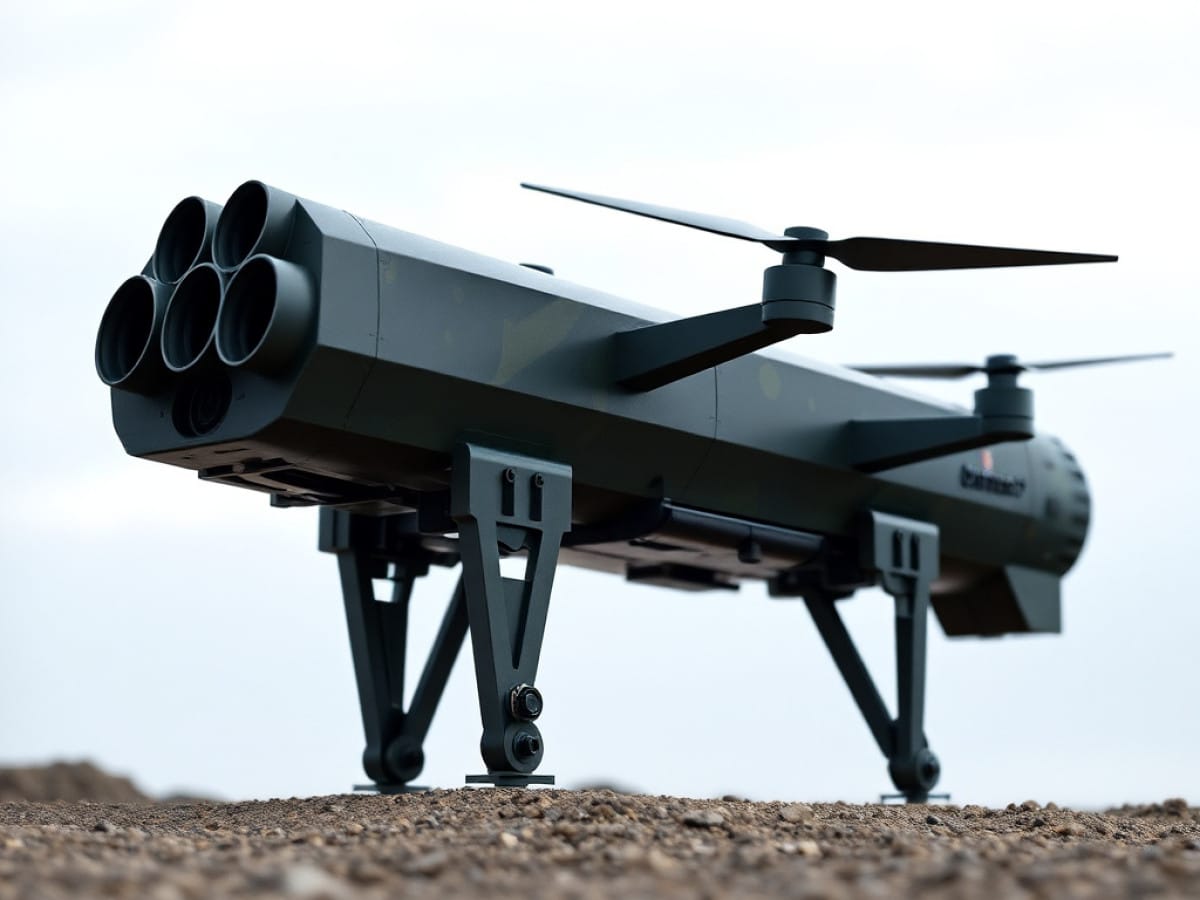
PARIS — The UK-based defense organization Babcock is collaborating with the Estonian tech firm Frankenburg Technologies to create a modular missile launch system. This initiative aims to provide cost-effective maritime defenses designed to counter single-use attack drones.
New Maritime Defense Collaboration
A recent agreement between Babcock and Frankenburg aims to research and develop an economical anti-drone air-defense system for maritime environments. This project will be spearheaded in the UK, enhancing the region’s defense technology capabilities. This partnership was announced through a statement released by both companies on Wednesday.
Frankenburg, headquartered in Tallinn, Estonia, is focused on revolutionizing missile technology by producing systems that are significantly cheaper and faster to manufacture than the current market offerings. The company is led by CEO Kusti Salm, who previously worked for the Estonian Ministry of Defence, and Andreas Bappert, a former executive at Diehl Defence, who oversees technology and engineering.
“The evolving drone threats have transformed modern warfare, necessitating defenses that are capable of handling large volumes at high speeds,” stated CEO Kusti Salm. He believes that the collaboration with Babcock will expedite the development of vital maritime defense capabilities.
The air-defense systems being developed will offer scalable, cost-effective, and potent solutions to safeguard military forces and vital infrastructure throughout Europe. The companies also expect that this collaboration will facilitate opportunities for global exports.
Response to Emerging Drone Threats
As the use of inexpensive drones intensifies, particularly noted in conflict zones like Ukraine, European armed forces are urgently seeking effective and affordable countermeasures.
Salm highlighted that Frankenburg’s Mark 1 missile is claimed to be the smallest guided missile globally. In October, Estonia selected the company among four others to establish production facilities at the new Defence Industry Park. The initial production goal is to manufacture 100 short-range air-defense missiles daily.
The Mark 1 missile, measuring about 60 centimeters, is designed for mass production. It utilizes a solid-fuel rocket motor and is constructed from commercially accessible parts. Remarkably, Frankenburg developed this missile from concept to live firing within just 13 months.
In December, the company achieved a significant milestone by successfully intercepting a fast-moving aerial target at the Ādaži NATO base in Latvia. This event was described as a pivotal “SpaceX moment” for the missile industry by the company.
Industry’s Response to Drone Warfare
“Defense industries are entering a new phase with the rapid evolution of drone warfare, and it’s imperative that we adapt to these emerging challenges,” stated Babcock CEO David Lockwood.
Moreover, in November, Frankenburg signed a memorandum of understanding with Polska Grupa Zbrojeniowa to integrate its missile technology onto PGZ platforms. This agreement also includes establishing a manufacturing facility capable of producing up to 10,000 missile units annually.
Similar Posts:
- Airbus Interceptor Fires Missile at Attack Drone: See the One-Way Engagement Test Unfold!
- Saab Unveils Drone-Killing Missile: Cost-Effective Defense Solution in the Works
- Australia Unveils Cutting-Edge Hybrid Air Defense System: A Game Changer in Military Tech
- India Advances in Defense: Homegrown Long-Range Air Defense System Nears Completion
- Estonian Intelligence Confirms: Europe’s United Defense Strategy is Effective

Jamal Peterson reports on defense, aerospace, and tech policy. With a military background and a strategic mind, he dissects complex subjects with clarity, offering readers sharp, reliable insights.