Copying is often seen as the highest form of flattery, and in that respect, China’s adoption of stealth technology in aviation is a nod to the creativity of the United States.
Impressed yet wary of American stealth capabilities, China has poured significant resources into the development of stealth jets and counter-stealth defense systems.
However, according to recent insights from the U.S. Air Force, China may have misunderstood the underlying principles of the U.S. stealth strategy. China believes that superior technology is the cornerstone of American stealth success.
In contrast, the U.S. approach integrates stealth into a broader, multifaceted aerial combat strategy, per the analysis.
“Chinese assessments often miss the mark when it comes to the technical and operational realities of U.S. stealth capabilities,” stated Major Derek Ecklebe, an officer in the U.S. Air Force and a scholar at the Air Force’s China Aerospace Studies Institute.
According to Ecklebe, the U.S. employs stealth as a layered capability that synergizes technology with tactical operations to dominate the skies. “It’s crucial to understand that while stealth technology is complex and costly, it is just a piece of the puzzle,” he explained.
China’s reaction to the U.S. stealth technology is mixed with elements of fear and assurance.
“The Chinese military strategy has evolved to perceive stealth technology as a challenge that is surmountable yet provides the U.S. with a distinct advantage. This has led to their dual approach of developing extensive air defenses and aggressively advancing their own stealth aircraft program,” Ecklebe noted.
Interestingly, the U.S. military and intelligence sectors are sometimes criticized for overly focusing on technology rather than on broader strategic and tactical frameworks. However, Ecklebe points out that it is actually China that may be placing too much emphasis on technological solutions.
This belief in the primacy of technology leads Chinese defense strategists to invest heavily in developing technologies aimed at countering stealth capabilities, such as advanced anti-stealth sensors.
Chinese military publications and media stress that improved sensors, particularly low-frequency radars, represent the best defense against stealth technologies.
“Chinese experts often view stealth as a technical challenge that can be overcome with newer detection technologies,” said Ecklebe, highlighting the focus on low-frequency radars, passive sensors, and terahertz sensors as emerging solutions that might soon negate U.S. technological advantages.
However, these technologies to counter stealth are either still in experimental stages or come with significant drawbacks, such as issues with accuracy, clutter, or susceptibility to electronic countermeasures.
“These systems are subject to considerable physical and operational limitations,” Ecklebe cautioned.
Nevertheless, the effectiveness of Chinese air defense systems, even against advanced stealth aircraft like the F-35 and B-2, should not be underestimated.
“What truly makes China’s defenses robust is not any individual radar or missile system but their ability to integrate these into a cohesive air defense network,” Ecklebe warned. “The PLA emphasizes on multi-domain operations, integrating inputs from various systems including early-warning radars, passive sensors, and satellites into their command centers.”
This fascination with technology extends to China’s own development of stealth aircraft.
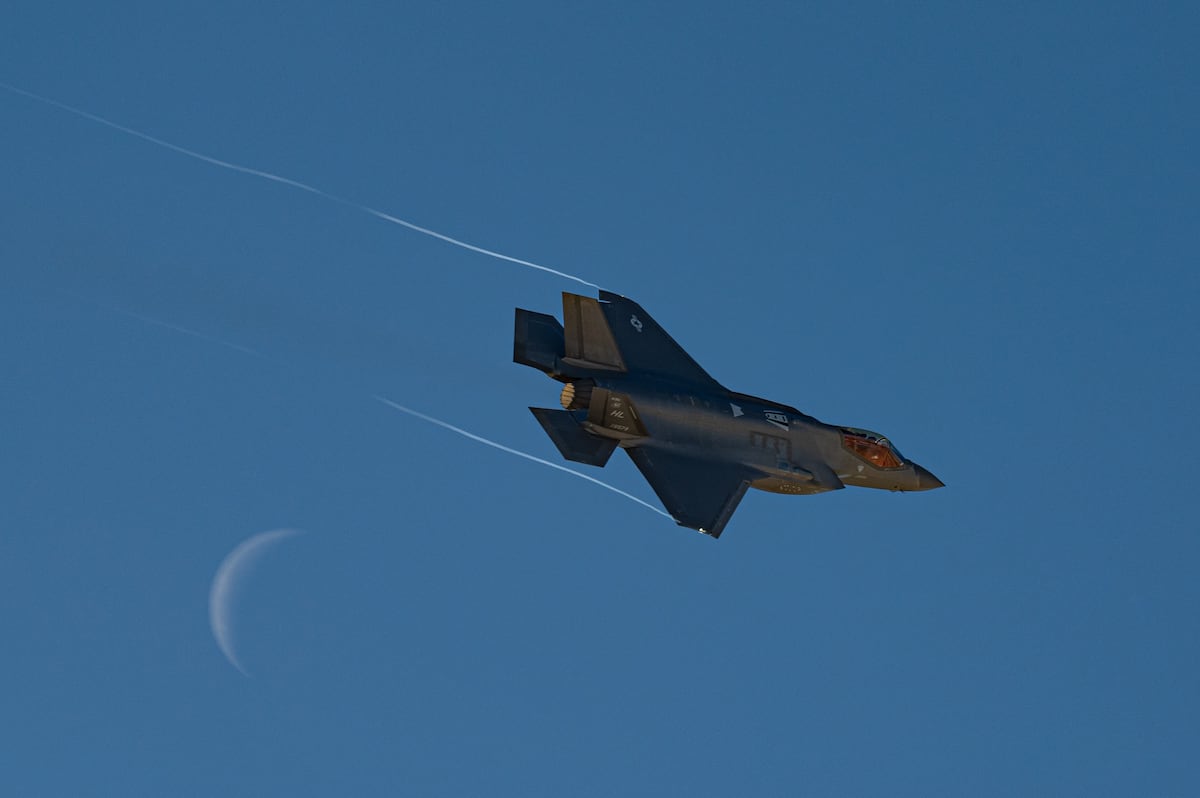
The Chinese J-35, which bears a striking resemblance to the U.S. F-35, “mimics aspects of the F-35’s design but focuses on quantitative hardware improvements rather than the qualitative, software-driven adaptability and tactics modernization that characterize American models,” Ecklebe explained.
He suggests that the Chinese understanding of U.S. stealth capabilities—and their perceived vulnerabilities—might be skewed by the technical challenges experienced with their own stealth aircraft, such as unreliable engines.
“Projection of domestic technical limitations, such as issues with the reliability and modernization of WS-10 and AL-31F engines affecting the J-10 and J-20’s operational rates, onto U.S. systems could be causing misjudgments,” Ecklebe noted.
A critical question remains: could these Chinese misperceptions about American stealth capabilities heighten the risk of conflict, possibly influencing decisions about aggressive actions towards Taiwan?
“Chinese military thinkers seem to view stealth not as an unbeatable advantage but as a manageable aspect within a larger strategy that prioritizes rapid and decisive actions to deter U.S. intervention,” Ecklebe concluded.
Similar Posts:
- China’s Armed Forces Aim to Neutralize US Submarine Detection System: Experts Reveal
- US Marine Forces in Pacific Concern China: New Report Reveals Tensions
- China Tops Space Threat List, Warns U.S. Space Force General
- China’s Military Expansion Threatens US Security: Pentagon Warns of Growing Vulnerability
- Bangladesh Air Force to Spend Billions on Multirole Fighters: Major Military Upgrade Approved!

Jamal Peterson reports on defense, aerospace, and tech policy. With a military background and a strategic mind, he dissects complex subjects with clarity, offering readers sharp, reliable insights.