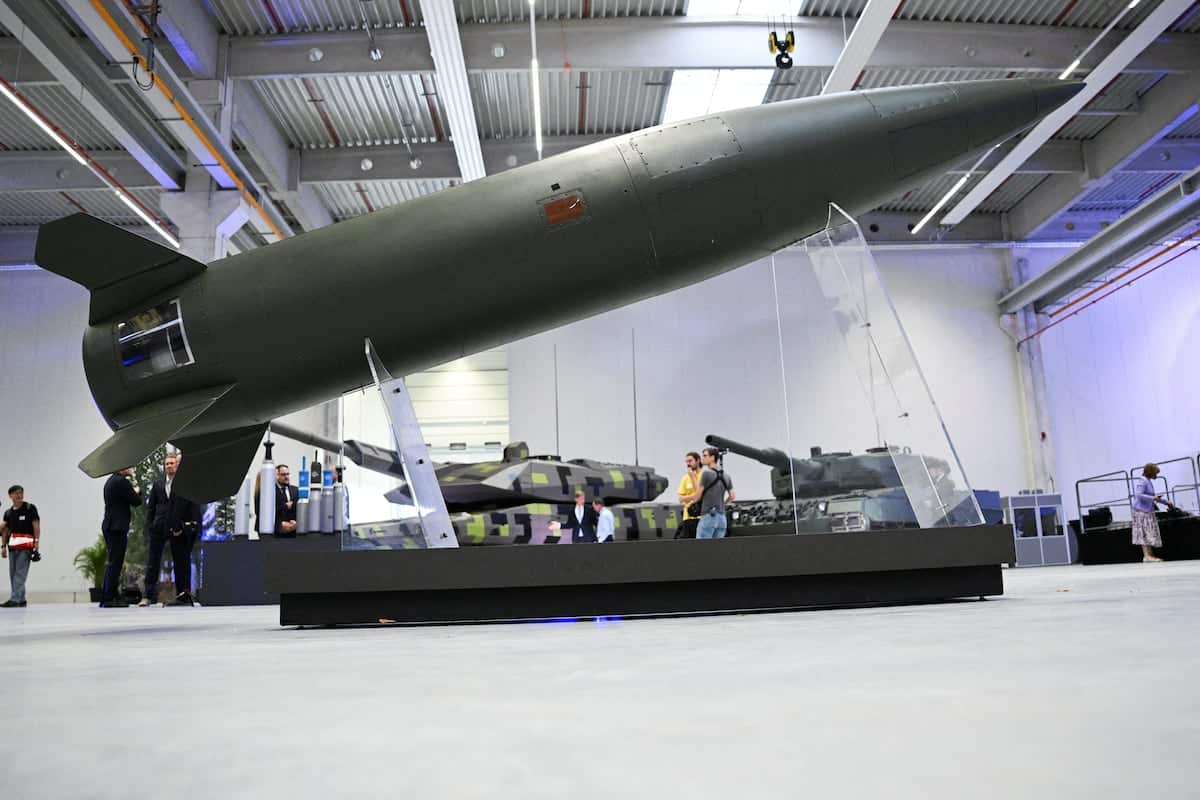
Rheinmetall announced on Friday that it would require additional time to increase its planned production of ATACMS missiles in collaboration with Lockheed Martin, highlighting the difficulties the United States is encountering in refilling its depleted arsenal following the conflict with Iran.
Earlier in the week, Reuters disclosed that during the five-month war with Iran, the U.S. Army had significantly depleted its worldwide reserves of long-range precision missiles, leading to concerns over the military’s preparedness for potential future emergencies.
On Thursday, President Donald Trump downplayed worries regarding the depletion of weapons, stating that the U.S. possesses a nearly limitless supply of certain types of munitions, while admitting that the availability of others was more constrained. He further mentioned that American defense manufacturers were in the process of expanding their production capabilities.
Last month, Rheinmetall signed a memorandum of understanding with Lockheed to jointly manufacture Army Tactical Missile Systems (ATACMS) at Rheinmetall’s facility in Unterluess, northern Germany, with plans to establish production lines there next year.
In an interview with Reuters on Thursday, which was published on Friday, CEO Armin Papperger assured that there would be ample capacity to restore the U.S. military’s arsenal, which had been exhausted by the conflict with Iran, stating, “That won’t happen in two years. It will take much longer.”
Defense firms globally are scrambling to meet the increased demand as nations boost military expenditures amidst ongoing conflicts in Ukraine and the Middle East, and as the U.S. urges Europe to assume greater responsibility for its own security.
Boosting Europe’s Defense Capabilities
Rheinmetall has significantly benefited from Europe’s initiative to increase defense spending. The continent’s leading ammunition manufacturer has engaged in partnerships and acquisitions to quickly enhance its production capacity in response to the rising demand.
The ATACMS partnership still requires formal approval, but Papperger indicated that the process was well underway and had received support from the U.S. government. He added that the partnership aims to serve the global ATACMS missile market, anticipating a demand for these missiles over the next 15 years.
Papperger projected that the joint venture would start generating revenue by 2028.
Discussions Pending with New Leonardo CEO
Papperger also expressed Rheinmetall’s ongoing interest in acquiring the military truck division of Iveco from Italy’s Leonardo. Future negotiations, however, would depend on the newly appointed CEO, Lorenzo Mariani.
“I had a handshake agreement with his predecessor,” Papperger mentioned. “Mariani can decide on new terms, and we will see if they remain attractive to Rheinmetall.” He added that the deal was still on track and expressed hope to meet Mariani after the summer break.
Anticipating the Boxer Contract by Year-End
Rheinmetall, which recently revised its sales forecast downward following Germany’s cancellation of its F126 frigate program, is also expecting to secure a multibillion-euro contract to supply Boxer armored vehicles to the German military by the end of the year, according to Papperger.
“There is absolutely nothing standing in the way,” he stated. The share of the contract attributable to Rheinmetall is valued at €12.4 billion ($14.3 billion), with the total value, including contributions from partner KNDS, expected to reach approximately €25 billion.
Similar Posts:
- Germany to Lead Global ATACMS Missile Production: A First in International Defense
- US Secures $22.9 Billion Raytheon Deal: Boosting Tomahawk Missile Production!
- Lockheed Martin Receives Key Patriot Interceptor Parts: General Motors Delivers First Batch!
- Pentagon Escalates Efforts: Major Surge in Missile Production Announced!
- Netherlands Buys Skyranger Anti-Drone Cannons for Less Than €1 Billion: Enhancing Defense Capabilities

Jamal Peterson reports on defense, aerospace, and tech policy. With a military background and a strategic mind, he dissects complex subjects with clarity, offering readers sharp, reliable insights.