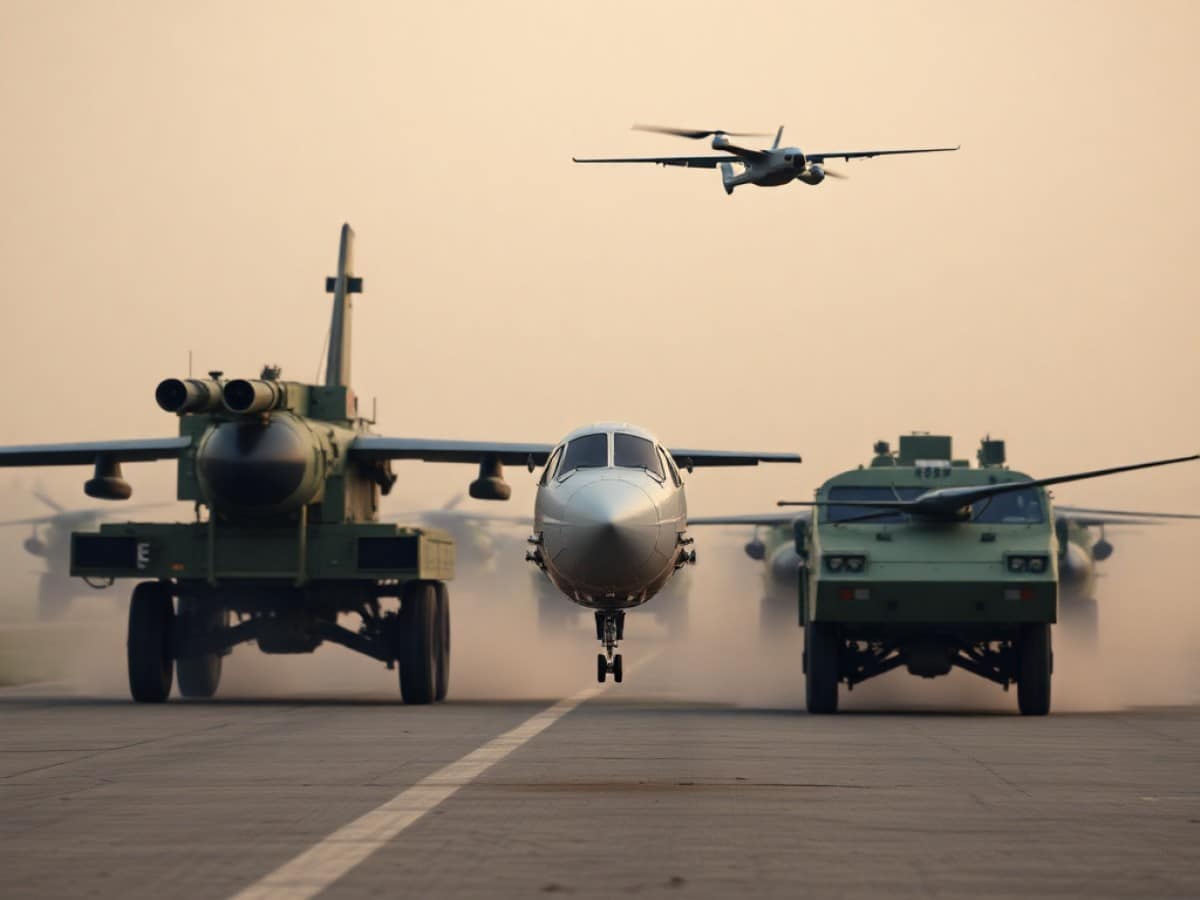
NEW DELHI — India has recently sanctioned a substantial $25 billion investment for the enhancement of its military capabilities, which encompasses the acquisition of new air-defense missile systems from Russia, in addition to unmanned combat air vehicles and transport planes.
This recent development is part of an effort to fortify the nation’s aerial defense and attack capabilities in anticipation of modern warfare scenarios where air strength plays a pivotal role, suggest experts. India’s strategic positioning necessitates robust defenses against potential threats from neighboring adversaries such as China and Pakistan to the north and west, and instability along its eastern border with Myanmar.
A significant component of this new defense strategy, as authorized by the Defense Acquisition Council led by Defense Minister Rajnath Singh, is the procurement of five additional S-400 Triumf air defense systems from Russia. This is in addition to the five systems previously ordered in 2018, three of which are already deployed along the northern and western borders, with the remaining two expected to be delivered within the current year.
These ten systems are slated to form the cornerstone of India’s strategic long-range air defense, expanding coverage and sealing any existing gaps once fully operational.
The decision to further invest in the S-400 systems was influenced by their effective performance in neutralizing aerial threats during the brief military engagement with Pakistan last year. The use of missile strikes and drones was prominent during the four-day conflict, underscoring the S-400’s role in reinforcing national air defense capabilities.
“The S-400 systems have validated their effectiveness by intercepting aerial threats and downing several missiles launched by Islamabad, proving their operational worth,” stated Dinakar Peri, a security studies expert at Carnegie India. “With more systems in place, India aims to extend its air defense perimeter significantly.”
Additionally, India plans to enhance its offensive air capabilities with the acquisition of 60 more remotely piloted strike aircraft. These drones, which have been integral in recent conflicts, allow for precision strikes without risking pilot lives, reflecting a broader shift towards unmanned military operations in modern warfare.
“The evolving landscape of warfare now requires a combination of traditional heavy-duty platforms like bombers and submarines with advanced drone technology, which has become indispensable in modern military strategies,” Peri added. This change in tactical approach was partly inspired by recent international conflicts such as the Russia-Ukraine war, which demonstrated the strategic importance of drones and robust air defenses.
The Defense Ministry highlighted that the recent approvals aim to bolster both defensive and offensive air capabilities. “The S-400 system will counteract long-range aerial threats aimed at critical national infrastructure, while the newly added drones will support offensive counter-air operations, and provide enhanced intelligence, surveillance, and reconnaissance capabilities,” the ministry stated.
Furthermore, the defense budget allocation includes the procurement of the Tunguska air defense missile system worth $47 million from Russia, addressing a shortfall in short-range air defense that is crucial for protecting ground troops against low-altitude threats like helicopters, drones, and cruise missiles.
The funding will also facilitate the acquisition of 60 new multirole transport aircraft, replacing older models and enhancing the operational flexibility of Indian forces across diverse terrains, from high mountains to remote islands. Potential suppliers for these aircraft include Brazil’s Embraer, Lockheed Martin from the USA, and Russia’s Ilyushin, as per various reports.
Experts note that while Russia’s share of India’s defense imports has decreased as New Delhi diversifies its sources to include countries like France, Israel, and the USA, Russia continues to be a significant supplier due to the cost-effectiveness and reliability of its military hardware.
“Russian equipment not only offers affordability but also versatility, capable of operating in extreme environments from frigid mountainous regions to scorching deserts,” explained Rahul Bedi, a defense analyst based in New Delhi. “The Indian military’s familiarity with Russian systems also plays a crucial role in this continued partnership.”
This recent escalation in defense expenditure, which includes a $40 billion deal for 114 Rafale fighter jets, reflects a strategic urgency driven by the changing dynamics of global warfare and growing geopolitical uncertainties.
“The preference for air power over traditional land warfare is becoming more pronounced among nations, aiming to minimize ground engagements as much as possible,” stated Amit Cowshish, a former financial adviser for acquisitions at India’s Defence Ministry. “This shift underscores the increasing importance of air warfare capabilities in contemporary military strategy.”
Despite being one of the top military spenders globally, the modernization of India’s armed forces continues to pose challenges, as highlighted by data from the Stockholm International Peace Research Institute which ranks India as the world’s fifth-largest military spender and second-largest arms importer following Ukraine.
Similar Posts:
- India Advances in Defense: Homegrown Long-Range Air Defense System Nears Completion
- India Eyes Key Role in France’s Advanced Sixth-Generation Fighter Jet Program: Strategic Partnership Ahead?
- India Supercharges Submarine Fleet: Boosting Nuclear and Conventional Combat Capabilities!
- Saab Unveils Drone-Killing Missile: Cost-Effective Defense Solution in the Works
- Iranian Warships Seek Refuge: Strategic Moves in India and Sri Lanka

Jamal Peterson reports on defense, aerospace, and tech policy. With a military background and a strategic mind, he dissects complex subjects with clarity, offering readers sharp, reliable insights.