MILAN — Recent Video Footage Highlights Key Role of U.S.-Manufactured Defense Systems in Qatar’s Missile Interception
A new video has surfaced showing that a variety of U.S.-produced defense technologies were crucial in Qatar’s successful interception of missiles launched by Iran in a recent assault. These systems created a multi-layered defense strategy during the conflict that occurred last month.
The video, which was disseminated by Al Jazeera, a media giant based in Doha, features commentary from Qatari military personnel who played roles in countering the missile threat on June 23.
The footage discloses that Qatar had early intelligence warnings that American interests in the area might be targeted, leading to a directive from Qatari authorities to shut down the nation’s airspace.
Al-Udeid Air Base, the largest U.S. military installation in the Middle East located just outside Doha, hosts around 10,000 U.S. troops.
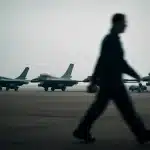
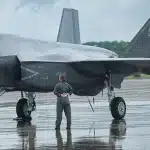
The video highlighted four primary American-made systems employed by the Qatari military: F-15 fighter jets, Apache helicopters, Patriot missile defense systems, and the National Advanced Surface-to-Air Missile Systems (NASAMS).
The F-15 jets were tasked with lengthy patrol missions to ensure they were ready to intercept any incoming missiles.
Qatari fighter pilots explained in the video that the jets were kept on continuous rotation, typically between two to three hours at a time, with refueling capabilities that could extend their airborne time to between six and eight hours if necessary.
These jets relayed critical data to ground radars using the Link 16 network, a secure military communication system that protects data similar to an encrypted, jam-resistant Bluetooth. Qatar is noted as one of the few non-NATO countries that has access to this network.
Complementing the jets, Apache AH-64E helicopters were also a significant part of the air defense, operating at different altitudes and ready to tackle any drone intrusions or other threats, said Jaber Al-Naama, an officer in the Qatar Emiri Air Force, during the Al Jazeera broadcast.
This utilization of Apache helicopters in a defensive role mirrors strategies employed by the U.S. Army. Similarly, other nations like France and Israel have experimented with using helicopters for air defense, with France reportedly downing a Houthi drone with an NH-90 helicopter over the Red Sea last year, and Israel using AH-64s in anti-drone operations.
On the evening of the attack at around 7:30 p.m., early warning systems detected two waves of missiles launched by Iran, one from the northeast over territorial waters and another from the north.
Qatar activated multiple Patriot missile defense batteries positioned across two sites, successfully intercepting seven missiles over the Persian Gulf and 11 over Doha, with one missile striking the Al-Udeid base, as reported by Qatar’s foreign ministry spokesperson Majed Al-Ansari to CNN in June.
The latest footage shows one of the Patriot systems positioned near coastal territorial waters. Qatar had established a dual-layer air defense grid where the Patriots formed the first line of defense followed by NASAMS, co-developed by Norway’s Kongsberg and RTX.
Military officials noted that the secondary defense system was not required to engage, as the Patriots successfully intercepted all 19 launched missiles, and there were no drone threats involved in the attack.
Similar Posts:
- Turkey and Qatar Boost Defense Alliance: Multiple Deals Signed at Naval Expo
- Anduril Targets Poland: Autonomous Aircraft Pitch for F-35, Apache Enhanced Capabilities!
- Army Expands Patriot Battalions: Additional Unit Destined for Guam
- Trump Signs Bold Executive Order: Commits to Defending Qatar
- Army Boosts Air Defense Force by 30%: Strategic Expansion Amid Rising Threats

Jamal Peterson reports on defense, aerospace, and tech policy. With a military background and a strategic mind, he dissects complex subjects with clarity, offering readers sharp, reliable insights.