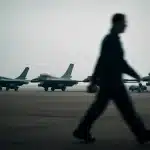
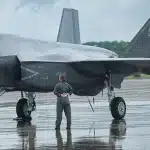
BANGKOK — Formally, the defense partnership between the United States and Thailand stands as one of the most robust in Asia. Established over seventy years ago, it includes annual military drills involving thousands of troops from both nations and several others.
However, over the last decade, Thailand has been gravitating towards China, a shift that analysts believe is weakening this alliance, impacting the U.S.’s military and strategic posture throughout the region.
Emma Chanlett-Avery, who directs political-security affairs at the Asia Society Policy Institute in Washington, expressed to Military Times that Thailand’s deepening relationship with China is a clear sign of the U.S. losing its strategic grip in Southeast Asia.
Chanlett-Avery pointed out, “Although Thailand remains a treaty ally of the U.S., it has been increasingly aligning its interests with the People’s Republic of China.”
Shifting Loyalties to Beijing
Thailand, known as Siam in 1833, was the first Asian nation to establish diplomatic and commercial relations with the United States through a treaty of amity and commerce. By the time the Cold War escalated, Thailand joined the Manila Pact of 1954 alongside the United States, affirming collective defense among its members.
Years later, Thailand emerged as a crucial hub for U.S. operations during the Vietnam War and was designated a major non-NATO ally in 2003.
Since 1982, Thailand and the U.S. have jointly hosted Cobra Gold, the world’s largest multilateral military exercise, according to Chanlett-Avery. Despite these strong ties, Thailand’s main trading partner has increasingly become China, influencing its strategic decisions.
Historically, the U.S. was the primary arms supplier to Thailand. However, following the 2014 military coup in Thailand, which ousted its elected government, the U.S. significantly reduced its involvement, allowing China to fill the void.
Data from Australia’s Lowy Institute shows that from 2016 to 2022, China sold nearly $400 million worth of military equipment to Thailand, doubling the U.S. sales figures. This equipment ranged from surface-to-air missiles to radars and tanks, and presently, Thailand is coordinating with China for its first submarine acquisition.
Despite the U.S. conducting more advanced military exercises with Thailand than China, the balance is shifting as China catches up, notes the Lowy Institute.
Chanlett-Avery emphasized that Thailand’s strengthening military connections with China are diminishing the certainty of U.S. access to Thai military bases, especially in potential conflicts such as those in the Taiwan Straits.
The Risk of Growing Apart
Zach Cooper, a senior fellow at the American Enterprise Institute, warned of a potential “decoupling” between the two allies, which could see them no longer aligning their strategic interests. This could result in fewer arms deals, reduced joint exercises, and limited access to strategic Thai bases like U-Tapao, a crucial naval airfield.
U-Tapao’s strategic location is vital for U.S. operations in Southeast Asia, Cooper explained to Military Times. Although alternatives like Singapore exist, Thailand’s more northern location offers logistical advantages, particularly for U.S. operations extending from the Middle East to Asia.
The International Institute for Strategic Studies highlighted in its 2024 report that Thailand’s tilt towards China could also limit U.S. missile deployment options in the region, crucial for countering missile threats from China and North Korea.
Cooper also pointed out that Bangkok’s inclinations might restrict U.S. defense cooperation, affecting the military intelligence and technology that the U.S. is willing to share or sell.
Diminishing Interest and Influence
As Thailand pivots towards China, the U.S. appears to be shifting its focus from Southeast Asia, noted Cooper. While the U.S. announced its “Pivot to Asia” in 2011, emphasizing South and Southeast Asia, recent strategies suggest a narrower focus, primarily towards the first island chain near China’s coast.
According to Chanlett-Avery, the U.S. is now prioritizing smaller, multilateral security arrangements with countries like Australia, India, Japan, and South Korea, largely excluding Southeast Asia, except for the Philippines.
This repositioning is part of an effort to counter China’s aggressive moves in the South China Sea and around Taiwan. However, it leaves the U.S. with diminishing influence not only in Thailand but across Southeast Asia, a region that seems to be slipping from U.S. strategic priorities, further exacerbated by the reduction of U.S. aid through mechanisms like USAID.
This evolving geopolitical landscape underscores a growing distance between the U.S. and Thailand, potentially reshaping regional security dynamics in significant ways.
Similar Posts:
- USS Abraham Lincoln Set to Dock in Thailand: Thai Official Confirms Arrival Next Week
- Colby Challenges Reports of Shrinking Supplies During Southeast Asia Visit
- Singapore Set to Receive Its First F-35 Fighters: A Milestone Arrival Expected This Year
- US-Philippine Alliance Strengthens: A New Task Force to Reinforce South China Sea Deterrence
- Thailand Greenlights Chinese-Built Submarine: Delay Ends as Deal Proceeds

Jamal Peterson reports on defense, aerospace, and tech policy. With a military background and a strategic mind, he dissects complex subjects with clarity, offering readers sharp, reliable insights.