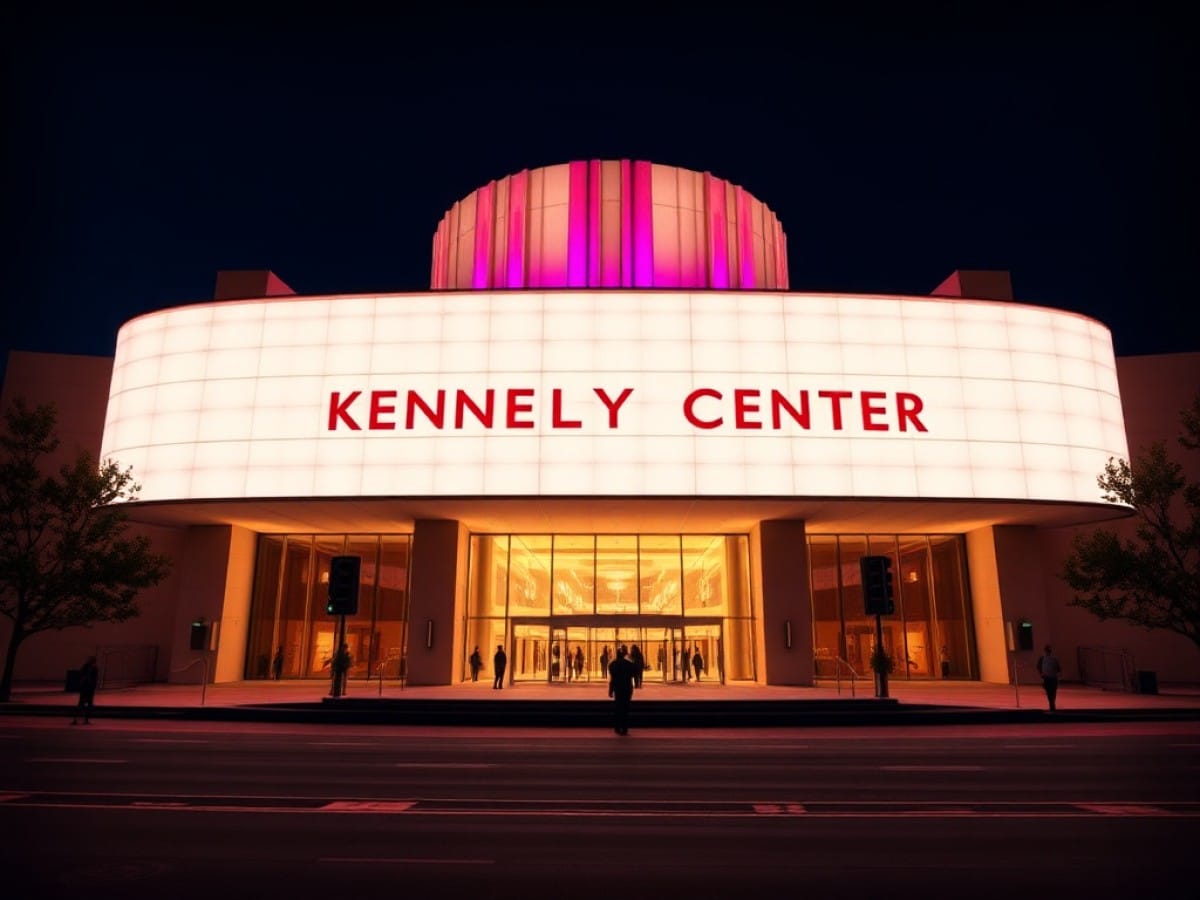
Transformations at the Kennedy Center
Merely a year ago, Washington DC’s Kennedy Center was celebrated as a premier institution for the performing arts, home to a distinguished opera company and eagerly anticipating a season featuring the acclaimed musical Hamilton. It boasted a bipartisan board that maintained the storied respect and governmental support it had enjoyed since its mid-20th century inception.
However, the situation rapidly deteriorated. Following his inauguration on January 20, Donald Trump took the helm as the chair of the Kennedy Center. He quickly ousted the seasoned executive director and appointed Richard Grenell, a former ambassador to Germany with no background in the arts, to manage the institution. This shift in leadership led to a mass exodus of artists and audience members alike. By November, Francesca Zambello, artistic director of the Washington National Opera, revealed to me that opera ticket sales had plummeted, a trend consistent throughout the center according to a Washington Post analysis.
Zambello shared that she received daily protests from disillusioned patrons, some returning their season brochures torn to pieces, with messages expressing their refusal to return while the “orange menace” remained in charge. The financial ramifications were so severe that the opera contemplated relocating independently due to Grenell’s mandate that all productions be pre-funded, a nearly impossible feat given the scale of the performances and necessary financial support.
The Opera’s Departure from the Kennedy Center
This week, it was made official: the opera will vacate the Kennedy Center. A new website has been set up, and donations and expressions of solidarity have surged. However, complex legal battles loom as the Kennedy Center holds the opera’s endowment. Despite the center’s claim of a mutual separation, the circumstances suggest otherwise. Starting this spring, opera enthusiasts might find shows relocated to George Washington University’s Lisner Auditorium, and later, more permanent venues such as Constitution Hall and the Shakespeare Theatre Company’s Harman Hall might host performances.
In a dramatic twist just before the holiday season, Trump whimsically suggested that the center be renamed after him, leading to his name being added to the building’s facade, prompting legal and public backlash. The change has since left the center in a somber state, described by an insider as resembling a “funeral parlour.” The repercussions continue to ripple, with event cancellations including the longstanding Martin Luther King Day concert, which had been a fixture at the center for over two decades.
As for the remaining resident groups, such as the National Symphony Orchestra (NSO), their future is uncertain. NSO’s music director, Gianandrea Noseda, issued a vague statement affirming the orchestra’s community role, seemingly distancing the group from the unfolding drama.
Cultural Shifts in Washington
Meanwhile, other cultural shifts in Washington include the Smithsonian Institution’s National Portrait Gallery altering its portrait and description of Trump, an act perceived as conceding to his displeasure over references to his impeachments. The Smithsonian also faced pressure to align its exhibits and narratives with a more flattering portrayal of American history, reflecting the ongoing tug-of-war over the nation’s cultural narrative under Trump’s administration.
As Trump’s second term progresses, the battle over America’s cultural identity intensifies not only in its streets but within its revered institutions. It remains to be seen how these cultural entities will navigate the challenges ahead, whether they will stand their ground or capitulate in the face of political pressures.
Charlotte Higgins is the chief culture writer for the Guardian.
Similar Posts:
- Soprano Ausrine Stundyte Masters Trauma in Opera: How She Plays a 300-Year-Old Woman
- Pimpinone Review Unveiled: A Riveting Performance at Linbury, London!
- “The Merry Widow” Dazzles at Holland Park: A Must-See Lehar Opera in London!
- Embracing Freedom: Meet the Retirement Rebel Living Life to the Fullest
- Michael Sheen Transforms Theatre: Inside His Bold Welsh National Debut with “Our Town”

Fatima Clarke is a seasoned health reporter who bridges medical science with human stories. She writes with compassion, precision, and a drive to inform.