Defense Minister of Latvia Steps Down Amid Drone Intrusions
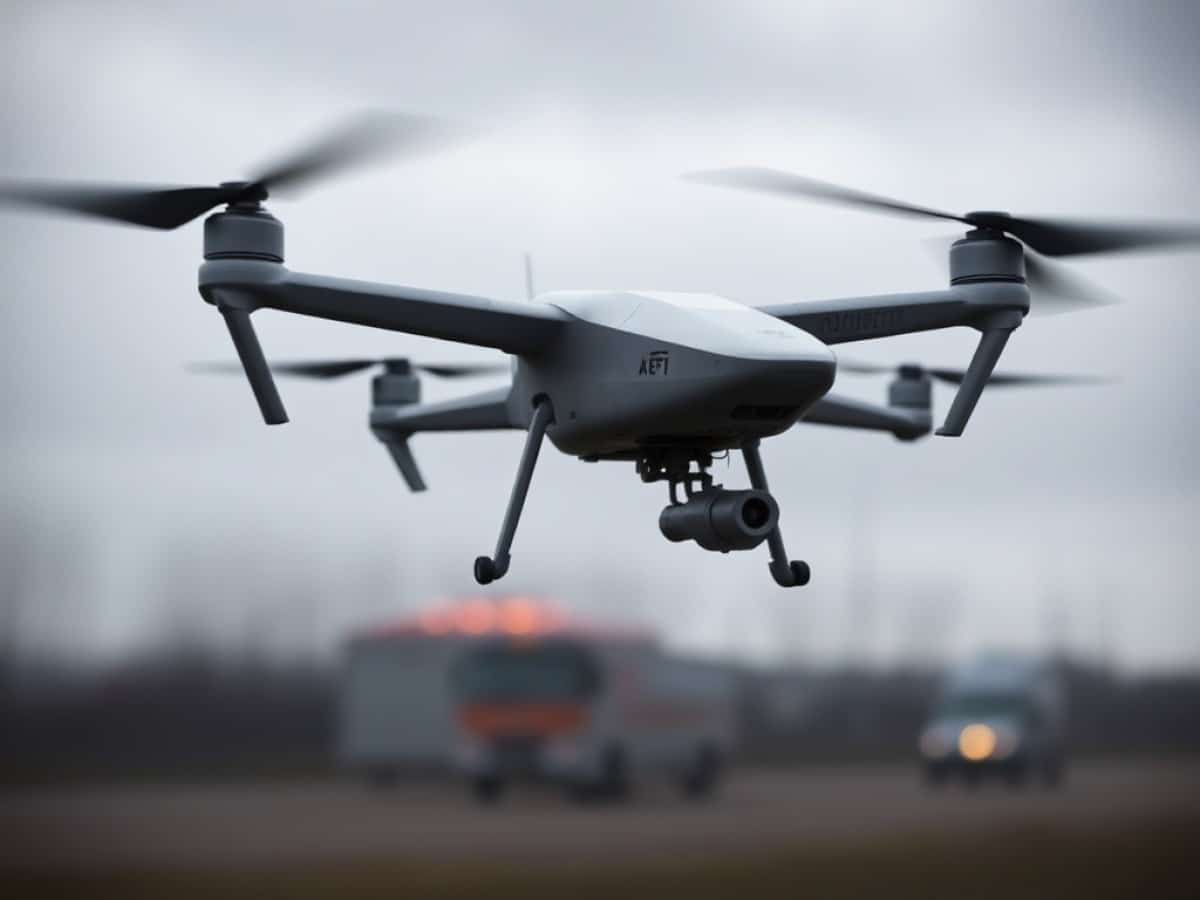
In Vienna, Latvia has announced the resignation of its defense minister following another intrusion of Ukrainian drones into the nation’s airspace, this time targeting an unoccupied fuel depot. This recent event is part of a continuing issue involving Ukrainian drones that have mistakenly violated the airspace of Baltic NATO members while supposedly aiming for Russian sites distant from Ukraine’s capital.
On the 7th of May, two drones crossed into Latvian territory from Russian airspace, striking a fuel depot without causing any injuries. There have been similar occurrences earlier in the year, such as in March when a Ukrainian drone collided with a chimney at a power station within the Baltic region.
Changes in Latvia’s Defense Leadership
Following the latest airspace violation, Latvia’s Prime Minister Evika Siliņa expressed her loss of confidence in Defense Minister Andris Sprūds, citing a diminished trust from the public and prompting his resignation. He resigned over the weekend, with Colonel Raivis Melnis from the Latvian Army appointed as his successor.
Additionally, on the same day, Ukraine’s Foreign Minister Andrii Sybiha acknowledged that the drones involved in the incident were dispatched by Ukraine, but stressed that they were not intended to enter Latvian airspace. He attributed the misdirection of these drones to Russian electronic countermeasures, which he claimed were used to intentionally redirect the drones away from their original targets in Russia to friendly territories instead.
A day before his resignation, during the Defence 24 Days conference in Warsaw, Poland, the then-defense minister, Andris Spruds, participated in a panel discussion, as captured in a photograph by Omar Marques for Getty Images.
Speculations on Drone Misdirection
Earlier this year, when drones hit all three Baltic states, there was speculation that Russian electronic warfare capabilities were the cause, suggesting that Russia might be redirecting these drones back to the sender but towards Europe instead. The recent acknowledgment by Ukraine’s top diplomat has provided the most concrete public confirmation of Moscow’s alleged tactics to date.
Fortunately, these incidents involving stray Ukrainian drones have not resulted in any casualties. However, they have exposed significant vulnerabilities in NATO’s air defenses on its eastern borders, with the absence of fatalities largely attributed to luck.
In a recent strike that occurred 40 kilometers within Latvian territory from the Russian border, four empty oil tanks were damaged, necessitating fire department intervention to manage a smoldering area roughly 30 square meters in size. The incident led to the closure of schools in Rēzekne, the activation of air raid alerts in three municipalities, and reports of explosions heard by local residents. In response, French NATO jets assigned to Baltic Air Policing were scrambled.
Initial responses from Latvian officials suggested that the drones were not shot down due to concerns over civilian and infrastructure safety. However, Sprūds later shifted this stance, asserting the importance of intercepting such drones, a responsibility he shared with the head of the Armed Forces.
In light of the May 7 incident, the Baltic states, particularly Latvia and Lithuania, have urged NATO to enhance regional air defenses. Lithuania’s Defense Minister Robertas Kaunas emphasized the need for improved anti-drone defenses, calling for additional capabilities to strengthen the region’s security framework.
Similar Posts:
- NATO Jet Downs Ukrainian Drone Over Estonia: Tensions Rise Amid Airspace Violations
- Finland Shuts Airspace, Limits Sea Traffic Near Russia: Drone Threats Escalate
- Swedish Navy Captures Russian Drone Near French Carrier: Tensions Rise in Baltic Sea
- Ukrainian Unmanned Vessel Destroys Shahed Drone: A First in Maritime Warfare!
- Ukraine Ready for Russian Retaliation After Drone Incident: Defense Minister Pistorius Confirms

Jamal Peterson reports on defense, aerospace, and tech policy. With a military background and a strategic mind, he dissects complex subjects with clarity, offering readers sharp, reliable insights.