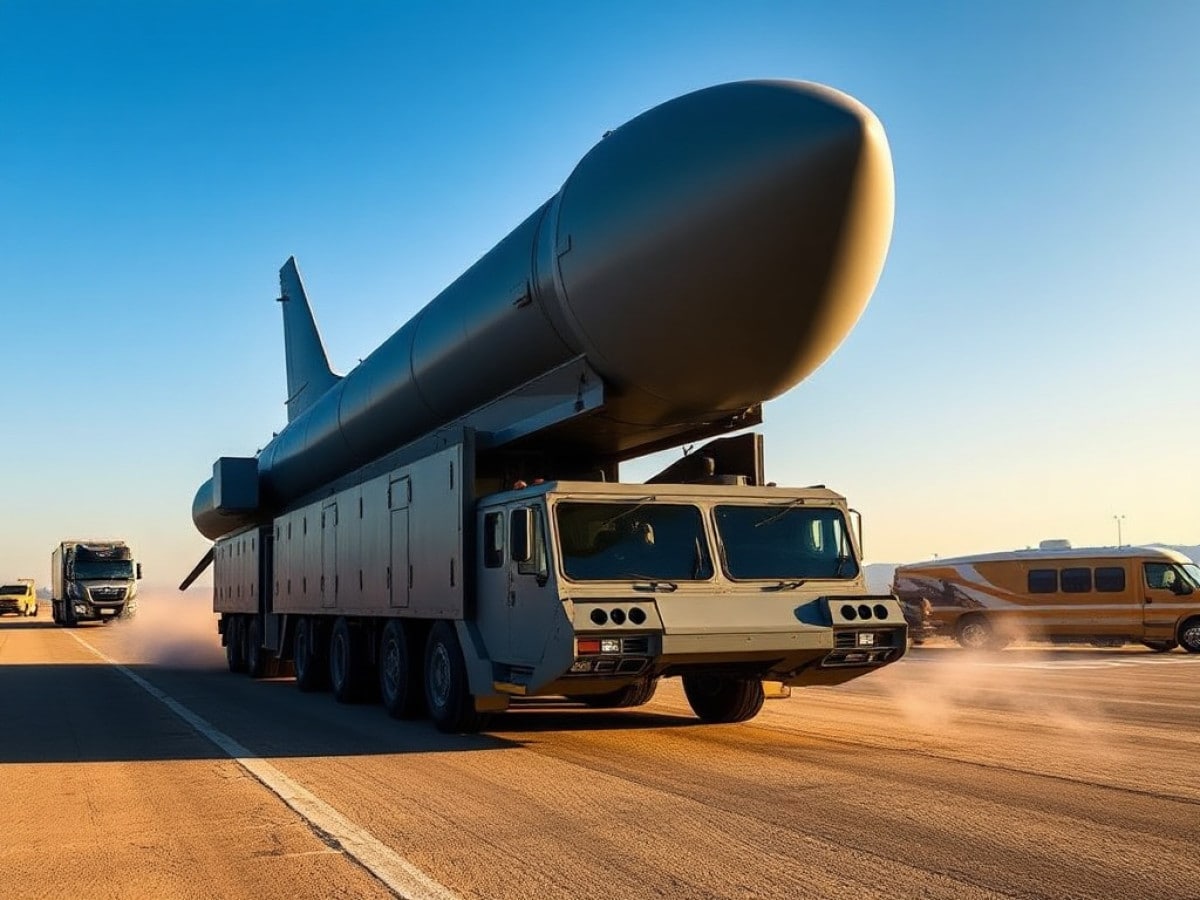
The aging fleet of Minuteman III intercontinental ballistic missiles in the United States is creating a pressing issue for the U.S. Air Force, which now also has to deal with outdated vehicles used for transporting missile components like warheads and rocket engines.
The Air Force is seeking to procure additional armored vehicles to replace the current Payload Transporter, known as PT III. The new Payload Transporter Replacement (PTR) aims to address issues related to the obsolescence of parts, the age of the existing fleet, rising maintenance costs, and current vehicles’ failure to meet the necessary security and asset protection standards. This need is outlined in the Air Force’s Request for Information/Sources Sought notice, which has a deadline of March 12.
The U.S. Air Force intends to acquire five additional PTRs. In 2019, Armorworks was awarded a five-year contract to deliver 25 PTRs.
Most details, including the technical specifications from the RFI, are classified. Nevertheless, the basic design of the PTR vehicle resembles a robust tractor-trailer which would blend into regular highway traffic. According to the RFI description, it consists of a specially armored tractor that pulls a similarly protected trailer, both equipped with an auxiliary power unit.
As stated in the document, “The PTR is exclusively used for the transportation of Aerospace Vehicle Equipment (AVE) to and from host bases and ICBM launch facilities (LF), and it is the only platform used for AVE removal and replacement operations while stationed over the LF.” The AVE includes the Reentry System (RS), Missile Guidance Set (MGS), Propulsion System Rocket Engine (PSRE), among other components.
Armorworks describes the PTR vehicle as featuring an armored cab and a cargo containment system resistant to blasts and forced entry, designed to transport nuclear missile components discreetly and safely on air-cushioned pallets.
Contractors interested in responding to the RFI are expected to detail their experience with designing military-grade ballistic armor and conducting shock and vibration testing. They should also provide information about their expertise in developing and producing designs certified for nuclear use, collaborating with nuclear surety organizations to obtain nuclear design certifications, and managing engineering changes that affect nuclear certified designs, as per the notice.
The issue with transport vehicles is among several challenges facing the current U.S. fleet of 400 Minuteman III missiles, initially deployed in 1970. A report by the Government Accountability Office in September 2025 highlighted difficulties related to parts obsolescence and aging infrastructure.
Efforts to replace the Minuteman, including the MX Peacekeeper in the 1980s and the ongoing LGM-35A Sentinel program, have encountered numerous setbacks, such as design flaws and budget overruns. This suggests that the Minuteman III may need to continue serving as America’s primary land-based ICBM until potentially 2050, as warned by the GAO.
Similar Posts:
- US Air Force Could Extend Minuteman III Nukes to 2050: New Report Reveals
- US Navy Seeks Innovative Railcar for Ballistic Missile Transport: Get the Details!
- US Navy Launches Trident Missiles: Demonstrates Nuclear-Capable Firepower in Test
- Grey Wolf Helicopter Triumphs in Debut Mission: See How It Soared on Its First Operation!
- France Set to Choose Rocket Artillery: Plans for Ballistic Missile by 2035

Jamal Peterson reports on defense, aerospace, and tech policy. With a military background and a strategic mind, he dissects complex subjects with clarity, offering readers sharp, reliable insights.