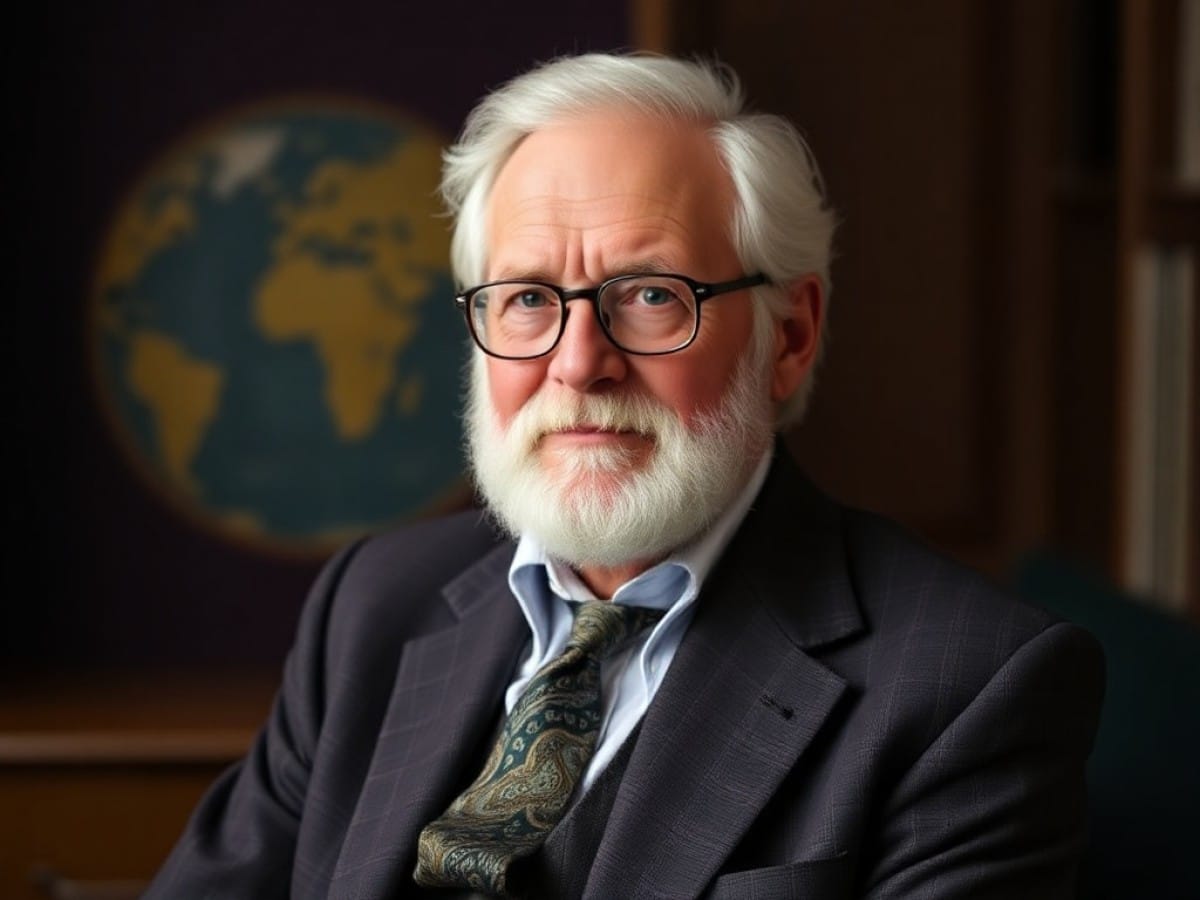
While serving as a medical missionary in Nigeria during the 1960s, Foege and his colleagues devised a “ring containment” strategy to control a smallpox outbreak.
ATLANTA (AP) – Dr. William Foege, a pivotal figure in one of humanity’s greatest public health achievements—the global eradication of smallpox—has passed away.
Foege died on Saturday in Atlanta at the age of 89, as reported by the Task Force for Global Health, an organization he helped establish.
Foege was renowned in the public health sector. He was a physician noted for his brilliant mind and calm demeanor, with a natural aptitude for combating infectious diseases.
He served as the director of the U.S. Centers for Disease Control and Prevention in the late 1970s and early 1980s, and later held other significant leadership roles in campaigns addressing global health issues.
However, his most significant contribution occurred earlier, with his work on smallpox, one of the deadliest diseases in human history. For centuries, it killed about one-third of those infected and left most survivors with severe facial scarring from pustular lesions.
Vaccination campaigns against smallpox were already well established by the time Foege was a young doctor. In fact, the disease was no longer present in the United States. However, infections continued in other parts of the world, and efforts to eliminate the disease were faltering.
While working as a medical missionary in Nigeria in the 1960s, Foege and his colleagues developed a “ring containment” strategy, where a smallpox outbreak was controlled by identifying each case of smallpox and vaccinating everyone who had come into contact with the infected patients.
The method relied heavily on swift investigation and arose from necessity. There simply were not enough vaccines available to immunize everyone, Foege wrote in “House on Fire,” his 2011 book about the smallpox eradication campaign.
The strategy was effective and became crucial in helping to eradicate smallpox from the world permanently. The last natural case was recorded in Somalia in 1977. By 1980, the World Health Organization declared smallpox eradicated from the planet.
“If you look at the simple metric of who has saved more lives, he ranks at the top of the pantheon. The eradication of smallpox has prevented hundreds of millions of deaths,” stated former CDC director Dr. Tom Frieden, who regularly consulted with Foege.
Foege was born on March 12, 1936. His father was a Lutheran minister, but he became interested in medicine at the age of 13 while working at a pharmacy in Colville, Washington.
He earned his medical degree from the University of Washington in 1961 and a Master’s in Public Health from Harvard in 1965.
He was the director of the CDC based in Atlanta from 1977 to 1983, and later held other leadership roles in international public health, including periods as the executive director of the Carter Center and a senior fellow at the Bill and Melinda Gates Foundation.
In 2012, President Barack Obama awarded Foege the Presidential Medal of Freedom, the country’s highest civilian honor. In 2016, while bestowing an honorary degree on Foege, Duke University President Richard Brodhead called him “the Father of Global Health.”
“Bill Foege had an unwavering commitment to improving the health of people around the world, through strong coalitions with a defined purpose that applied the best available science,” said Dr. Patrick O’Carroll, Executive Director of the Task Force for Global Health, in a statement. “We strive to uphold that commitment in each of our programs, day after day.”
Similar Posts:
- Bedbugs at Home: Discover the Diseases They Carry and How to Eliminate Them
- Deadly Disease Hits Largest Elk Herd: Urgent Talks to Reduce Numbers!
- Health Department Considers Measles Vaccination Booths in CDMX Metro: Protecting Commuters!
- Covid and Flu May Activate Cancerous Cells in Lungs: Specialist Reveals
- INCan Earns Prestigious Quality Recognition from American College of Radiology: A Milestone Achievement