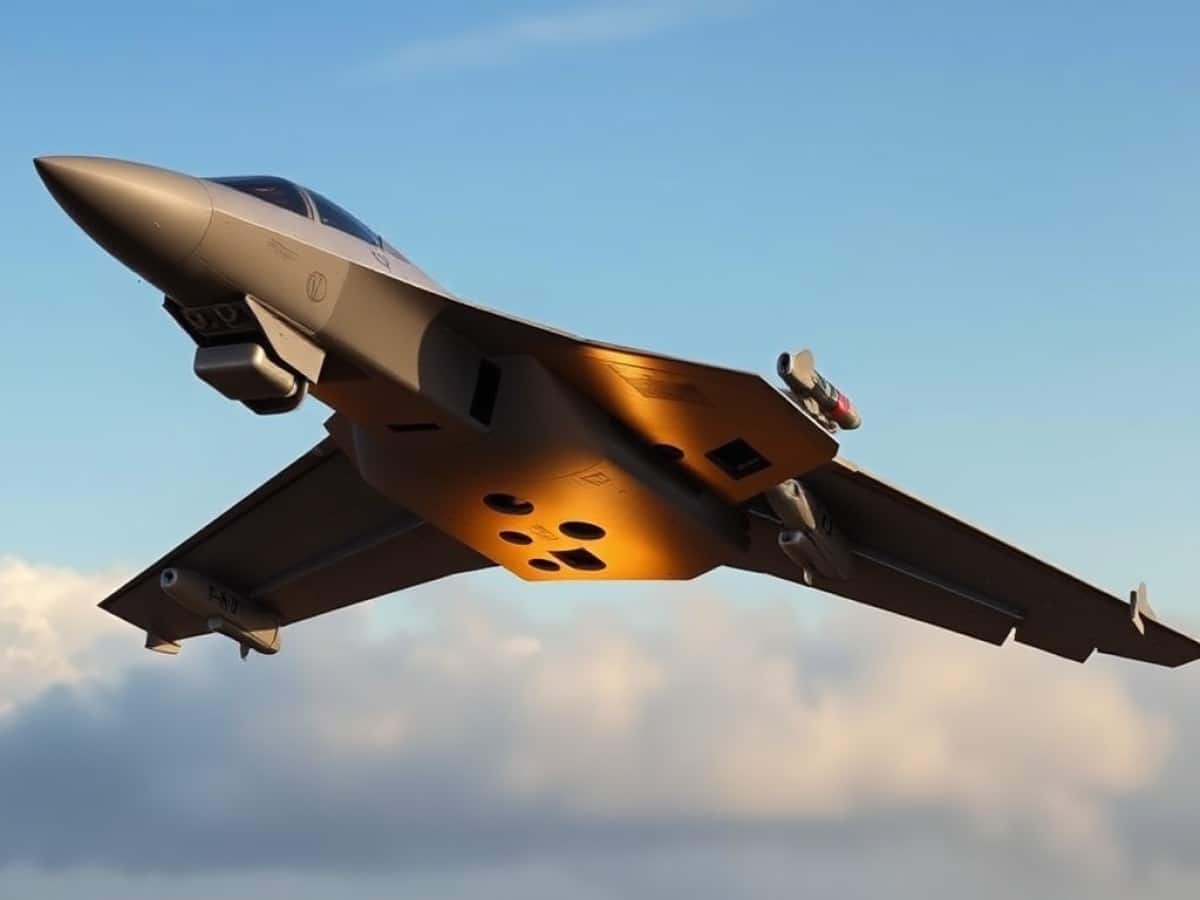
PARIS — Airbus Conducts Missile Test with Frankenburg Technologies on Drone Interceptor
In a recent development, Airbus has teamed up with defense innovator Frankenburg Technologies to conduct trials on a missile-equipped jet-powered interceptor designed specifically to counter one-way attack drones. This collaboration highlights their initiative to offer an economical defense solution in combating such drones.
The trial featured the reusable Bird of Prey interceptor drone, which successfully completed its initial test flight in a realistic military training environment located in northern Germany. According to a joint press release from Monday, the interceptor autonomously located, identified, and engaged a medium-sized one-way attack drone using a Mark I air-to-air missile from Frankenburg.
Global Conflicts Highlight the Need for Cost-Effective Drone Defense
Recent conflicts, such as the ongoing war in Ukraine and tensions in the Middle East, have emphasized the emerging threat posed by inexpensive one-way drones like the Shahed drones from Iran. These drones are relatively cheap compared to the costly interceptors typically used for neutralization. This disparity has prompted Western defense agencies and companies to urgently seek more affordable counter-drone measures instead of relying on high-cost, limited-supply air-defense missiles.
Mike Schoellhorn, CEO of Airbus Defence and Space, stressed the importance of addressing the tactical challenges posed by kamikaze drones. He praised the collaboration with Frankenburg, pointing out that their combined efforts have resulted in an effective and economically feasible solution that addresses a significant capability shortfall in current asymmetric warfare scenarios.
Technical Specifications and Capabilities of the Bird of Prey Drone
The Bird of Prey interceptor is based on Airbus’s Do-DT25 target drone, which boasts a top speed of 555 kilometers per hour (approximately 300 knots). This drone, when equipped with Frankenburg’s missiles, allows for cost-effective large-scale interception operations. Frankenburg noted that the interceptor can engage multiple aerial targets over its lifespan, drastically reducing the cost per intercept.
The integration of Frankenburg’s missile technology onto the Airbus platform was efficiently completed within nine months, showcasing the rapid development capabilities of the startup.
The prototype drone used in the tests has a wingspan of 2.5 meters (8.2 feet) and can take off with a maximum weight of 160 kilograms. It was equipped with four Mark I missiles for the test, although the operational version will have the capacity for eight missiles.
Kusti Salm, CEO of Frankenburg, highlighted the significance of this development in air defense, marking it as a pioneering integration of a new class of low-cost, easily manufacturable interceptor missiles on a drone platform. This integration is set to redefine the economics of air-defense, enabling effective defense against large-scale aerial threats.
The Frankenburg Mark 1 missile, which is used in this setup, is a lightweight guided interceptor missile, weighing less than 2 kilograms and measuring 65 centimeters in length. It is capable of engaging targets up to 1.5 kilometers away, and is equipped with a fragmentation warhead, making it the lightest of its kind currently developed.
Looking ahead, Airbus and Frankenburg are planning additional test flights for 2026, which will incorporate a live warhead. These tests aim to further refine the operational capabilities of the system and demonstrate its effectiveness to potential clients. The Bird of Prey is designed to integrate seamlessly into NATO’s air-defense framework through Airbus’s advanced battle-management system.
Similar Posts:
- Babcock & Frankenburg Unveil Tiny Anti-Drone Missile: A Game-Changer in Defense Technology!
- Interceptor Drones Revolutionize Air-Defense: Ukraine Gains Economic Edge
- Japan Embraces Interceptor Drones: Joins Global Defense Trend
- Australia Unveils Cutting-Edge Hybrid Air Defense System: A Game Changer in Military Tech
- Ukrainian Unmanned Vessel Destroys Shahed Drone: A First in Maritime Warfare!

Jamal Peterson reports on defense, aerospace, and tech policy. With a military background and a strategic mind, he dissects complex subjects with clarity, offering readers sharp, reliable insights.