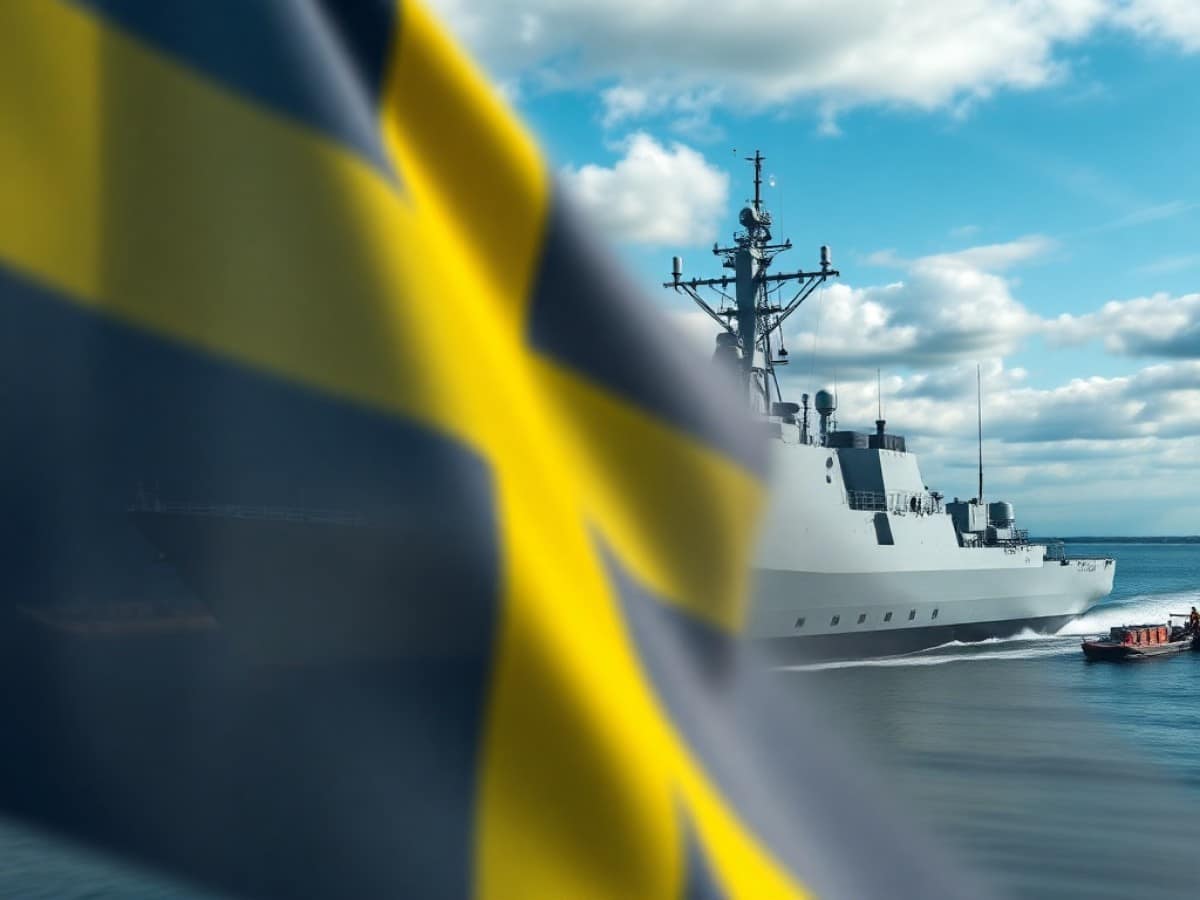
Sweden Chooses France’s Naval Group for Frigate Acquisition
PARIS — In a significant defense procurement, Sweden has selected France’s Naval Group to supply four FDI frigates, in a contract potentially exceeding 40 billion Swedish kroner (about US$4.2 billion). This decision places the French bid ahead of other contenders, including Spain’s Navantia and the United Kingdom’s Babcock International.
The cost per frigate is estimated to be just over 10 billion Swedish kroner, subject to variations based on the specific equipment and systems incorporated, according to Swedish Defence Minister Pål Jonson during a press conference in Stockholm on Tuesday. These ships will be outfitted with the MBDA’s Aster 30 missiles, designed for long-range air defense.
This purchase is among Sweden’s largest defense investments since the introduction of the Gripen fighter jets in the 1980s and is set to enhance the nation’s air-defense capabilities threefold, stated Prime Minister Ulf Kristersson. For the Naval Group, this represents a crucial victory, especially following a previous setback when Norway opted for the UK’s Type 26 frigate over the French design in August of the preceding year.
“The rapid deployment of these frigates is absolutely critical given our current severe security context,” Jonson emphasized. He further explained that the FDI frigates represent a sophisticated maritime combat solution that would require considerable resources for any adversary to challenge.
The choice of the Naval Group’s FDI, also known as the Frégate de Défense et d’Intervention in French, was influenced by factors such as delivery timelines, a currently active production line which ensures high reliability in delivery, and a proven integrated air-defense system. Jonson also highlighted the benefits of cost-sharing with other FDI users like France and Greece.
The first vessel, which will be part of the newly named Luleå class, is slated for delivery in 2030, with subsequent frigates arriving annually, Jonson detailed.
Recent defense interactions include France’s order from Sweden for two of Saab’s GlobalEye airborne early warning and control aircraft last December, with options for additional units.
Jonson clarified that the primary factor for selecting the French frigate was timely delivery, rather than any offset agreements. He noted that the upcoming negotiations with France and the Naval Group would finalize the cost based on the chosen subsystems and weaponry. The deal is poised to not only strengthen Swedish-French defense relations but also pave the way for broader cooperation.
Prime Minister Kristersson disclosed that he had personally communicated with French President Emmanuel Macron to inform him of the decision ahead of any media reports. He also confirmed that the choice of the frigate was unrelated to ongoing discussions about cooperation on France’s nuclear capabilities.
The addition of these new frigates will significantly bolster the capabilities of the Swedish Navy and armed forces. Sweden plans to continue utilizing its current Visby corvettes for an extended period, in conjunction with the forthcoming Luleå class, Jonson affirmed. These corvettes will receive upgrades to enhance their air-defense features, added Swedish Chief of Defence Gen. Michael Claesson.
Kristersson, Jonson, and Claesson shared these insights during a press briefing held aboard the Visby-class corvette Härnösand, docked at Stockholm’s historic Skeppsbron quay. The Swedish corvettes measure 73 meters in length and have a displacement of 650 tons.
The new surface combatants are designed to operate throughout NATO’s operational zone, requiring larger ships than the Visby-class corvettes, equipped with superior long-range air defenses, according to Jonson. The FDI frigates, measuring 122 meters in length and displacing about 4,500 tons, are smaller than many contemporary frigate models from the UK, Spain, Italy, and Germany.
In addition to the Aster 30 missiles, which are capable of intercepting ballistic missiles and are comparable to the land-based Patriot air-defense system, the frigates will also be equipped with the CAMM-ER medium-range air-defense system by MBDA, Jonson explained.
The contract discussions will include demands for the integration of Swedish components like Saab’s RBS-15 anti-ship missile, Torped 47 lightweight torpedo, Giraffe G1X radar, Trackfire remote-weapon station, and the BAE Systems Bofors 57mm naval gun and 40mm cannon, Jonson specified.
Claesson emphasized the importance of ensuring system compatibility with NATO standards, noting the FDI’s integrated command-and-control capabilities. “The frigates will provide us with significantly greater operational flexibility to fulfill a broader range of NATO’s mission requirements,” he stated, mentioning that the move is also aimed at meeting NATO capability goals.
Naval Group had previously announced its capacity to produce two FDI frigates annually in October, and France had confirmed its order for the fifth and final planned FDI frigate for its navy in March, with delivery expected by 2032. The total budget for these five frigates is approximately €4.28 billion, about €850 million per unit, according to France’s 2019 defense budget.
In a related development, Greece exercised an option for a fourth FDI frigate in November and dispatched its first ship in the class, the frigate Kimon, to Cyprus in March.
The FDI is equipped with a Thales Sea Fire radar featuring four fixed panels, and France describes the frigate as fully digital, boasting significant computational power for processing sensor data.
Similar Posts:
- Sweden’s Frigate Decision Looms: France Eyes 2030 for Naval Upgrade
- France Completes Fleet Plan: Orders Final FDI Frigate from Naval Group!
- Swedish Navy Captures Russian Drone Near French Carrier: Tensions Rise in Baltic Sea
- Ukraine Upgrades Air Force: Buys 20 New Gripen Jets, Sweden Accelerates Donation of Older Models
- Norway’s $14 Billion Splash: Set to Purchase British Frigates

Jamal Peterson reports on defense, aerospace, and tech policy. With a military background and a strategic mind, he dissects complex subjects with clarity, offering readers sharp, reliable insights.