Even if the name Tan Dun doesn’t ring a bell, chances are you’ve encountered his compositions. He’s famously known for his soundtrack for Ang Lee’s film “Crouching Tiger, Hidden Dragon,” which garnered numerous awards in 2000. He also crafted the official anthem for the 2008 Beijing Olympics. His extensive portfolio boasts concertos for renowned classical artists such as Yo-Yo Ma and Lang Lang, a grand opera for the Metropolitan Opera, and even an Internet Symphony commissioned by Google/YouTube.
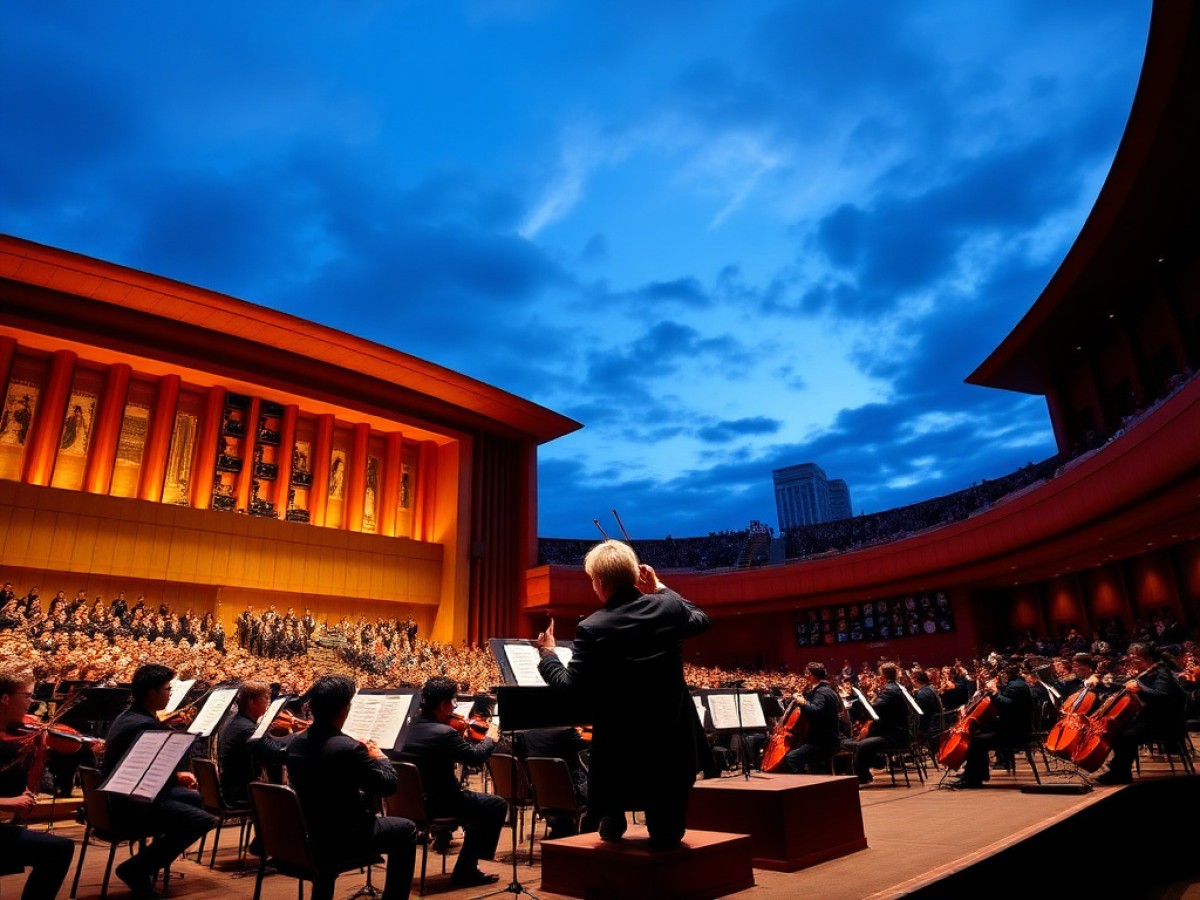
With such an impressive career, it’s no wonder that Tan’s Choral Concerto: Nine captivates listeners from the start. Created to celebrate Beethoven’s 250th birthday, the piece calls for the same orchestral and choral arrangement as Beethoven’s iconic last symphony, with the addition of extensive percussion. Tan conducted the UK debut himself, which featured an expanded stage setup at the London Philharmonic Orchestra to fit numerous percussion instruments, while the London Philharmonic Choir and the London Chinese Philharmonic Choir were positioned behind them.
The performance was rich with choral sound effects, from an initial hissing sound that transitioned smoothly from high to low pitches, to precisely synchronized mouth sounds, sliding pitches, dramatic collective breaths, and even elements of Mongolian throat singing. The more traditional choral parts delivered English renditions of works by Chinese poets Qu Yuan and Li Bai, with a vocal harmony that was expertly fine-tuned. The LPO added strong bass pedal drones, a blend of diatonic and pentatonic harmonies characteristic of Tan’s style, and brief references to Beethoven’s Ninth Symphony. The orchestral effects, including muted pizzicatos, brass players covering their mouthpieces, and percussionists clacking stones together, ensured the performance never veered into the mundane.
In contrast, Beethoven’s Ninth Symphony, as conducted by Tan, featured brisk tempos and sharp rhythms. However, the performance lacked a magical touch and a clear sense of progression through the work’s repeated sections. The so-called “chaos” chord at the start of the finale was more loud than dissonant, overwhelmed by booming brass. The vocal quartet – Elizabeth Watts, Hongni Wu, John Findon, and Matthew Rose – were well-coordinated, with Rose delivering a particularly powerful solo in the “Ode to Joy”. Despite their efforts and the immense power of the chorus, the performance felt somewhat routine and lacked the expected vibrancy.
Similar Posts:
- Stunning Performance: Danish National Symphony Orchestra Electrifies Royal Albert Hall!
- Sir John Rutter’s Grand Birthday Bash at St. Paul’s Cathedral: A Night to Remember!
- Royal Liverpool Philharmonic Stuns with Simpsons Oratorio: Elgar and Sibelius Keep It Classy!
- BBCSO Stuns with Phibbs’ Cello Concerto World Premiere: Schuldt Captivates at Barbican, London
- CB Symphony Dazzles: Yamada Leads Trombone Into Fujikura’s Sonic Depths!

Fatima Clarke is a seasoned health reporter who bridges medical science with human stories. She writes with compassion, precision, and a drive to inform.