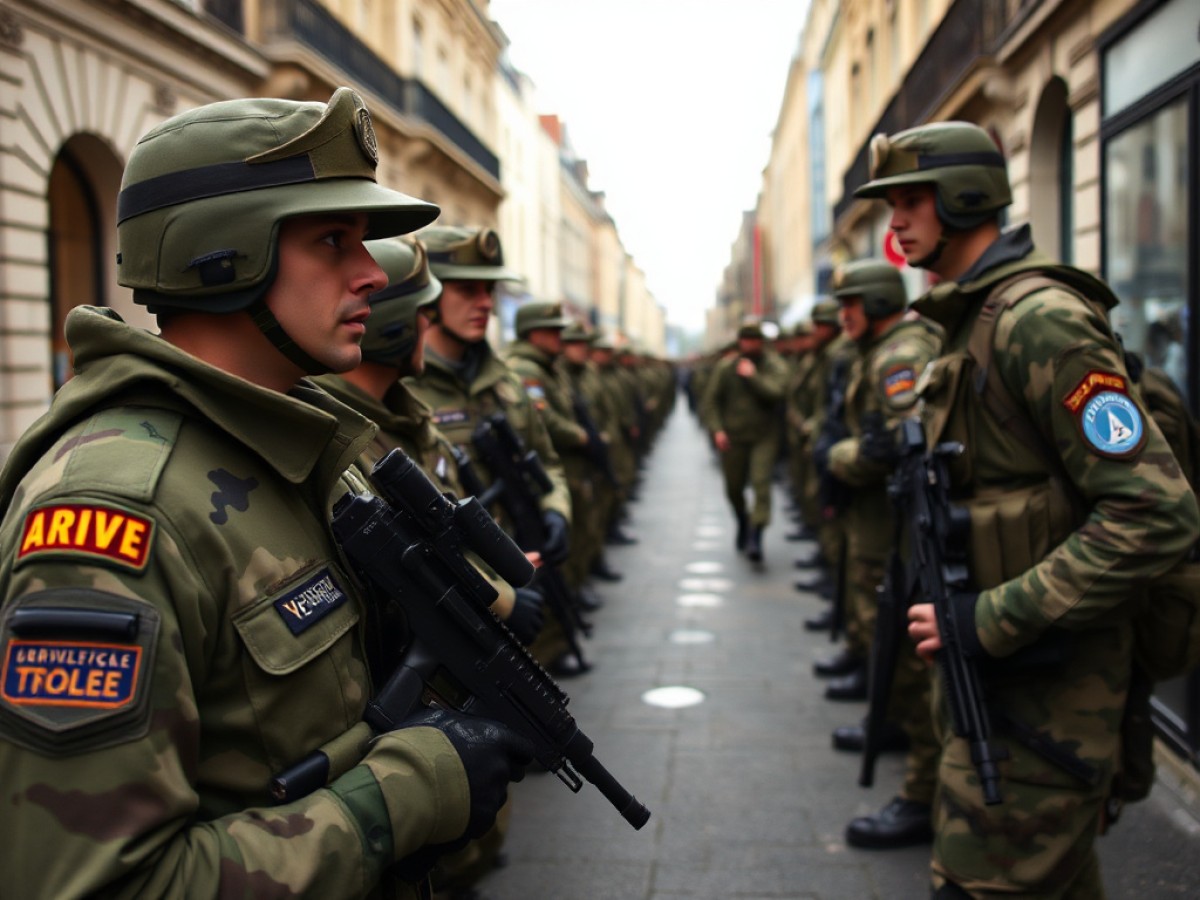
PARIS — The French military is experiencing an influx of potential recruits, forcing a slowdown in its recruitment efforts, according to Gen. Patrick Justel, the deputy chief of staff. He also highlighted deficiencies in military equipment, ranging from shortages in spare parts to gaps in advanced weaponry and anti-drone capabilities.
Unlike Germany and Poland, which have sufficient funding for military equipment but face challenges in attracting adequate personnel, France has an excess of candidates wanting to join the armed forces. Last year, financial limitations led to the decision not to recruit the number of candidates equivalent to a full regiment, Justel explained during a briefing.
Following Russia’s invasion of Ukraine in 2022, NATO members in Europe, driven by pressure from the United States to bolster their conventional defenses, have increased their defense budgets. While many nations, including France, are enhancing their reserve forces, Germany and Poland are actively working to significantly boost their numbers of active military personnel over the next few years, introducing incentives such as increased pay to attract more recruits.
Justel pointed out the stark contrasts in military recruitment and equipment acquisition between France and countries like Poland and Germany. He emphasized the challenges faced by these countries in recruiting enough personnel to match their ambitious military expansion plans, despite their substantial investments in hardware.
Specifically, Germany plans to grow its military forces to 260,000 active soldiers by 2035, up from the current 186,000, while Poland aims to expand its armed forces to 300,000 by mid-2025, up from about 210,000. In contrast, France currently maintains a military force of approximately 191,000 personnel, with plans to recruit 21,400 active-duty troops by 2026.
Despite Poland’s high ambitions for military growth, Justel noted the recruitment challenges it faces amid a booming economy and low unemployment rates, which intensify competition for labor. A report by RAND last year highlighted Poland having the second-lowest unemployment rate in the European Union.
In France, the dynamics of military recruitment are quite different. “This year, we’ve had to scale back on recruitment as our retention rates have improved and we are attracting high-quality candidates,” Justel said.
France benefits from having one of the largest youth populations in Europe, with those aged 15 to 19 comprising 6.2% of the population in 2024. This demographic advantage is coupled with high levels of trust in the military, with 84% of the French population expressing confidence in their armed forces, compared to 73% in Germany and 76% in Poland, according to a Eurobarometer poll published in May.
Justel also highlighted the strong motivation and dedication among young French individuals who aspire to join combat units and defend their nation, reflecting a robust patriotic spirit and demographic potential.
The deputy chief of staff expressed concerns about France’s current military equipment capabilities, noting significant deficiencies in areas such as deep fires, air defense, counter-drone operations, and electronic warfare. He acknowledged that recent defense-planning laws have somewhat improved the situation and that modernization of armored vehicles is progressing well, but emphasized the need for further enhancements.
Justel mentioned that while France excels in electronic warfare, it needs to expand these capabilities more broadly across the armed forces. He identified the need for additional battalions to improve effectiveness in command, logistics, deep fires, drones, and electronic warfare, describing these efforts as part of a long-term strategic shift.
In terms of international deployment, Justel explained that France’s current military commitments, such as in Romania and Estonia, make it challenging to permanently replace U.S. troops in parts of Europe. Instead, the French Army focuses on regular exercises in countries like Finland, which help maintain readiness and familiarity with local conditions, ensuring swift and effective deployment when needed.
Similar Posts:
- Norway Joins French Nuclear Pact: Distrust in US Leads to Historic Alliance
- US Considers Deploying Nukes in Poland, Baltic States: Alarming New Report Reveals
- Germany May Use French, UK Nukes as Deterrent, Says Merz: A Bold Shift in Defense Strategy?
- France Aims for Key Deal on Cutting-Edge Fighter Jet: Progress Toward ‘Mutually Acceptable’ Accord
- Norway’s $2 Billion Decision: Chooses Hanwha for Rocket Artillery Supply

Jamal Peterson reports on defense, aerospace, and tech policy. With a military background and a strategic mind, he dissects complex subjects with clarity, offering readers sharp, reliable insights.