BERLIN — Chancellor Friedrich Merz has clarified that Germany is not looking to develop its own nuclear arsenal, but is instead keen on a partnership with France and the UK, similar to NATO’s arrangement with the U.S., to create a nuclear shield for Europe.
Germany’s Nuclear Strategy
In a recent episode of the Machtwechsel podcast, which was broadcast online, Chancellor Merz shared his thoughts in what marked his first significant interview of the year. “I am not in favor of Germany developing nuclear weapons,” he stated emphatically.
Merz proposed exploring the possibility of elevating France and the UK to a status comparable to the U.S. in NATO’s nuclear umbrella, which aims to protect Europe and maintain NATO’s territorial integrity. “Like with the U.S., the ultimate decision would lie with France and the UK,” Merz explained, discussing potential deployment scenarios for these weapons.
Both France and the UK maintain robust nuclear deterrents primarily through submarine-launched ballistic missiles. Additionally, France has over 50 air-launched cruise missiles ready to be deployed with its Rafale fighters, which operate from both land and aircraft carriers.
NATO’s Nuclear Sharing
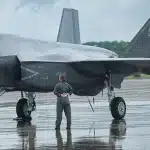
Under NATO’s current nuclear-sharing framework, German Tornado jets and the forthcoming F-35A aircraft are equipped to carry U.S. nuclear bombs, which are stored in Germany. However, the decision to deploy these weapons does not rest with Germany.
Previously, French President Emmanuel Macron has offered to extend France’s nuclear deterrence to Germany. Notably, France has kept its nuclear forces independent from NATO’s control to maintain strategic autonomy. “Times have changed, and I think it’s crucial we discuss the French offer,” Merz remarked, emphasizing the importance of reviewing such proposals in current times.
Future of Franco-German Nuclear Collaboration
In a speech anticipated to be delivered by the end of February, Macron has hinted he would clarify France’s nuclear stance, echoing former President Charles de Gaulle’s sentiment that France’s vital interests include a European dimension. Macron also highlighted ongoing strategic dialogues with Germany and several other European countries to align their national doctrines through “special cooperation, common exercises, and shared security interests.”
“This dialogue is not only important in itself but crucial for aligning our defense and security strategies and fostering a shared strategic culture between Germany and France,” Macron stated.
Broader European Context
Amidst the ongoing conflict in Ukraine and deteriorating relations with Moscow, discussions about nuclear capabilities have become more pronounced across Europe. Germany, in particular, finds itself reevaluating its military and defense strategies, moving away from its traditionally pacifist stance, yet constrained by national and international laws from actively pursuing certain types of nuclear deterrence.
Merz pointed out legal limitations due to the 2+4 Treaty, a post-Cold War agreement between East and West Germany and their World War II allies, and the nuclear nonproliferation treaty, which prohibits the spread of nuclear weapons.
Reflecting on historical context, Merz mentioned that the idea of a Franco-German nuclear partnership traces back to proposals by de Gaulle in the 1960s, with discussions now resurfacing. “We are only at the beginning,” said Merz, indicating that preliminary talks have started but nothing substantive has been decided yet.
In July, France and the UK agreed to deepen coordination of their nuclear deterrents, asserting that any severe threat to one would likely impact the other, requiring a mutual response.
Ruitenberg reported from Paris.
Editor’s note: This story has been updated to accurately describe France’s air-based nuclear deterrent, which consists of air-launched nuclear cruise missiles.
Similar Posts:
- Germany and France Abandon Joint Fighter Jet Initiative: What’s Behind the Shocking Decision?
- Norway Joins French Nuclear Pact: Distrust in US Leads to Historic Alliance
- US Considers Deploying Nukes in Poland, Baltic States: Alarming New Report Reveals
- Germany-UK Forge First Defense Pact Since WWII: Moscow Issues Stark Warning
- US Pulls 5,000 Troops from Germany: Officials Reveal Strategic Military Reduction!

Jamal Peterson reports on defense, aerospace, and tech policy. With a military background and a strategic mind, he dissects complex subjects with clarity, offering readers sharp, reliable insights.