Martin Parr might easily blend into a crowd with his unassuming demeanor, dressed in a plain sweater—likely from Marks & Spencer—and practical sandals paired with socks. His hair is neatly trimmed, parted on the side, and his appearance is as mild as his manner. At first glance, he could be mistaken for a mundane birdwatcher. Yet, this ordinary facade masks a visionary artist, a revolutionary figure in the world of photography.
So, what’s the story of Martin Parr? What insights could we gain if we delved into his thoughts? His biography mirrors that of an average person: born into a diverse family, raised by a caring grandparent, unremarkable school years with its share of joys and troubles, and a series of youthful adventures including college life, romantic escapades, and temporary jobs. His transition into adulthood was marked by hard work, global travel, and personal milestones such as marriage and fatherhood, all culminating in a career that spans achievements and challenges, and eventually wisdom and acclaim in his later years.
Parr’s journey is also a reflection of the century he lives in. He documented major historical moments starting with the severe winter of 1962, experienced the evolution from steam to electric trains, the cultural shifts of the 70s, and significant global events from the Troubles in Ireland to the fall of communism and the rise of global brands like McDonald’s. His lens captured the transition into the digital age, the social movements of recent decades, and personal encounters with historical figures and everyday people alike.
In his photography, Parr is like a visual chronicler akin to Forrest Gump, being present at pivotal moments in history. In the mid-80s, Parr’s photography transitioned dramatically into vibrant color through his project in New Brighton, a modest seaside town. There he captured scenes of mundane leisure in stark, vivid colors – gulls, littered beaches, and the local populace engaging in everyday pleasures. This marked a significant shift from the previous portrayal of such locations, offering a raw, unembellished look at working-class recreation.
Years before, I had approached Martin with the proposal to pen his biography. He agreed, but our endeavor was short-lived. My questions were met with succinct answers; deeper inquiries only circled back to his hobby of birdwatching, and he often concluded with the least helpful phrase for a biographer: “That’s all I’ve got to say about that.” His life’s essence, it seemed, was captured more in his photographs than in words.
A decade and a half later, I returned with a different approach, suggesting he narrate his life story through his images. This time, he agreed.
Today, Martin Parr stands as a seasoned observer of life, rich in experience. Though he continues to witness and document the world’s evolution, his recent works explore themes like the juxtaposition of comfort and discomfort through a series on smoking. He remains dedicated to capturing the mundane, continually finding fascination in the everyday.
So, if you find yourself being photographed by a gentle-looking man, particularly in an ordinary moment, consider it a unique encounter—you’ve just been ‘Parr-ed.’ WJ
Frozen Stream, Chessington, England, 1962-3
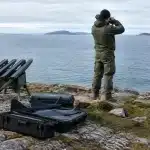
My earliest photographic memory is of capturing my father standing over a frozen stream, a scene just outside our house during the harsh winter of 1962-3. I was about ten years old, and the community spirit was tangible as we joined efforts to clear the snow. You can see him equipped with binoculars, a testament to his and my mother’s avid birdwatching, which shaped many of our family outings.
We often visited places like Thursley Common for birdwatching, which became a significant part of my childhood. Even trips to less appealing sites like Hersham Sewage Works were adventures, where we searched for migratory birds amidst the unpleasant smells, wearing wellington boots and occasionally collecting green tomatoes that never seemed to ripen, which my mother would then turn into chutney.
Birdwatchers, Surrey Bird Club, England, 1972
During breaks from college, I captured images of my father leading birdwatching excursions with the Surrey Bird Club, where he was president. His expertise in spotting the elusive Dartford warbler came through in his meticulous lists of sightings. This particular photo, taken during one of their picnic lunches, humorously captures two couples, both equipped with binoculars, their poses echoing the birds they sought. It was one of the first instances where I recognized the potential for humor in my photography.
Susie Mitchell, Paris, France, 1978
Despite my struggles with French during my school years, by the late 70s I began visiting France, and on one trip, I met Jean-Claude Lemagny, who managed the photography collection at the Bibliothèque Nationale de France. He purchased some of my early black-and-white prints, which although sold for modest sums, thrilled me and bolstered my reputation in France. Susie, who accompanied me because of her fluency in French, was less thrilled to be photographed, often shielding her face, claiming she looked terrible in photos—a sentiment I’ve never agreed with. Her discomfort doesn’t stop me; if anything, it challenges me to capture her unguarded moments, adding to the collection of photos I have of her. We’ve been together for 45 years now.
Colour and Flash, New Brighton, England, 1983-85
In 1982, Susie’s job moved us to Liverpool, and we found a home with views of the Mersey River. Nearby was the seaside resort of New Brighton, a place teeming with photographic potential. Despite its dilapidated state, it attracted visitors from across Merseyside for a taste of seaside amusement, complete with an ice cream parlor and arcade games.
Initially, I continued to work in black and white, as color photography was not yet widely respected in the UK—it was seen as trivial and commercial. However, by the late 70s, seeing the work of American photographers like Stephen Shore and William Eggleston, who were recognized in major museums, convinced me of color photography’s potential. The combination of vivid colors, flash, and the unique atmosphere of New Brighton was transformative for my work. It was then I fully embraced color, appreciating its immediacy and impact, and I never looked back.
Something That Seems Ordinary, Salford, England, 1986
I found myself photographing a seemingly mundane scene at a petrol station, an act other photographers might deem pointless due to its lack of glamour. Yet, there’s an inherent intrigue in the mundane. What appears ordinary now can gain significance over time. This image, nearly four decades old, now reveals much about that era’s consumerism through the outdated styles of cars, clothes, and even the petrol pump itself.
Conservative Midsummer Madness Party, Bath, England, 1988
In the late 80s, I gained access to a Conservative Party event in Bath. Back then, it was easier to get such permissions. Today, my reputation might make that more challenging. The photograph captures the essence of the event perfectly—men in suits and ties, a woman with hair so styled it seems immovable, epitomizing the ‘Midsummer Madness’ theme.
Small World, Kleine Scheidegg, Switzerland, 1990
In 1992, my photography exhibition on global tourism, titled “Small World,” opened in Paris. Among the attendees was Henri Cartier-Bresson, a titan of 20th-century photography and a co-founder of Magnum Photos. He was so perturbed by my exhibition that he sent me a fax stating that my work seemed from another planet, suggesting a profound disconnect between our visions. I saw this as a validation of my approach, embracing the critique as a sign of doing something impactful and different. My work intentionally contrasts with the celebratory nature of Cartier-Bresson’s—it critiques and questions, reflecting the complexity of modern life.
Lost ball, Chew Stoke, England, 1992
This image captures a quintessential British summer scene—a cricket match where things have gone slightly awry. The focus is not on professional athletes but on a community coming together, scrambling through the grass to find a lost ball so the game can continue. It’s these small, human moments that I find so telling and rich.
McDonald’s, Moscow, Russia, 1992
The opening of the first McDonald’s in Moscow was a landmark event, symbolizing a new era under Gorbachev’s policies. The excitement was palpable among the thousands who queued to experience this symbol of American culture. Dubbed the ‘Bolshoi Mac,’ it was the largest McDonald’s at the time, a beacon of the new consumerist spirit engulfing the post-Soviet space. This was a rare occasion I was permitted to photograph inside McDonald’s, capturing a moment of cultural and economic transition.
Pyongyang, North Korea, 1997
North Korea was perhaps the most surreal place I’ve ever photographed. In 1997, I joined a tour that took us around the country’s propaganda-laden sites, all meticulously staged to impress foreigners. The lack of cars and visible poverty was stark, yet our guides ensured we only saw what the regime wanted us to see. Despite the restrictions, I occasionally managed to capture candid shots, like the one from the bus window, offering a fleeting glimpse of the reality behind the facade.
A perfect cup of tea, Sand Bay, England, 1997
This photo of a perfectly brewed cup of tea, set against a red gingham tablecloth, was taken at Monk’s Rest cafe near Weston-super-Mare. It’s a simple yet iconic image, capturing a quintessentially British moment of leisure. This picture has become one of my most recognized works, often used to represent the comforting, everyday ritual of tea drinking.
Benidorm, Spain, 1997
I was drawn to Benidorm by its expansive beaches and the bustling promenade. Using a macro lens allowed me to capture intimate details of the holiday-goers, like the woman in the photo, who was soundly asleep under the sun, sporting blue eyeshields. It was a fleeting moment that produced one of my most famous images. Interestingly, I’ve been contacted by people claiming she was their grandmother, though none could conclusively prove it.
Senegalese street seller, Dakar, 2001
In 2001, while working on a fashion shoot in Dakar, I captured this image of a local street vendor whose tray of goods contrasted sharply with the luxury items I was there to photograph. The juxtaposition of his inexpensive wares with a high-end cigarette case from Louis Vuitton created a striking commentary on global economic disparities. This image, part of a series for a French fashion magazine, highlights the ironic clash between everyday street commerce in Dakar and the opulence associated with Western luxury brands.
Shalfleet Church Fete, Isle of Wight, England, 2007
I’ve always been captivated by the quaint charm of British country fetes, which seem to encapsulate a bygone era. At a fete in Shalfleet, the signage advising to take just one cherry tomato with a roll particularly amused me. It’s these small, peculiar details, often overlooked, that I find compelling. Unfortunately, the modern trend of covering food with cling film detracts from the aesthetic I seek to capture, although it does reflect current attitudes towards health and safety.
Spectators in Switzerland Watching Polo, St Moritz, 2011
At a polo match in St Moritz, I was less interested in the sport than in the spectators, who were engrossed in the game. Their expressions, attire, and even their pets, added layers to the scene, capturing the social dynamics at play. This image, part of a series on luxury and leisure, underscores the distinct cultural practices associated with the upper echelons of society.

Fatima Clarke is a seasoned health reporter who bridges medical science with human stories. She writes with compassion, precision, and a drive to inform.