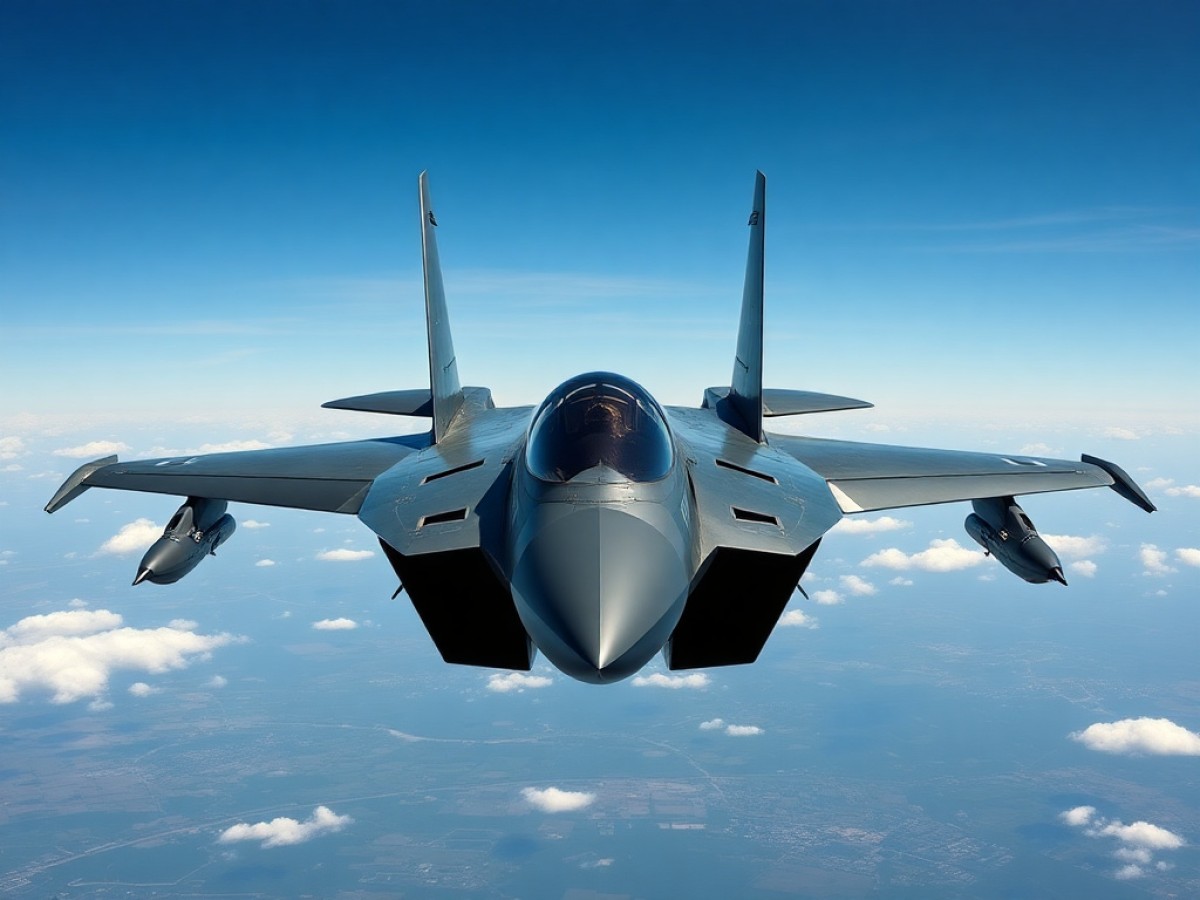
COLOGNE, Germany — In the wake of the halted Future Combat Air System (FCAS) program, German and Spanish firms are urging their governments to continue investing in the advanced sixth-generation fighter jet expertise developed during the project.
This plea was delivered through separate announcements made by the leading companies from both countries, Airbus and Indra, following recent news that German Chancellor Friedrich Merz and French President Emmanuel Macron have discontinued the sixth-generation fighter jet component of the FCAS.
This aircraft was intended to be the flagship element of the project, designed to integrate with drones, sensors, and communications gear to form a groundbreaking aerial combat system.
Persistent disputes over leadership roles and intellectual property rights between German industry leader Airbus and French counterpart Dassault Aviation ultimately led to the project’s collapse, overriding the political support from both nations.
On the German front, an alliance known as “Team Gen 6” has been formed, which includes major defense and aerospace entities such as Airbus Defence and Space, Autoflug, Diehl Defence, Hensoldt, Liebherr, MBDA Deutschland, MTU Aero Engines, and Rohde & Schwarz.
During the ILA Berlin Airshow this Thursday, these companies issued a collective statement advocating for the continuation of the sixth-generation fighter jet program as a national objective for Germany.
“A restructured approach is critical to achieve our shared goal: a dominant European air combat system that ensures our collective security,” the companies stated.
With the current FCAS contracts set to expire this year, these firms are requesting that the government maintain its financial support for the program, cautioning that any interruption in funding could cause an irreversible loss of technological expertise.
In Spain, the industry group includes major players such as Indra, the Spanish division of Airbus Defence and Space, Grupo Oesia, GMV, ITP, and Sener.
Significantly, these companies are expressing a willingness to collaborate on an international scale, potentially aligning with existing sixth-generation initiatives like the British-Italian-Japanese Global Combat Air Programme, or possibly involving aerospace entities like Sweden’s Saab.
This week, German Defense Minister Boris Pistorius highlighted several alternatives for Germany to acquire next-generation fighters following the FCAS development’s conclusion.
These alternatives include purchasing F-35 jets from the United States, participating in the GCAP, or pursuing an Airbus-led project in collaboration with other firms, which aligns closely with what German companies have been advocating in their recent joint declaration.
Similar Posts:
- Germany Considers More F-35s After FCAS Project Fails: Exploring Future Defense Strategies
- Germany Joins GCAP: New Leonardo Boss Cautions on Timing
- France Aims for Key Deal on Cutting-Edge Fighter Jet: Progress Toward ‘Mutually Acceptable’ Accord
- Crisis in French-German Fighter Jet Program: Dassault Points Finger at Airbus!
- Germany and France Abandon Joint Fighter Jet Initiative: What’s Behind the Shocking Decision?

Jamal Peterson reports on defense, aerospace, and tech policy. With a military background and a strategic mind, he dissects complex subjects with clarity, offering readers sharp, reliable insights.