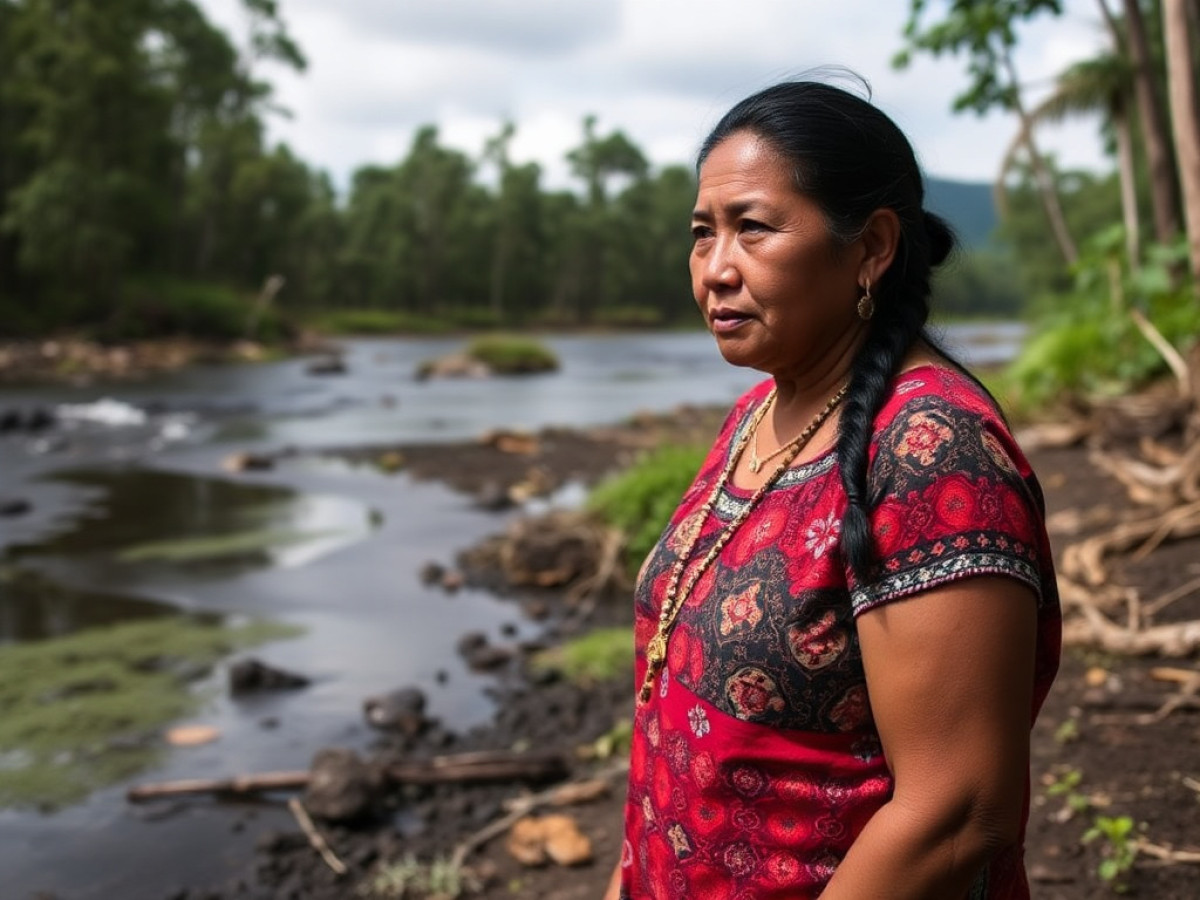
NUEVA LOJA, Ecuador (AP) — As she stood next to a darkly stained stream, an Indigenous woman gazed in dismay at the slick of oil floating on the water’s surface and the ruptured pipes traversing the forest. In the distance, flames from gas flares soared above the trees.
Julia Catalina Chumbi, a 76-year-old Shuar leader from the southern Amazon’s Pastaza province, had journeyed hundreds of miles to witness the environmental degradation caused by decades of oil extraction in Sucumbios, a northeastern province of Ecuador.
“The contamination is everywhere, even in the air we breathe,” she murmured softly.
Just moments before, she had been struck by a troubling revelation. In the vicinity of the oil fields in Sucumbios, locals are forced to purchase water due to pollution and health concerns, as the rivers have become unsafe for consumption.
“It’s heartbreaking to see this,” Chumbi expressed, noting how rivers in her own region remain potable.
Chumbi was one of roughly 30 Indigenous women from various parts of Ecuador’s Amazon who had embarked on a journey, termed a “toxitour” by activists, to visit areas affected by oil drilling, pipelines, and gas flaring. The purpose of the tour was to forge connections between women from regions where new oil projects are proposed and those who have lived alongside oil extraction for decades. The overlap of oil blocks with Indigenous territories often results in these communities being the first to witness the degradation of their rivers, forests, and food sources.
The delegation, representing seven Indigenous communities, convened in Nueva Loja over several days for workshops to exchange stories and deliberate on shared challenges. Known historically as Lago Agrio, a name attributed to the area in the 1960s by workers from Texaco after the Texan oil town of Sour Lake, Nueva Loja became a hub during the onset of Ecuador’s oil boom in the Amazon.
A Cautionary Visit to the Oil Fields
Traveling by bus, the women passed countless oil pipelines that lined the roads leading to the Libertador oil field, operated by Ecuador’s national oil company, Petroecuador. Here, they prepared banners for their march, one of which declared: “Amazon free from oil and mining.” The Associated Press observed as they quietly made their way through parts of the oil production area to see the environmental impacts firsthand, including polluted waterways and visibly affected plant life, with a noticeable absence of wildlife.
Salome Aranda, 43, from the Kichwa community of Morete Cocha in the central Amazon province of Pastaza, stood near a loud gas flare. Her face adorned with traditional paint, she shared that this visit offered her a rare glimpse of the environmental impacts close to oil operations, which she is typically barred from accessing in her own area.
“The wildlife is vanishing, and our crops are failing,” she observed. After returning to Nueva Loja, the group spent hours in workshops, reflecting on their observations and comparing them to the situations in their home territories. By the end of these sessions, they had started to develop strategies to resist potential new oil concessions in their areas.
The Threat of Further Expansion
“Women in the north have endured over fifty years of oil exploitation,” Natalia Yepes, a legal advisor for Amazon Watch in Ecuador, explained at a workshop. She emphasized the importance of sharing these experiences with women from central and southern regions now facing similar threats. Last year, the Ecuadorian government announced an ambitious plan to expand the oil and gas sector through new exploration and drilling, potentially opening vast regions of the Amazon to environmental degradation.
Critics argue that this expansion could lead to significant deforestation and pollution due to drilling and the associated infrastructure. Concerns are heightened by the fact that many local communities have not consented to these projects, a requirement under both Ecuadorian law and international human rights standards.
The ongoing debate over fossil fuel development in the Amazon is set to be a topic of discussion at an upcoming international conference in Santa Marta, Colombia, following the recent U.N. climate summit in Belem, Brazil.
Indigenous Advocacy Intensifies
For participants like Dayuma Nango, vice president of the Association of Waorani Women of Ecuador, the tour underlined the importance of continuing to resist oil development in Indigenous territories. “Our forest is essentially our mother, which is why we fight to protect it,” said Nango, who has faced threats due to her activism. The Waorani have successfully challenged major oil operations in the past, including a landmark court decision in 2019 that blocked drilling in one of their territories.
After witnessing the pollution in Sucumbios, Nango expressed concern that her community might suffer similarly if new projects are approved. “We refuse to endure what our brothers and sisters here are experiencing,” she stated firmly.
Toa Alvarado, 30, another Kichwa leader from Pastaza, echoed this sentiment. She recalled her father’s resolve to protect their land from miners, a legacy she is determined to continue.
The following day, the women joined in International Women’s Day events in Puyo, using the platform to highlight the environmental injustices faced by Indigenous women. “Today is about broadcasting to the world the violations against both our rights and the rights of nature,” stated Ruth Peñafiel, 59, from a northern Amazon Kichwa community.
For Chumbi, the lessons from the tour will bolster her resolve to oppose oil drilling in her Shuar community. “We are prepared to fight,” she declared, “even at the cost of our lives.”
Similar Posts:
- Amazon Tribes to UN: Stop Organized Crime Without Militarizing Our Lands!
- Amazon Crisis: Cattle Conflict Intensifies Tensions for Brazil’s Indigenous Peoples
- Amazon Crisis Escalates: Key Legal Battles Hit Brazil’s Supreme Court After Lula’s Congressional Setbacks
- Indigenous Youth in Colombia Fight to Protect Land: Escaping Violence to Save Their Heritage
- Brazil’s Amazon Wins Deforestation Battle: Forest Degradation Threatens Progress!

Morgan Ellis is an investigative journalist passionate about environmental policy and corporate accountability. With a background in climate science and years of reporting for nonprofit media, Morgan brings depth, clarity, and purpose to every story.