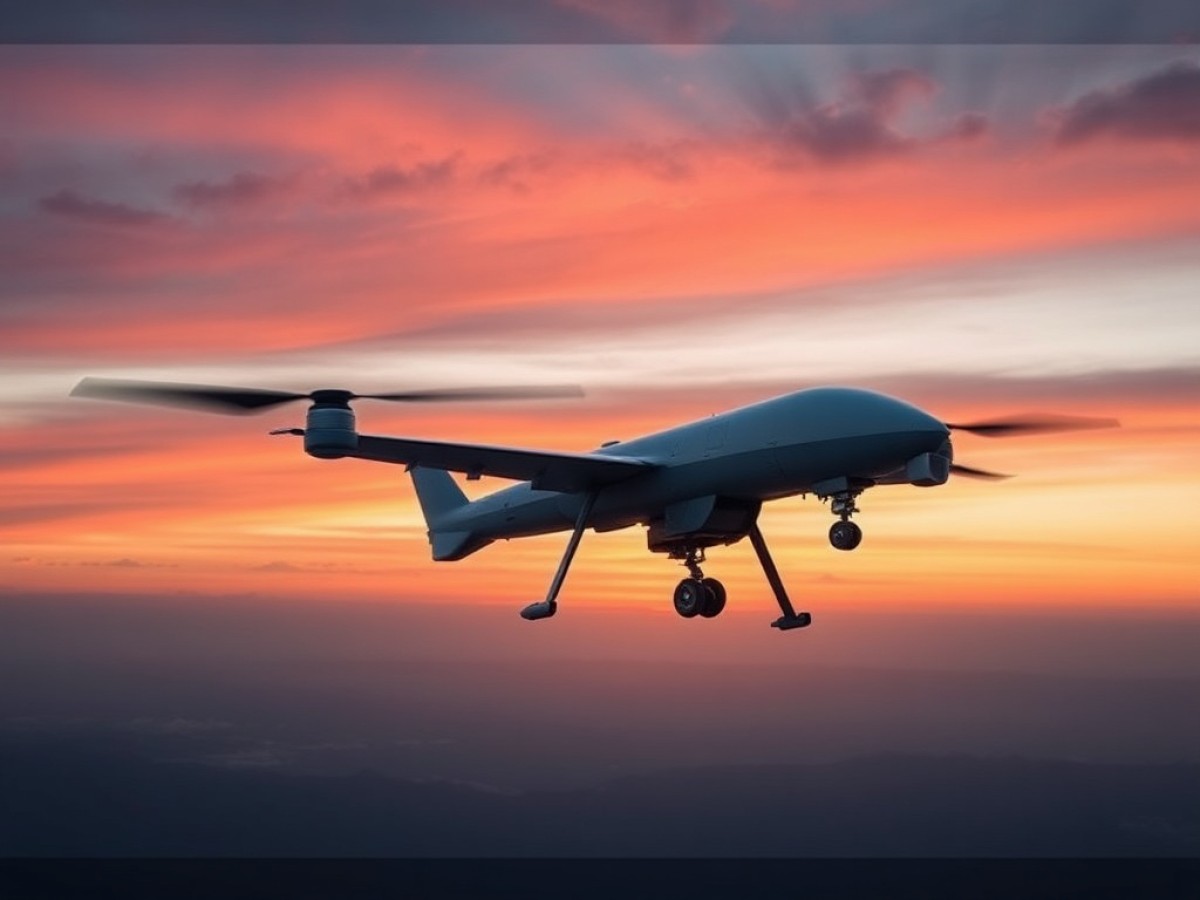
MANILA, Philippines — In response to potential delays in Tomahawk missile deliveries due to a strained U.S. arsenal post-Iran conflict, Japan is swiftly moving to integrate autonomous interceptor drones to bolster its standoff-strike capabilities.
The Japanese government’s Acquisition, Technology and Logistics Agency has issued an announcement for a demonstration to take place next month. The aim is to accelerate the procurement process and ensure rapid mass production and deployment of these systems.
By 2027, these drone interceptor systems are slated to be operational around key locations such as radar sites, bases, and vessels, as per the agency’s plans.
This initiative builds on a previous announcement by the Ministry of Defense which detailed requirements for autonomous systems capable of countering swarms of advanced “long-range suicide UAVs,” including those similar to the Shahed-136 model.
According to the requirements, the drones should already be operational within other military forces, proven in shooting down Shahed-type UAVs, and be compatible with existing radar and command systems. They should also be manageable by no more than two personnel and require minimal, straightforward maintenance.
The addition of these interceptor drones marks a significant expansion in Japan’s UAV strategy. The ministry previously engaged with Terra Drone, a company that deployed two interceptor drone models in Ukraine through local startups.
In March, Terra Drone invested in Amazing Drones, launching the rocket-type interceptor, Terra 1, and subsequently introduced a fixed-wing version, Terra 2, in partnership with Ukrainian defense company WinnyLab.
The response from the Japanese defense sector has been overwhelmingly positive, with significant interest in these interceptor drones, according to Terra Drone’s CEO Toru Tokushige.
The development of drone technology in Ukraine has underscored the value of such technology as a cost-effective alternative to traditional interceptor missiles, added Tokushige.
The conflict in the Middle East has demonstrated the effectiveness of Shahed-type drones, which have seen more use than traditional missiles. Their ability to travel up to 1,100 miles poses a significant threat, indicating that similar weapons could potentially reach as far as Japan, South Korea, and the Philippines from Northeast Asia.
“My initial perception of the defense industry was of a sector bogged down by tradition and bureaucracy. However, the recent experiences in Ukraine and the ongoing conflict in the Middle East have shifted that perspective, highlighting the strategic importance and investment potential of advanced drone technology,” Tokushige remarked.
Following the U.S. military’s 38-day campaign in Iran, dubbed Operation Epic Fury, there have been significant depletions in missile stockpiles. This has led to delays in fulfilling contracts with European allies and concerns over potential delays in Tomahawk missile deliveries to Japan.
The Center for Strategic and International Studies (CSIS) has expressed concern over a potential munitions shortage in the near future. Despite these challenges, U.S. Defense Secretary Pete Hegseth and Japanese Defense Minister Shinjiro Koizumi have denied any issues with Tomahawk deliveries, although Koizumi disclosed plans for Japan to boost its domestic missile production capabilities. This includes a new agreement under Operation Supercharge for joint U.S.-Japan production of interceptor missiles like the SM-6 and SM-3.
Japan’s defensive strategy, set for completion in 2027, envisions the deployment of advanced standoff capabilities, missile defense networks, and various unmanned systems including drones, ground vehicles, and submarines. The budget for these unmanned defense capabilities alone has seen a significant increase this year to 277 billion yen ($1.72 billion) from last year’s 111 billion yen ($690 million).
With a government proposal to boost defense spending to 3.5% of GDP, further investments in unmanned systems are anticipated. The ruling Liberal Democratic Party recently endorsed a plan to produce approximately 80,000 drones annually by 2030, though specific budget allocations are still pending.
Similar Posts:
- Japan Greenlights Mass Production of 3D-Printed Interceptor Drones: A Game-Changer in Defense Tech
- Japanese Destroyer Unleashes Tomahawk Missiles: A Major Boost to Combat Capabilities!
- Ukrainian Unmanned Vessel Destroys Shahed Drone: A First in Maritime Warfare!
- Interceptor Drones Revolutionize Air-Defense: Ukraine Gains Economic Edge
- China Outraged by US Army’s Typhon Missile Deployment in Japan: Tensions Escalate

Jamal Peterson reports on defense, aerospace, and tech policy. With a military background and a strategic mind, he dissects complex subjects with clarity, offering readers sharp, reliable insights.