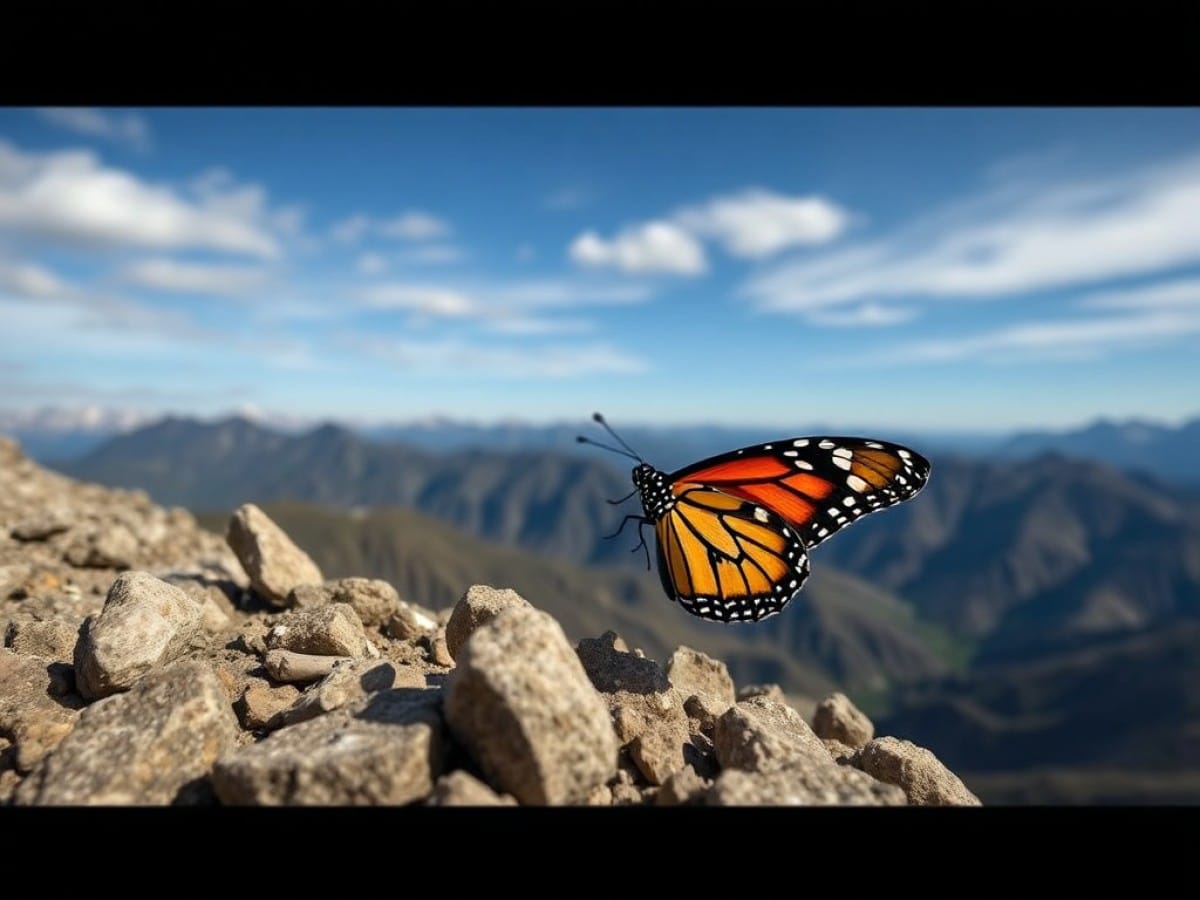
Perched high in the rugged terrains of the Caucasus mountains, photojournalist Rena Effendi is on a quest to find a rare butterfly named after her father, a man she barely knew. The landscape is stark yet stunning, characterized by rocks and steep slopes, and colored by the harsh yellow of sun-scorched grass. This elusive butterfly, Satyrus effendi, if it still exists, is known to inhabit such unforgiving environments, typically flying solitary across vast stretches of land.
The pursuit of a butterfly might seem an unlikely focus for an award-winning documentary, yet “Searching for Satyrus” is a compelling narrative that not only introduces viewers to a lesser-known region but also explores deep themes such as conflict, nationalism, environmental change, and extinction. More personally, it is Effendi’s emotional journey through her family’s obscured past and the enigmatic life of her estranged father.
Described by her expedition companion, lepidopterist Dmitrii V Morgun, as a “melancholic and brooding” species, the Satyrus effendi butterfly mirrors the personality of Effendi’s father, Rustam Effendi. A brilliant but unpredictable Azerbaijani lepidopterist, Rustam was a fleeting presence in her childhood, much like the butterfly he studied.
Rustam Effendi, known among his acquaintances as an irrepressible charmer and lover of wine, was seldom home, leading a life marked by numerous affairs and eventually divorcing Effendi’s mother. He passed away when Effendi was just 14, leaving behind a complicated legacy. She recalls a funeral attended by women from various phases of his life, including multiple wives and unknown faces, at a time when political turmoil between Azerbaijan and Armenia was intensifying—a conflict that, despite claims of resolution by figures like Donald Trump, persists to this day.
It was only years later, driven by a sudden impulse in 2017, that Effendi discovered her father had a butterfly named after him while reading a Russian Wikipedia page. The Satyrus effendi was critically endangered, existing only in the contentious mountainous border area between Azerbaijan and Armenia. Intrigued by the poetic connection to her heritage and name, she felt compelled to learn more.
Following Azerbaijan’s reclamation of these territories, Effendi was able to follow in her father’s footsteps, starting from Baku and moving into the mountains where he once researched. Her journey unfolds in the documentary much like her real-life exploration began, at the financially struggling Institute of Zoology where her father’s life’s work lay crumbling to dust.
Effendi’s venture into Armenia required special permissions due to her sensitive mission. “What are you doing here?” asked a puzzled policeman during an hour-long interrogation, to which she replied that she was hunting a rare butterfly—a story so outlandish it could only be true.
This search was not just about tracing a butterfly; it was a deeper exploration into who her father was. His presence in her life was almost spectral, marked by brief appearances before vanishing on expeditions. At home, she would find jars with insects and his photography negatives—silent remnants of his existence.
Becoming a photojournalist herself, Effendi saw parallels in their lives. Both professions—hers with a camera, his with a net—involved solitude, patience, and the critical moment of capture. Each butterfly in his collection told a story, much like each photograph she took.
In Armenia, Effendi met one of her father’s old friends, Pavlik Kazaryan, who had fled to Armenia during the conflict. Together, they ventured into the mountains with a butterfly net, designed by her father, to find the elusive Satyrus effendi. Kazaryan, who considered Rustam a father figure, revealed that Rustam never mentioned Effendi, rendering her as invisible in his narratives as the butterfly they pursued.
This quest also uncovered painful family secrets. Effendi’s half-sister shared letters Rustam had written, filled with poetic descriptions of his travels—letters her own mother never received. These revelations, though romantic, underscored her absence from his life.
As Effendi dug deeper, she discovered more about her father’s mysterious life, including his dual passports, which suggested a life of complexities mirroring the mythical status of the butterfly straddling war-torn borders.
Despite the challenges—harsh weather and rugged terrains—the pursuit of the butterfly offered a glimmer of hope. Morgun remarked, “He flies above everything. For him, there are no borders, no wars, just mountains.”
Similar Posts:
- Trump Administration Postpones Monarch Butterfly Protections: Fate of Species in Limbo!
- E.A. Hanks Reveals Harrowing Childhood With Abusive Mother, Iconic Father
- Greenland’s Rare Earth Mining Stalled: Harsh Climates and Infrastructure Woes to Blame
- ScottishPower Denies Father’s Death: Family Battles for Recognition
- Thrill-Seeker’s Dream: Discover Life Hiking, Biking, Surfing on Global Adventures!

Fatima Clarke is a seasoned health reporter who bridges medical science with human stories. She writes with compassion, precision, and a drive to inform.