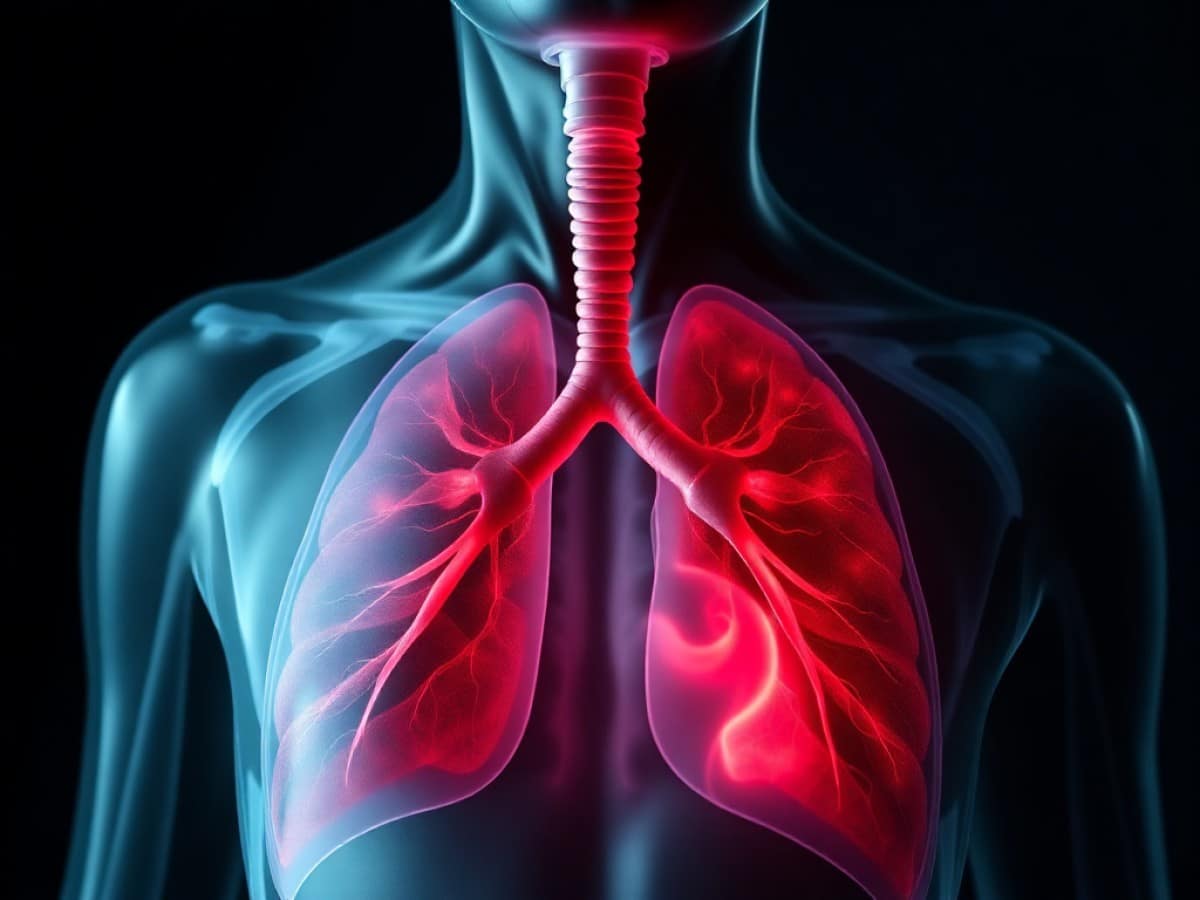
Tuberculosis is airborne and primarily affects the lungs; recognizing symptoms aids in controlling it.
MEXICO CITY (apro).— Tuberculosis remains a public health issue in Mexico and other Latin American countries. The disease, caused by the Mycobacterium tuberculosis bacterium, primarily targets the lungs and is transmitted through the air when an infected person coughs, speaks, or sneezes.
Health authorities in Mexico state that early detection facilitates the commencement of treatment and helps to reduce the spread. The disease can either develop actively or remain dormant without symptoms for months or years.
Symptoms of pulmonary tuberculosis typically begin gradually. The most common symptom is a persistent cough that lasts more than two weeks. This cough may produce phlegm and, in some cases, blood.
Analyze, context, and facts. Click and follow us on Google News
In addition to prolonged coughing, individuals may experience constant fevers, particularly in the evenings, night sweats, and unexplained weight loss. Fatigue and weakness are also common clinical signs.
Chest pain and breathing difficulties can occur as the disease progresses. Untreated cases can lead to progressive damage to lung tissue.
Fever, night sweats, and fatigue: common symptoms of pulmonary tuberculosis
The fever associated with tuberculosis can vary in intensity. It may not reach high levels, which can delay diagnosis. Night sweats are frequent and might necessitate changing bedclothes.
Weight loss occurs even when an individual maintains their usual diet. This decrease is linked to the body’s response to the bacterial infection.
Constant fatigue limits daily activities. Some people report a reduced appetite, which contributes further to weight loss.
When the bacteria spread beyond the lungs, they can affect other organs, known as extrapulmonary tuberculosis, involving lymph nodes, bones, kidneys, or the central nervous system. In these cases, symptoms depend on the affected organ.
Transmission of tuberculosis and those at higher risk in Mexico
Tuberculosis is transmitted through the air. An individual with active pulmonary tuberculosis can release bacteria into the environment, especially in closed and poorly ventilated spaces. The risk increases with close and prolonged contact.
Not everyone exposed to the bacteria develops the active disease. In some cases, the immune system contains the bacteria, leading to a latent infection. Those with latent infections show no symptoms and do not transmit the disease, but they can develop active tuberculosis in the future.
The groups at higher risk include individuals with weakened immune systems, such as those living with HIV, diabetes patients, people undergoing immunosuppressive treatment, and incarcerated populations. Those living in overcrowded conditions are also at greater risk.
Health authorities advise visiting a medical unit if persistent cough and other respiratory symptoms are present. Health professionals can conduct tests such as sputum smear microscopy, sputum culture, or molecular tests to confirm the diagnosis.
Diagnosis and treatment: key to halting the spread
Early diagnosis allows for the initiation of specific antibiotic treatment. The standard regimen includes a combination of several drugs over a minimum period of six months. Completing the treatment fully reduces the risk of relapse and prevents bacterial resistance.
Discontinuing treatment can lead to drug-resistant tuberculosis, complicating medical care. For this reason, health sectors implement follow-up strategies to ensure patients complete their prescribed treatment regimen.
Vaccination with BCG is administered in Mexico during childhood. This vaccine primarily protects against severe forms in children, such as meningitis tuberculosis. However, it does not prevent all cases of pulmonary tuberculosis in adulthood.
Detecting close contacts is part of control efforts. When a case is confirmed, health personnel can evaluate family members and cohabitants to rule out infection or active disease.
Health authorities continue to run information campaigns to identify symptoms and promote early medical attention. Ventilating closed spaces and using respiratory hygiene measures are also recommended.
Tuberculosis treatment is available at no cost through the public health system for diagnosed individuals.
Similar Posts:
- Multiple Myeloma: The Blood Cancer Rapidly Spreading Among Young Adults
- Flesh-Eating Bacteria Found Here: Essential Protection Tips Revealed
- H3N2 Super Flu Alert: Key Symptoms to Spot This Winter Season!
- 5 Prostate Health Mistakes to Avoid: Protect Yourself from Disease Now!
- World Cat Day: Complete Guide to Feline AIDS (FIV) Explained