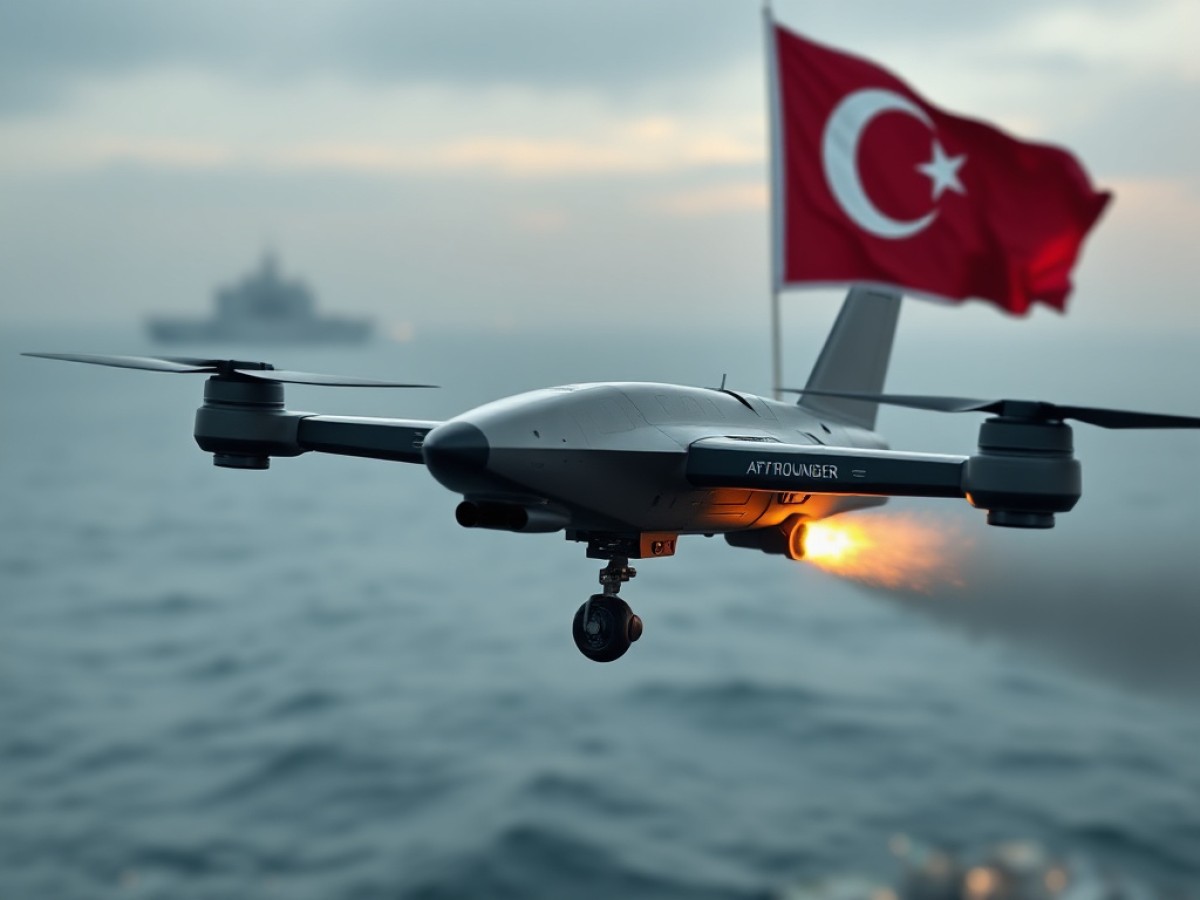
İZMİR – At the SAHA Expo 2026 defense exhibition held this month, it was revealed that Turkey plans to acquire 100 disposable unmanned surface vessels for its naval forces, according to Defense News.
This acquisition was determined in a February session of the Defense Industry Executive Committee, which is Turkey’s top authority on defense procurement and industry strategy.
The Secretariat of Defense Industries (SSB) is managing this procurement initiative. The plan includes the production of 100 disposable unmanned surface systems by three distinct firms.
Among the suppliers, Aselsan, in collaboration with Ares Shipyard, introduced their co-developed product, Tufan, at the SAHA Expo 2026 in Istanbul.
Another key provider, STM, has partnered with Yonca Shipyard to develop their own expendable USV, named Yaktu, which was also showcased at the exhibition.
The third company involved in production is Havelsan, which has teamed up with Sefine Shipyard.
The distribution of the 100 units sees Aselsan receiving an order for 40 units, while STM and Havelsan are both allocated 32 units each. This allocation requires a slight adjustment to fit the operational strategy, which includes the use of four-drone swarms.
The Tufan unmanned surface vessel by Aselsan is engineered for offensive operations against naval and shore-based targets. It measures 8 meters in length and 1.8 meters in width, and is equipped with a payload that equals the explosive power of one Mk 82 bomb.
STM’s Yaktu USV is tailored for asymmetric naval operations, from securing ports to conducting open-sea offensive missions. The vessel has a total length of 5.8 meters and a weight of 1.7 tons.
Both the Tufan and Yaktu models are designed as disposable, precision-strike platforms aimed at engaging surface threats. They feature streamlined, low-visibility hull designs to minimize radar and visual detection. Equipped with both line-of-sight (LOS) and satellite communication capabilities, these vessels can integrate seamlessly into network-centric warfare environments.
Their designed swarm architecture enables multiple units to collaborate effectively, sharing data instantly and autonomously distributing tasks during operations.
Similar Posts:
- Romania Enhances Black Sea Fleet: Acquires Advanced Turkish-Made Patrol Ship
- US Navy Plans Creation of New, Agile Class of Compact Combat Ships
- Turkey and Qatar Boost Defense Alliance: Multiple Deals Signed at Naval Expo
- Iran Captures US Submarine Drone in Strategic Strait of Hormuz: Tensions Escalate
- Navy Set to Launch Construction of Two ‘Trump Class’ Battleships: Find Out More!

Jamal Peterson reports on defense, aerospace, and tech policy. With a military background and a strategic mind, he dissects complex subjects with clarity, offering readers sharp, reliable insights.